Pore Reduction Laser Korea Laser by Laser, and Honest About What It Can Do
No laser shrinks a pore directly — different laser families firm the collagen around each opening so pores look smaller, and results are partial and maintained rather than a permanent erase. RE:BERRY Hongdae matches the right pore reduction laser korea approach to your skin in a 60-90 minute same-doctor consultation from ₩19,000 (about $14) at Hongik University Station, direct on the AREX airport line.
Visit RE:BERRY across Seoul, Korea
Hongdae opens soon. Until then, explore our flagships — tap a clinic to view it.
ONE RE:BERRY BRAND · MFDS-REGISTERED DEVICES · MULTILINGUAL CARE AT EVERY LOCATION
Which laser reduces enlarged pores, and how honestly does it work?
Pore reduction laser korea works indirectly: no laser shrinks a pore directly, so 1,064-nm Nd:YAG, non-ablative fractional and picosecond lasers stimulate collagen around each opening to make pores look smaller — partial and maintained, not erased. RE:BERRY Hongdae matches the laser to your skin from ₩19,000 (about $14) in a 60-90 minute same-doctor consultation at Hongik University Station.
Enlarged pores are multifactorial, which is why 1 laser is never a permanent cure. They are driven mainly by high sebum output, reduced elasticity of the skin around the pore opening, and increased hair-follicle volume, with genetics, aging and sun exposure adding to it. Lasers do not shrink pores directly; instead, different laser families deliver controlled energy that stimulates new collagen and remodeling in the perifollicular dermis, so the tissue around each opening firms and pores look smaller. This is the honest core of any pore reduction laser korea plan: you are firming and refining, not erasing. Long-pulsed and Q-switched 1,064-nm Nd:YAG lasers act on dermal fibroblasts and can also reduce sebum output; non-ablative fractional and fractionated picosecond lasers (using a microlens or diffractive array) create controlled micro-injury zones that trigger collagen renewal with limited downtime; ablative fractional CO2 lasers resurface more aggressively for stronger but higher-downtime results. RF microneedling is a separate radiofrequency option some patients add for oily, lax skin. The specific laser and settings are matched to your skin type, oiliness and downtime tolerance rather than a one-size default. Realistic scope matters: because results depend on new collagen, improvement is gradual over several sessions, partial rather than total, and maintained with periodic sessions and good skincare, since pores can enlarge again with oil, aging and sun. This pore reduction laser korea page is the laser-by-laser hub. RE:BERRY Hongdae builds your plan with Dr. Jae-Hong Kim (Korean Ministry of Health and Welfare Medical License No. 138911), with 8-language coordination on the AREX line in Mapo-gu.
Pore Reduction Laser Pricing at RE:BERRY Hongdae
Pore Reduction Laser at RE:BERRY Hongdae — What to Expect
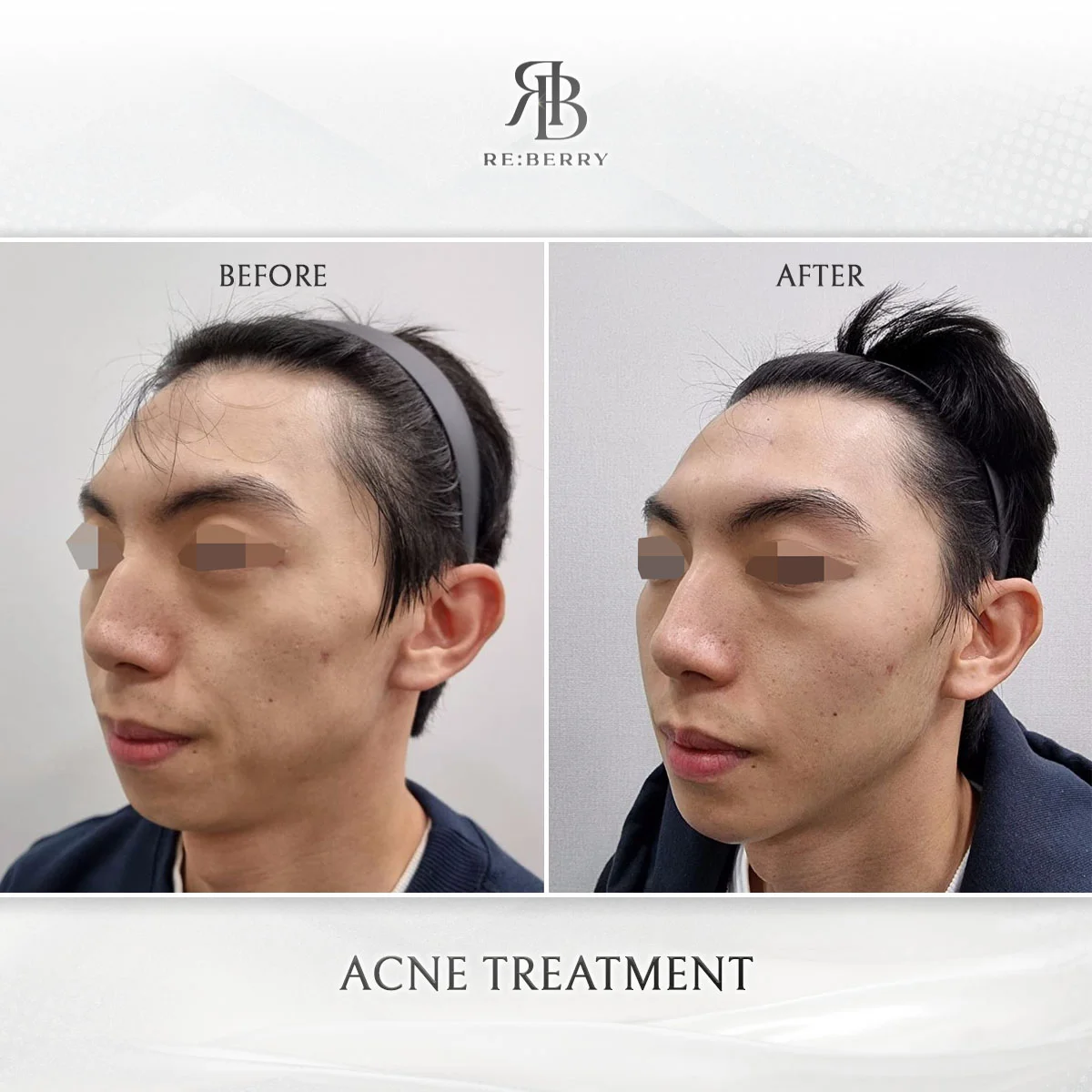
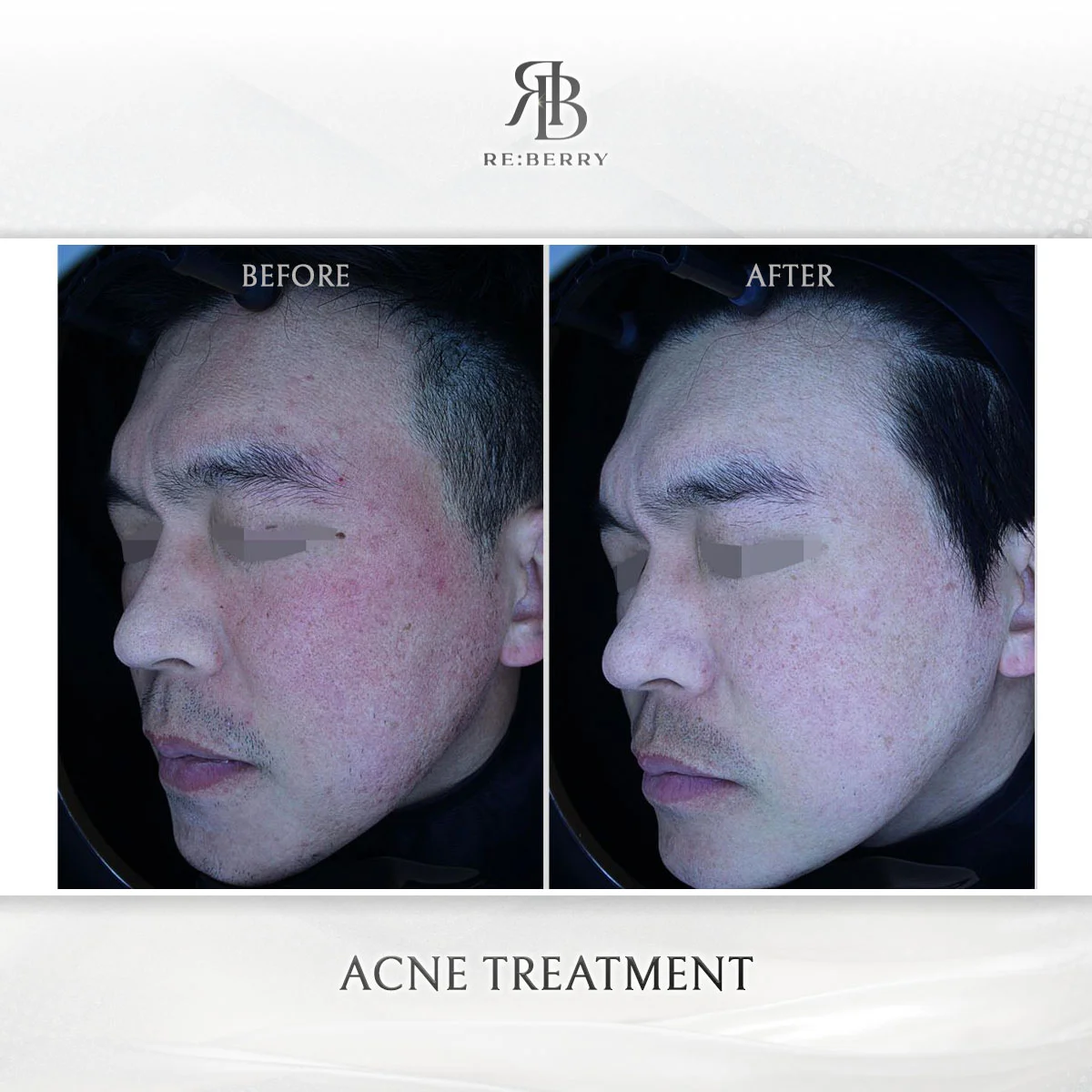
How a Pore Reduction Laser Korea Plan Is Built — 5 Points
Step 1: Diagnose why your pores are enlarged
RE:BERRY Hongdae assesses the 3 main drivers first — sebum output, lost elasticity and follicle volume — because they change the laser choice. Its 60-90 minute doctor-led consultation, over 15x Korea’s 4.3-minute average, sets realistic goals before any device is selected.
Step 2: Match the laser family to your skin
The plan matches 1 of several families to your case: 1,064-nm Nd:YAG for sebum and firming, non-ablative fractional or picosecond microlens for collagen with low downtime, or ablative CO2 for stronger resurfacing. RE:BERRY Hongdae explains each tradeoff rather than defaulting to 1 laser.
Step 3: Plan the series and cadence
Because results depend on new collagen, RE:BERRY Hongdae plans a series of about 3-5 sessions spaced weeks apart, not a single visit. It maps your session count and interval so you can complete the plan within 1 longer stay or across repeat Seoul visits.
Step 4: Calibrate downtime and PIH risk
RE:BERRY Hongdae calibrates energy to your downtime tolerance and skin tone: non-ablative approaches give mild redness, while ablative or fractional resurfacing means a few days of flaking. It keeps settings conservative for the 3 Fitzpatrick III-V skin types to lower post-inflammatory hyperpigmentation risk.
Step 5: Set maintenance and skincare honestly
Because pores enlarge again with oil, aging and sun, RE:BERRY Hongdae builds a maintenance plan plus sebum-aware skincare and daily SPF. It publishes pricing and confirms your quote via WhatsApp from ₩19,000 (about $14) before you travel, with no separate consultation charge.
Why Foreign Visitors Choose This Laser-by-Laser Pore Plan in Korea
- Which laser, and why — explained Rather than a vague ‘pore laser’, RE:BERRY Hongdae explains the pore reduction laser korea options family by family, so you book a realistic plan from ₩19,000 (about $14), understand the tradeoffs, and can self-verify each device in the MFDS database.
- Honest ‘minimize, not erase’ scope Because pores are driven by sebum, elasticity and follicle volume, no laser is a permanent cure. RE:BERRY Hongdae is clear that results are gradual, partial and maintained across a 3-5 session series, so expectations are set before you travel, not after.
- Downtime matched to your trip Non-ablative and picosecond microlens options mean mild redness; ablative CO2 means a few days of flaking. RE:BERRY Hongdae matches the 1 approach to your downtime tolerance so recovery fits your Seoul schedule and skin tone.
- Scheduling that fits your visit RE:BERRY Hongdae sits on the AREX line at Hongik University Station, a no-transfer ride from Incheon Airport Terminal 1 and Terminal 2. The doctor helps you weigh a longer stay for 3-5 sessions versus completing them across 2 or more visits.
| Timeline | What to Expect |
|---|---|
| Before travel | Send photos and dates on WhatsApp; receive 1 itemized plan quote |
| Day 1 | 60-90 min doctor-led pore and skin-type assessment |
| Weeks 1-12 | Series of laser sessions weeks apart, collagen building gradually |
| Ongoing | Maintenance sessions plus sebum-aware skincare and daily SPF |
Pore Reduction Laser Korea — 1064nm Nd:YAG vs Fractional vs Picosecond vs Ablative CO2
| Criteria | 1064nm Nd:YAG | Non-Ablative Fractional / Picosecond | Ablative CO2 Fractional | Source |
|---|---|---|---|---|
| Main action on pores | Fibroblast firming + sebum reduction | Micro-injury drives collagen renewal | Aggressive resurfacing + collagen | Peer-reviewed literature |
| Sebum modulation | Yes, can reduce oil | Limited | Limited | Peer-reviewed literature |
| Downtime | Minimal, transient redness | Mild redness, short | Days of flaking, more redness | Manufacturer / clinical data |
| Depth / intensity | Non-ablative, dermal | Controlled micro-zones | Ablative, strongest | Device manufacturer specs |
| PIH risk in dark skin | Comparatively lower | Conservative settings needed | Highest, care required | Peer-reviewed literature |
| Session series | Series of 3-5+ | Series of 3-5+ | Fewer, stronger | Published laser studies |
| Permanence | Partial, maintained | Partial, maintained | Longer but not permanent | Clinical protocol |
| Device verification | MFDS certificate on file | MFDS certificate on file | MFDS certificate on file | MFDS public database |
Why This Matters
The honest mechanism is the same across families: no laser shrinks a pore directly. Each firms the perifollicular collagen so the tissue around the opening tightens and pores look smaller. Because sebum, elasticity and follicle volume all drive pore size, RE:BERRY Hongdae treats pore reduction as partial and maintained, not a permanent erase.
Doctor continuity directly shapes a series-based outcome. According to KHIDI’s 2025 Medical Tourism Survey, 41.4% of international patients ranked ‘same doctor throughout treatment’ as their number-one priority when choosing a Korean clinic in Seoul. RE:BERRY Hongdae assigns one doctor per patient from consultation to aftercare.
Korea’s average outpatient consultation is 4.3 minutes — the shortest in the OECD, against a 16.4-minute member average. RE:BERRY Hongdae’s 60-90 minute consultations run over 15x the national norm, enough to diagnose your pore drivers and match the right laser. Source: KHIDI 2025; OECD Health Statistics 2023.
Your Physician at RE:BERRY Hongdae
Dr. Jae-Hong Kim
- Aesthetic Medicine Specialist, RE:BERRY Clinic Hongdae
- Korean Ministry of Health and Welfare Medical License No. 138911
- Regular Member, Korean Dermatological Association (kda.or.kr)
- Lead physician for the RE:BERRY Hongdae clinic protocol
Medically reviewed by Dr. Jae-Hong Kim, Aesthetic Medicine Specialist, RE:BERRY
SCIENTIFIC EVIDENCE — peer-reviewed references behind pore reduction laser standards at RE:BERRY Hongdae
The peer-reviewed evidence below draws on 6 studies spanning more than 15 years of controlled data on fractional, picosecond and Nd:YAG lasers, perifollicular collagen remodeling and Asian-skin safety — the criteria that define an honest pore reduction laser korea plan.
Fractional photothermolysis and pore-tissue remodeling
The 2004 foundational study in Lasers in Surgery and Medicine introduced fractional photothermolysis, showing how microscopic thermal-injury patterns drive dermal remodeling — the collagen mechanism by which non-ablative and fractional lasers firm the tissue around each pore so openings look smaller.
Manstein D, Herron GS, Sink RK, Tanner H, Anderson RR. Fractional photothermolysis: a new concept for cutaneous remodeling using microscopic patterns of thermal injury. Lasers Surg Med. 2004;34(5):426-438. doi:10.1002/lsm.20048
1064-nm picosecond microlens array for enlarged pores in Asians
A case-control study in Lasers in Surgery and Medicine quantified the long-term efficacy and safety of a 1,064-nm picosecond laser with a fractionated microlens array for enlarged pores in Asian skin, documenting measurable pore-size reduction and low complication rates across the analyzed cohort.
Palawisuth S, Manuskiatti W, Apinuntham C, Wanitphakdeedecha R, Cembrano KAG. Quantitative assessment of the long-term efficacy and safety of a 1064-nm picosecond laser with fractionated microlens array in the treatment of enlarged pores in Asians: A case-control study. Lasers Surg Med. 2022;54(8):1075-1082. doi:10.1002/lsm.23449
Picosecond 755-nm diffractive lens array on pore size
A study in the Journal of Drugs in Dermatology evaluated a picosecond 755-nm alexandrite laser with a diffractive lens array on pore size reduction, reporting measurable improvement across the treated group and reinforcing that fractionated picosecond energy refines pores through collagen stimulation.
Tran A, Klein R, Robinson D. Evaluation of picosecond 755-nm alexandrite laser with a diffractive lens array on pore size reduction. J Drugs Dermatol. 2021;20(11):1226-1230. doi:10.36849/jdd.6199
Fractional photothermolysis for enlarged pores and acne scars
A 2009 study in Dermatologic Surgery evaluated a fractional photothermolysis system with dynamic operating mode on acne scars and enlarged facial pores, quantifying pore and texture improvement across the treated cohort and supporting non-ablative fractional lasers as a low-downtime pore option.
Cho SB, Lee JH, Choi MJ, Lee KY, Oh SH. Efficacy of the fractional photothermolysis system with dynamic operating mode on acne scars and enlarged facial pores. Dermatol Surg. 2009;35(1):108-114. doi:10.1097/00042728-200901000-00015
Korean fractional laser and RF microneedling for enlarged pores
A randomized split-face study in the Korean Journal of Dermatology combined a non-ablative 1,550-nm Er:glass laser with fractional microneedle radiofrequency for enlarged facial pores in Asian skin, reporting measurable pore improvement across the 2 combined modalities in Korean patients.
Kim SK, Park JY, Song HS, Kim YS, Kim YC. Combination treatment of nonablative 1550-nm Er:glass laser and fractional microneedle radiofrequency for facial enlarged pores in Asian skin: a randomized split-face study. Korean J Dermatol. 2017;55(8):501-508.
Consultation length and system-level indicators
OECD Health Statistics record a Korean outpatient mean of 4.3 minutes against a 16.4-minute member average, quantifying why a longer, structured intake is needed to diagnose the 3 pore drivers and match the right laser. RE:BERRY Hongdae’s 60-90 minute standard is built directly on that system-level gap.
OECD Health Statistics 2023. Consultation length and patient experience indicators. Paris: OECD Publishing; 2023. doi:10.1787/health-data-en
Only Authentic, Brand-Certified Equipment
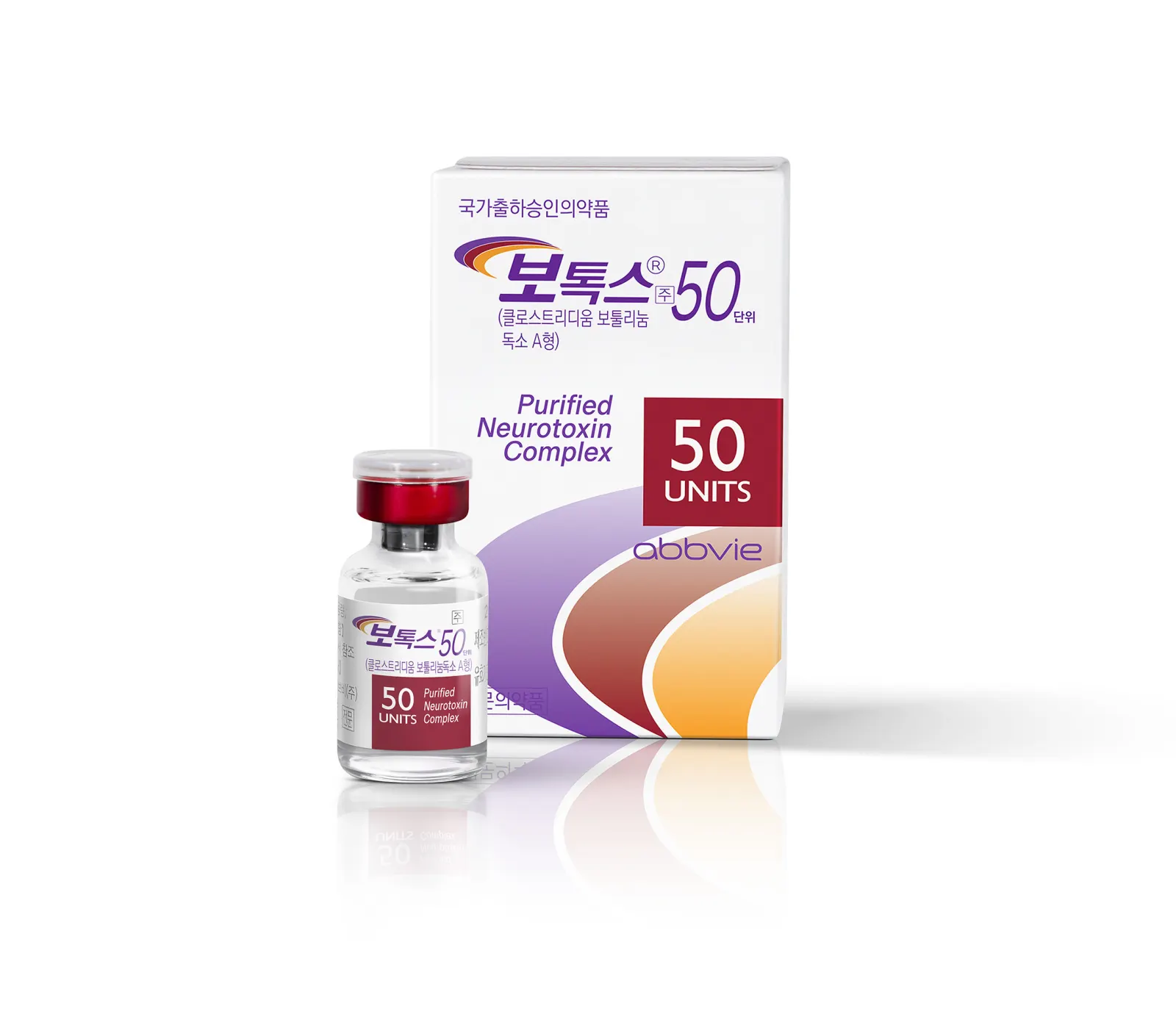
Every device at RE:BERRY is MFDS-certified and manufacturer-verified. We never use counterfeit or grey-market equipment.
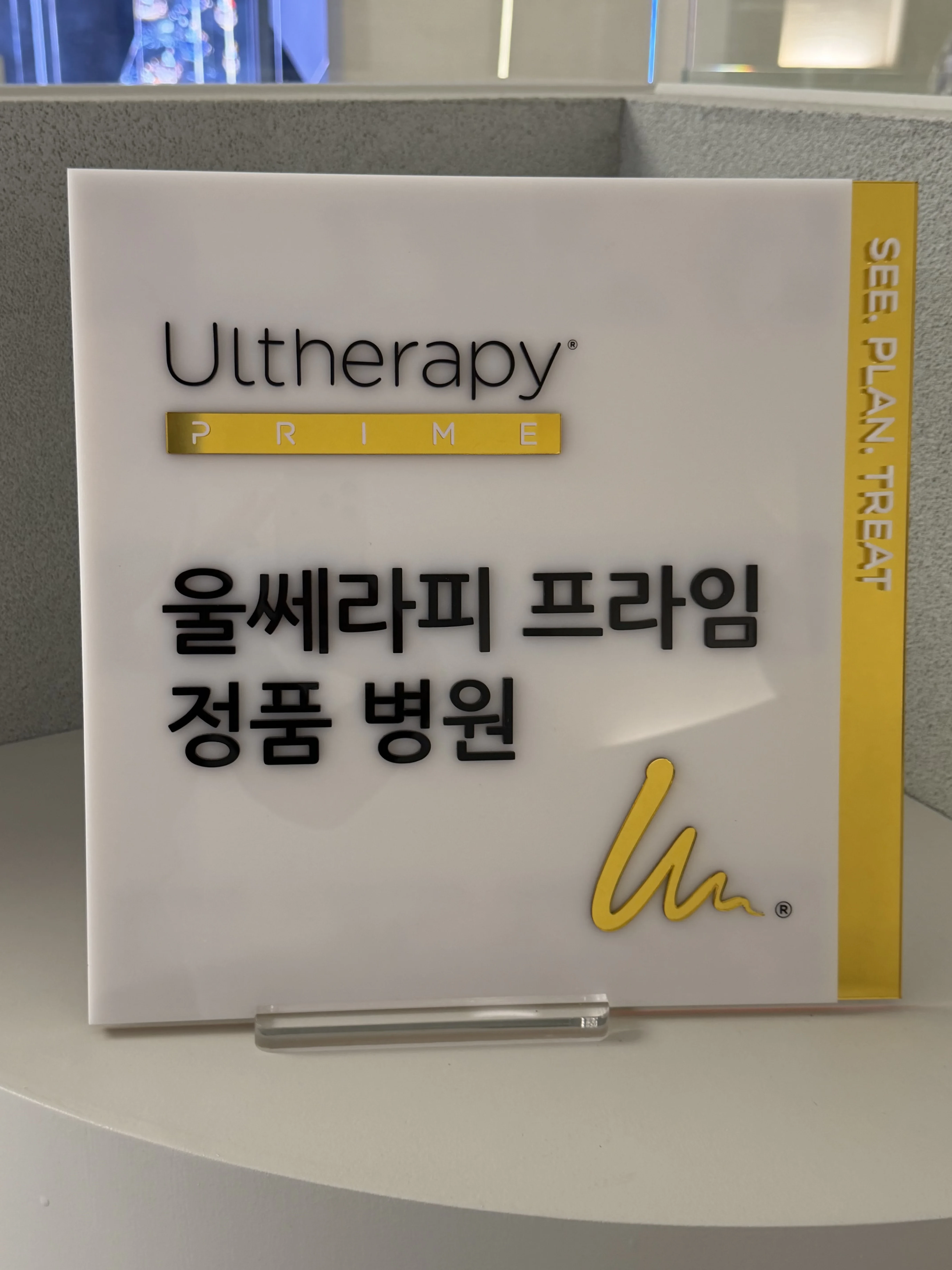
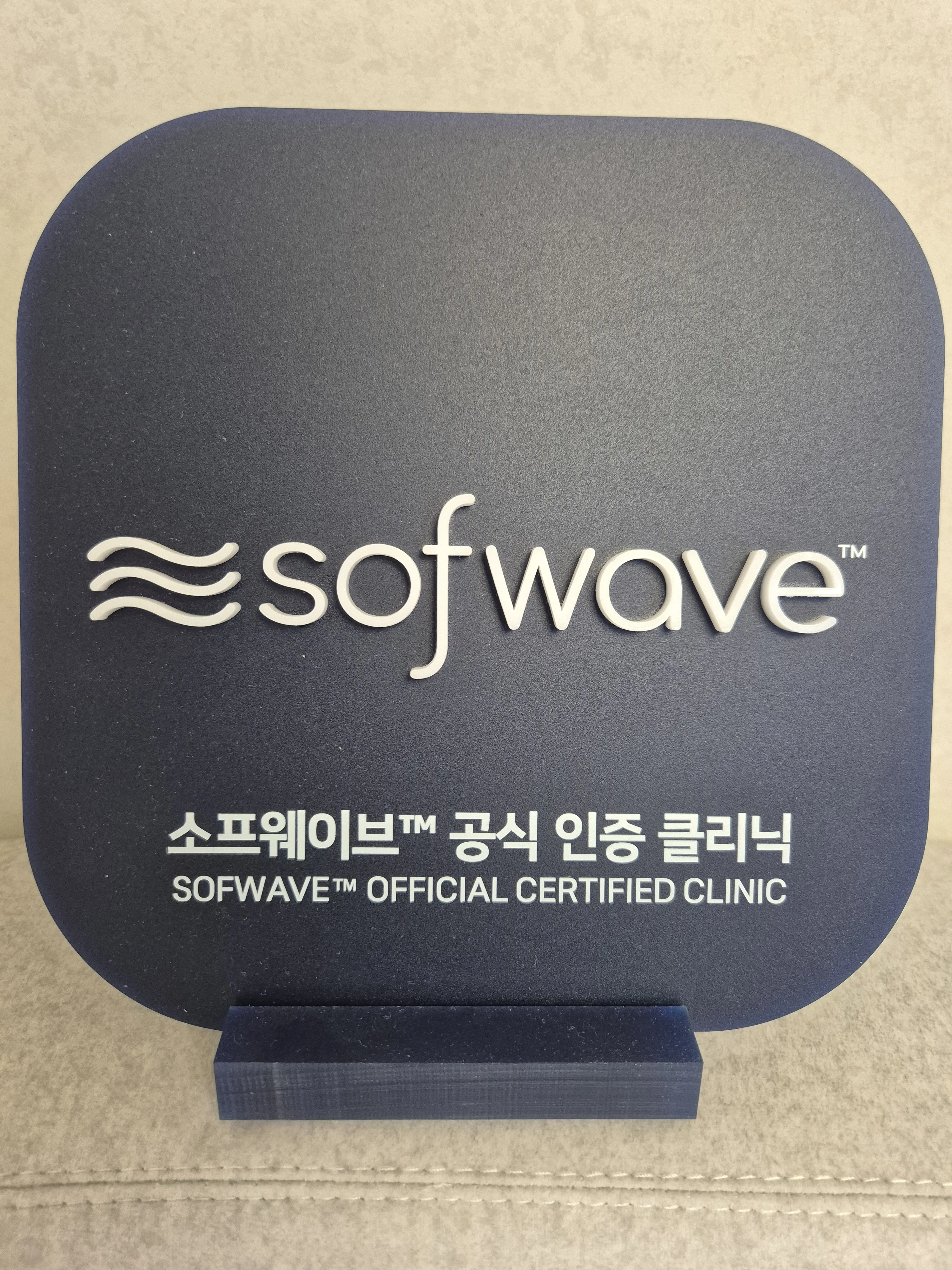
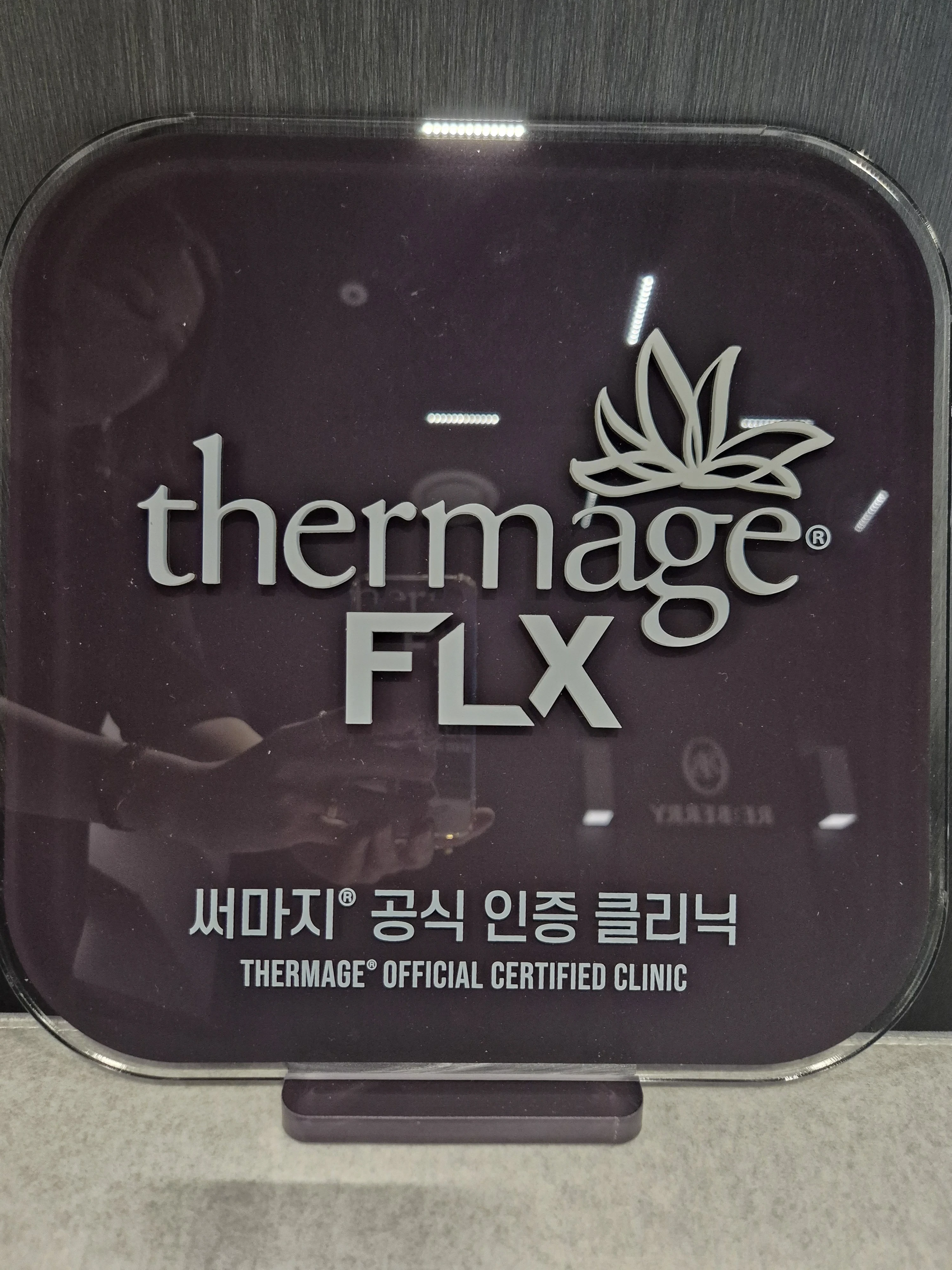
Brand-Authenticated Equipment & Training




Our doctors are certified by Korea’s top dermatological societies




Numbers That Tell Our Story
Real procedures performed.
Pore Reduction Laser Korea — Frequently Asked Questions
Laser-by-laser guidance, honest scope, sebum and collagen mechanism, Asian-skin safety, maintenance and travel answers for pore reduction laser korea visitors at RE:BERRY Hongdae, updated for 2026.
Which laser is used to reduce enlarged pores in Korea?
RE:BERRY Hongdae uses 1 of several laser families depending on your skin: 1,064-nm Nd:YAG for firming and sebum, non-ablative fractional or picosecond microlens for collagen with low downtime, or ablative CO2 for stronger resurfacing. Your pore reduction laser korea plan is matched in the Seoul consultation, not a fixed default.
How do lasers actually make enlarged pores look smaller?
RE:BERRY Hongdae explains it with 1 honest mechanism: no laser shrinks a pore directly. Each family stimulates new collagen in the perifollicular dermis, so the tissue around each opening firms and pores look smaller. That is why pore reduction is refinement, not erasure, and why it builds gradually in Seoul.
What is the difference between Nd:YAG, fractional and picosecond lasers for pores?
RE:BERRY Hongdae separates the 3 families because each behaves differently on enlarged pores and downtime. The 1,064-nm Nd:YAG firms and reduces oil, fractional and picosecond lasers drive collagen with mild recovery, and ablative CO2 resurfaces more strongly.
| Laser | Main action | Downtime |
|---|---|---|
| 1,064-nm Nd:YAG | Firming + sebum | Minimal |
| Fractional / picosecond | Collagen micro-injury | Mild |
| Ablative CO2 | Resurfacing | Days of flaking |
How much does pore reduction laser cost in Hongdae Seoul?
RE:BERRY Hongdae publishes transparent pricing for the full series, with your 1 quote confirmed on WhatsApp before you travel. The figure reflects your laser choice and session count, with no separate consultation charge — so you see every line item of your pore reduction laser korea plan before booking rather than after arrival.
Do Korean clinics perform more pore laser treatments than the US or Japan?
RE:BERRY Hongdae operates where Korean clinics run higher enlarged-pore and oily-skin laser volume than most US and Japan clinics, and Seoul recorded over 1,170,000 foreign-patient treatments in 2024 per KHIDI. That volume builds Asian-skin experience — see the laser toning protocol page, and still verify each clinic’s device yourself.
Does laser treatment reduce oil and sebum as well as pore size?
RE:BERRY Hongdae notes that 1,064-nm Nd:YAG lasers can reduce sebum output alongside firming, which matters because high oil is 1 of the 3 main drivers of enlarged pores. Fractional and picosecond lasers focus more on collagen, so the doctor matches the laser to whether oil or laxity dominates your skin in Seoul.
Is laser pore treatment safe for Asian and darker skin tones?
RE:BERRY Hongdae keeps settings conservative for the 3 Fitzpatrick III-V skin types, because some devices carry post-inflammatory hyperpigmentation risk in melanin-rich skin. Korean clinics treat higher Asian-skin volume than most Western markets, so the endpoint-reading discipline used in Seoul genuinely lowers that risk across your series.
Is there downtime after a pore reduction laser session?
RE:BERRY Hongdae matches downtime to the laser across all sessions: non-ablative and picosecond options give mild transient redness, while ablative CO2 fractional means a few days of flaking. Daily sun protection is part of every plan because UV worsens pigment and pore laxity, and your doctor explains aftercare in Seoul.
How long do the results of pore reduction laser last?
RE:BERRY Hongdae is honest that results are maintained, not permanent: because pores enlarge again with oil, aging and sun, refinement from a 3-5 session series holds with periodic maintenance and skincare. Your Seoul consultation sets the top-up cadence so pores stay refined rather than rebounding over time.
How many laser sessions are needed to see smaller pores?
RE:BERRY Hongdae sets gradual expectations: because results depend on new collagen, visible refinement usually builds over about 3-5 sessions spaced weeks apart. Korean clinics run higher enlarged-pore laser volume than most US and Japan clinics, so your Seoul doctor confirms a realistic session count backed by that experience.
Can pore laser be combined with other pore treatments like microneedling?
RE:BERRY Hongdae often combines 2 modalities, because pores are multifactorial: a laser plus RF microneedling can address both collagen and oily, lax skin in some patients. The doctor sequences them in Seoul so the tissue around each opening firms without overloading the skin, keeping downtime manageable — see the pico toning plan for tone as well.
Will pore reduction laser permanently get rid of my large pores?
RE:BERRY Hongdae is clear on 1 point: no laser permanently erases pores, because sebum, elasticity and follicle volume keep influencing pore size. Lasers firm the surrounding collagen so pores look smaller, and results are partial and maintained — realistic framing your Seoul doctor sets before any treatment begins.
Is pore reduction laser better than a chemical peel for pores?
RE:BERRY Hongdae matches the tool to 1 goal rather than ranking them: lasers reach the dermal collagen around each pore, while peels mainly work on the surface and oil. For structural pore refinement the laser usually does more, and your Seoul assessment decides based on your skin type and oiliness.
Can I get pore reduction laser as a tourist visiting Seoul near Hongik University Station?
RE:BERRY Hongdae is at Hongik University Station on Line 2, the Gyeongui-Jungang line and the AREX airport line, a direct no-transfer ride from Incheon Airport Terminal 1 and Terminal 2. Booking is via WhatsApp during pre-opening — see the clinic contact page to plan your series.
Why choose RE:BERRY for pore reduction laser in Hongdae Seoul?
3 things define RE:BERRY Hongdae: a laser-by-laser diagnosis that matches the right device to your pore drivers, honest ‘minimize not erase’ expectations across a 3-5 session series, and conservative settings with same-doctor continuity for Fitzpatrick III-V skin. The clinic sits in Hongdae’s design district on the AREX airport line — see the clinic contact page to start.
Plan Your Pore Reduction Laser Consultation at RE:BERRY Hongdae
Find out which pore reduction laser korea approach fits your skin — 1,064-nm Nd:YAG, non-ablative fractional, picosecond microlens or ablative CO2 — with honest, minimize-not-erase expectations and a maintenance plan, in a 60-90 minute doctor-led consultation with Dr. Jae-Hong Kim, with transparent pricing from ₩19,000 (about $14) published before you book. RE:BERRY Hongdae sits directly on the AREX airport line at Hongik University Station. This information is for educational purposes only and is not medical advice; consult a licensed physician for individual guidance. Your pore reduction laser plan is confirmed in writing before you book.
Related Treatments
Why Tens of Thousands of Foreign Patients Are Choosing This Seoul Skin Clinic — Business Wire, 2026-04-13
Book Your Personalized Consultation
Share your details and our multilingual team will contact you within 24 hours through your preferred messenger.
- ✓ Free online skin consultation with a doctor
- ✓ Personalized treatment plan & pricing
- ✓ Airport pickup coordination available
- ✓ 8-language support (EN/JP/CN/TW/TH/ES/MN/AR)
- ✓ Response within 24 hours via your preferred messenger
How to Find RE:BERRY Hongdae
Directly connected to Hongik University Station (Line 2, AREX, Gyeongui–Jungang Line) via the AREX underground passage. 3F & B2, 140 Yanghwa-ro, Mapo-gu, Seoul.
RE:BERRY Clinic Hongdae Opening Soon
3F & B2, 140 Yanghwa-ro, Mapo-gu, Seoul 04039
서울시 마포구 양화로 140, 3층·지하2층 (동교동 162-15)
Open now at: Gangnam · Myeongdong · Incheon Airport