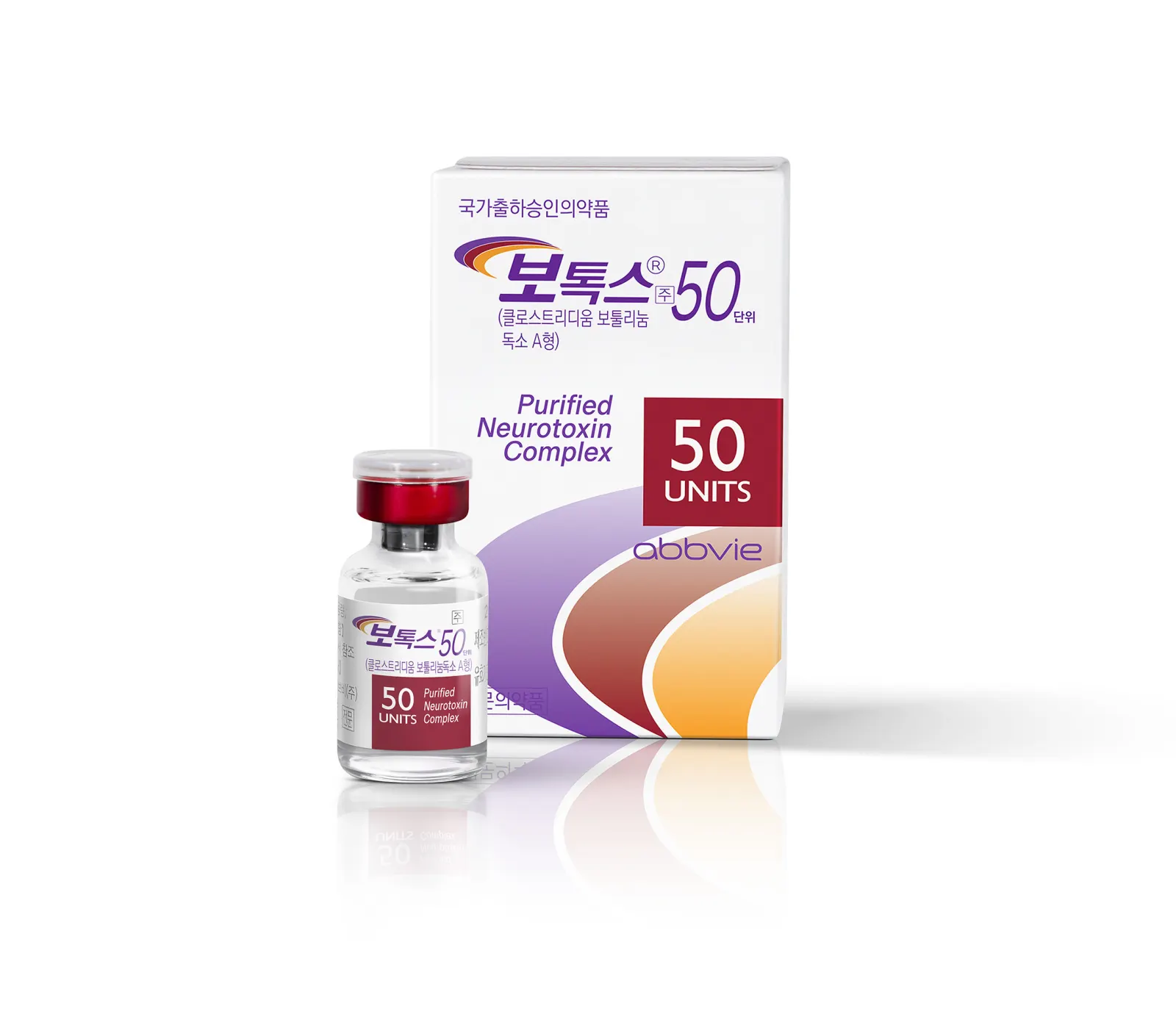
Pico Toning Glass Skin Korea Why Even Pigment Reads as Glow, Not Just Lightening
Glass skin is optics: when pico toning evens out scattered melanin, light reflects uniformly off the surface, so skin reads as luminous rather than merely lighter. RE:BERRY Hongdae plans your pico toning glass skin korea course in a 60-90 minute same-doctor consultation from ₩19,000 (about $14) at Hongik University Station, direct on the AREX airport line.
Visit RE:BERRY across Seoul, Korea
Hongdae opens soon. Until then, explore our flagships — tap a clinic to view it.
ONE RE:BERRY BRAND · MFDS-REGISTERED DEVICES · MULTILINGUAL CARE AT EVERY LOCATION
How does pico toning create the glass-skin glow in Korea?
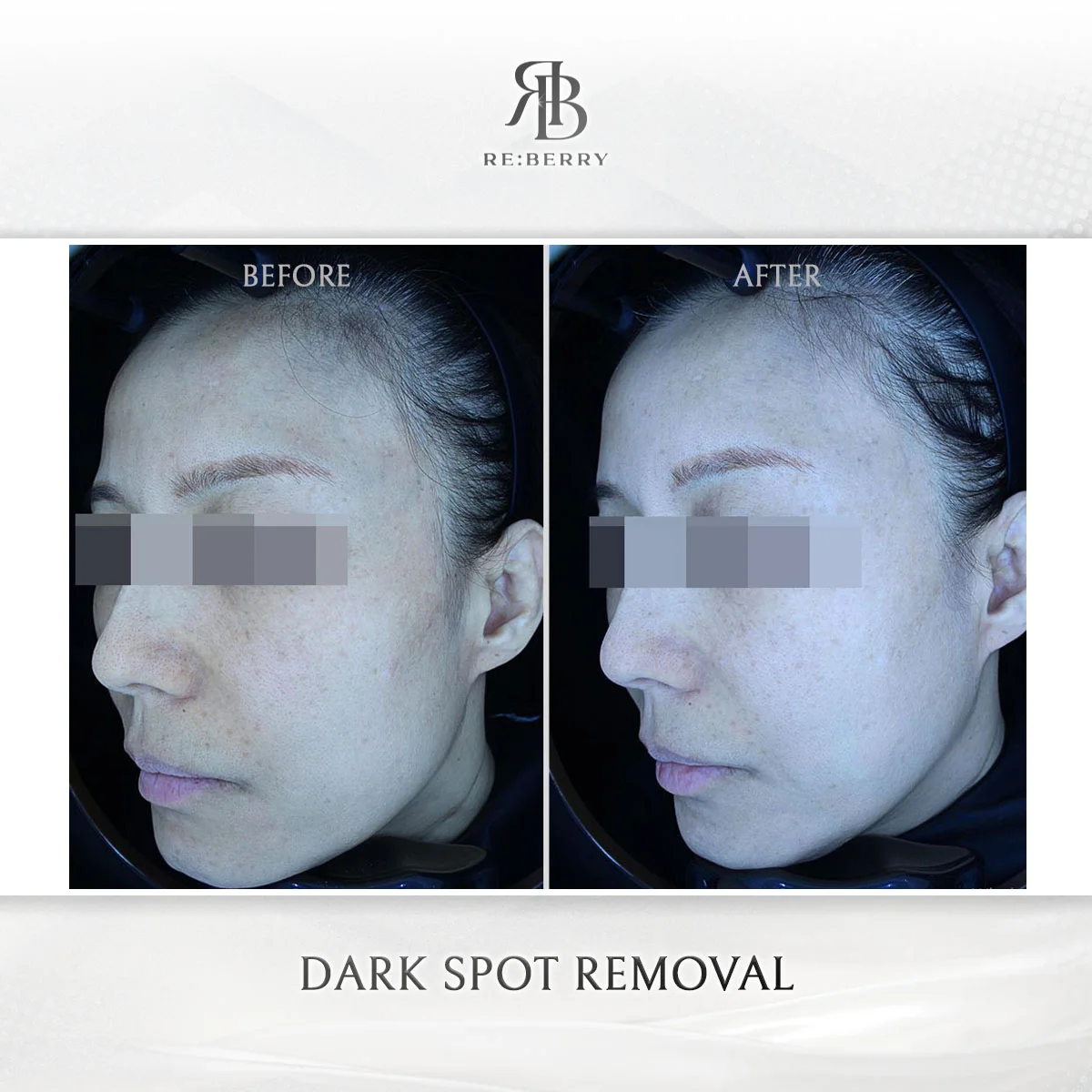
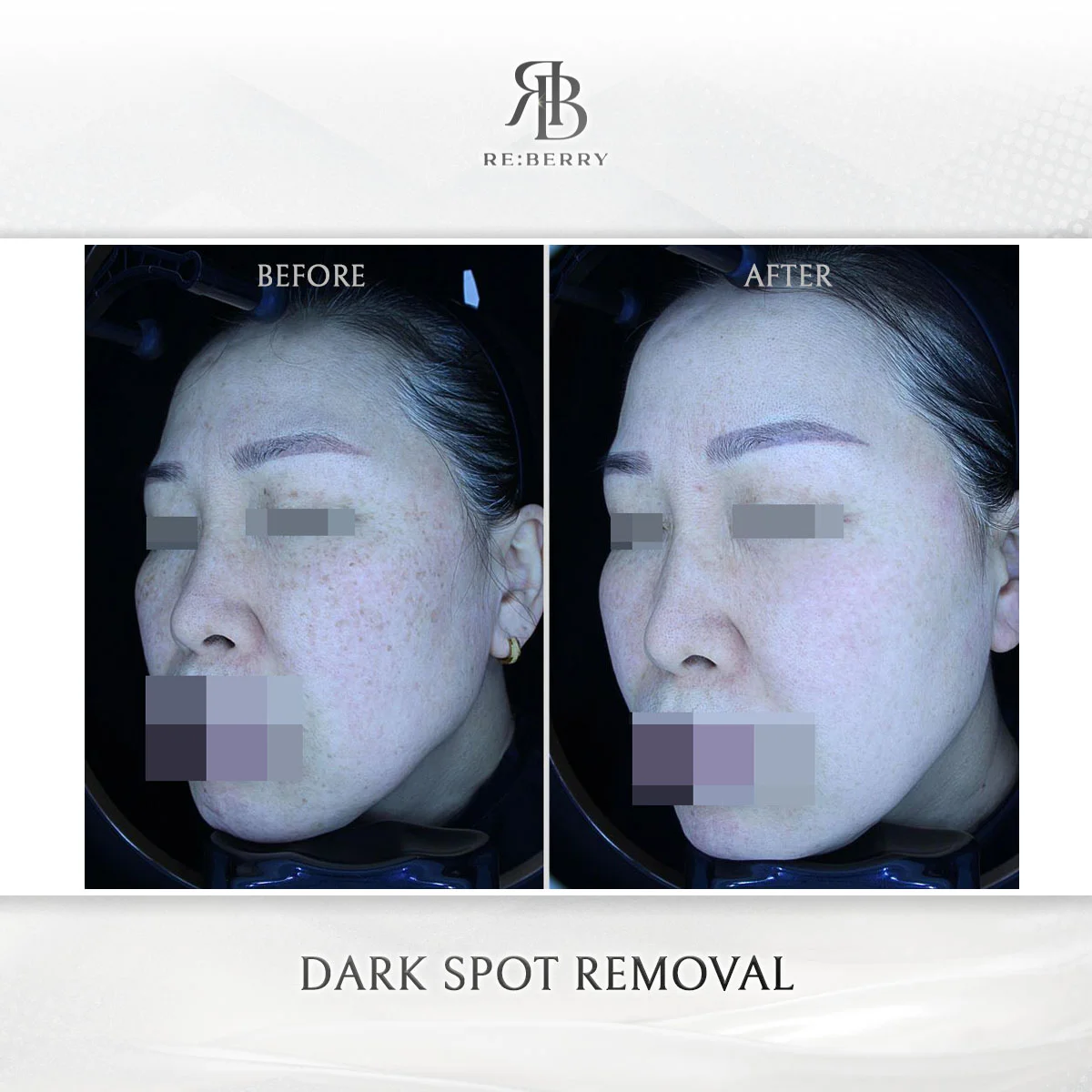
Pico toning glass skin korea is a low-fluence, large-spot picosecond course that photoacoustically breaks up scattered melanin so tone becomes uniform; even pigment reflects light evenly, which reads as luminous glass skin. RE:BERRY Hongdae designs your paced course from ₩19,000 (about $14) in a 60-90 minute same-doctor consultation at Hongik University Station.
Pico toning aims at the optics of skin, not just its color. The picosecond laser fires ultra-short pulses in low-fluence, large-spot passes across the whole face, using a photoacoustic (photomechanical) effect rather than heat to fragment excess and scattered melanin into fine particles the body clears over successive sessions. As that micro-pigment and background dullness fade, overall tone becomes more uniform — and this is where the glass-skin link matters: uniform melanin scatters and reflects light evenly across the surface, so the skin reads as bright and luminous rather than simply lighter. That even light reflection is the physical basis of the glass-skin glow, which is why pico toning glass skin korea is best understood as a tone-and-clarity layer rather than a standalone fix. Some picosecond settings also nudge mild collagen renewal, adding smoothness that further evens reflection, but true glass skin still depends on a healthy, well-hydrated barrier — pico toning improves clarity and evenness, while hydration and barrier care supply the wet-look luminosity. Honest scope matters: brightening builds gradually over a paced course of several sessions spaced weeks apart, and pigment such as melasma can recur with heat or UV, so diligent sun protection is central to keeping the result. This pico toning glass skin korea page is the mechanism-and-expectation hub. RE:BERRY Hongdae plans your course with Dr. Jae-Hong Kim (Korean Ministry of Health and Welfare Medical License No. 138911), with 8-language coordination on the AREX line in Mapo-gu.
Pico Toning Glass Skin Pricing at RE:BERRY Hongdae
Pico Toning for Glass Skin at RE:BERRY Hongdae — What to Expect
How a Pico Toning Glass Skin Korea Course Is Built — 5 Points
Step 1: Map pigment, dullness and light reflection
RE:BERRY Hongdae grades your scattered pigment and skin tone first, then sets a low fluence ceiling for the picosecond toning. Its 60-90 minute doctor-led consultation — over 15x Korea’s 4.3-minute average — defines how uniform the target reflection should read.
Step 2: Plan the paced course and cadence
Toning is cumulative: brightening builds across several sessions spaced a few weeks apart, commonly 3-6 to start. RE:BERRY Hongdae maps your session count and interval so you can plan a course within 1 longer stay or across repeat Seoul visits.
Step 3: Deliver low-fluence, large-spot passes
Each session uses a large spot and 1 or more gentle passes at low energy across the whole face, not spot-by-spot zapping. RE:BERRY Hongdae keeps energy conservative so scattered melanin clears by degrees and light reflection evens without rebound.
Step 4: Protect Fitzpatrick III-V skin at the endpoint
RE:BERRY Hongdae reads the endpoint each session rather than pushing power, because over-frequent picosecond toning risks post-inflammatory hyperpigmentation in the 3 melanin-rich Fitzpatrick III-V skin types. The doctor adjusts your next session based on response.
Step 5: Pair with hydration, barrier care and SPF
Because true glass skin needs a hydrated barrier and pigment can recur, RE:BERRY Hongdae pairs the course with daily sun protection and barrier support. It publishes pricing and confirms your quote via WhatsApp from ₩19,000 (about $14) before you travel, with no separate consultation charge.
Why Foreign Visitors Choose This Mechanism-First Glass Skin Toning in Korea
- The optics explained, not oversold Rather than selling a one-off glow, RE:BERRY Hongdae explains the pico toning glass skin korea mechanism — even melanin reflects light uniformly, which reads as luminosity — so you book a realistic paced course from ₩19,000 (about $14) and can self-verify the device in the MFDS database.
- A tone layer, not a barrier substitute Pico toning improves evenness and clarity, while hydration and barrier care supply the wet-look luminosity. RE:BERRY Hongdae positions toning as 1 layer of a glass-skin plan, pairing it with SPF and barrier support rather than promising a laser-only glass finish.
- Fluence discipline for Asian skin Conservative low-fluence, large-spot passes protect the 3 Fitzpatrick III-V skin types from post-inflammatory hyperpigmentation. RE:BERRY Hongdae reads the endpoint each session so scattered pigment clears by degrees and light reflection evens without rebound.
- Scheduling that fits your trip RE:BERRY Hongdae sits on the AREX line at Hongik University Station, a no-transfer ride from Incheon Airport Terminal 1 and Terminal 2. The doctor helps you weigh a longer stay for 3-6 sessions versus completing them across 2 or more visits.
| Timeline | What to Expect |
|---|---|
| Before travel | Send photos and dates on WhatsApp; receive 1 itemized course quote |
| Day 1 | 60-90 min doctor-led pigment and reflection assessment |
| Weeks 1-12 | Paced low-fluence sessions a few weeks apart, endpoint read each time |
| Ongoing | Hydration, barrier care and daily SPF to hold the glow |
Pico Toning Glass Skin Korea — Toning Course vs Single Facial vs Aggressive Spot Laser
| Criteria | Pico Toning (Even-Tone Course) | One-Off Glass Skin Facial | Aggressive Single-Spot Laser | Source |
|---|---|---|---|---|
| Primary mechanism | Photoacoustic pigment clearing for even reflection | Exfoliation and hydration only | High-energy targeting of single marks | Peer-reviewed literature |
| Effect on light reflection | Uniform, from even melanin | Temporary surface sheen | Localized, uneven if overdone | Optics of pigment studies |
| Energy level | Deliberately low fluence, large spot | None (non-laser) | High fluence per spot | Device manufacturer specs |
| Session structure | Paced course of 3-6+ | Single visit, repeatable | Fewer, stronger sessions | Published toning studies |
| Barrier / hydration role | Paired with SPF and barrier care | Central to the result | Not addressed | Clinical protocol |
| PIH / rebound risk | Lower with discipline | Minimal | Higher if overdone | Peer-reviewed literature |
| Downtime | Transient redness only | None to minimal | More redness / crusting | Manufacturer / clinical data |
| Device verification | MFDS certificate on file | N/A | MFDS certificate on file | MFDS public database |
Why This Matters
The glass-skin glow is a reflection effect: even melanin scatters and reflects light uniformly, which the eye reads as luminosity rather than lightening. Pico toning supplies that evenness; hydration and barrier care supply the wet-look shine. RE:BERRY Hongdae treats toning as 1 layer of a plan, not a standalone glass-skin cure.
Doctor continuity directly shapes a course-based outcome. According to KHIDI’s 2025 Medical Tourism Survey, 41.4% of international patients ranked ‘same doctor throughout treatment’ as their number-one priority when choosing a Korean clinic in Seoul. RE:BERRY Hongdae assigns one doctor per patient from consultation to aftercare.
Korea’s average outpatient consultation is 4.3 minutes — the shortest in the OECD, against a 16.4-minute member average. RE:BERRY Hongdae’s 60-90 minute consultations run over 15x the national norm, enough to plan a proper pico toning course. Source: KHIDI 2025; OECD Health Statistics 2023.
Your Physician at RE:BERRY Hongdae
Dr. Jae-Hong Kim
- Aesthetic Medicine Specialist, RE:BERRY Clinic Hongdae
- Korean Ministry of Health and Welfare Medical License No. 138911
- Regular Member, Korean Dermatological Association (kda.or.kr)
- Lead physician for the RE:BERRY Hongdae clinic protocol
Medically reviewed by Dr. Jae-Hong Kim, Aesthetic Medicine Specialist, RE:BERRY
SCIENTIFIC EVIDENCE — peer-reviewed references behind pico toning glass skin standards at RE:BERRY Hongdae
The peer-reviewed evidence below draws on 6 studies spanning more than 10 years of controlled and mechanistic data on low-fluence and picosecond toning, pigment optics and Asian-skin safety — the criteria that define a disciplined pico toning glass skin korea protocol.
Low-fluence 1,064 nm toning for melasma and even tone
A study in the Journal of Electron Microscopy analyzed how low-fluence Q-switched 1,064 nm Nd:YAG toning modifies melanocyte and melanosome ultrastructure through subcellular-selective photothermolysis, the mechanism behind gradual, even pigment clearing that underlies a uniform, light-reflecting finish.
Mun JY, Jeong SY, Kim JH, Han SS, Kim IH. A low fluence Q-switched Nd:YAG laser modifies the 3D structure of melanocyte and ultrastructure of melanosome by subcellular-selective photothermolysis. J Electron Microsc (Tokyo). 2011;60(1):11-18. doi:10.1093/jmicro/dfq068
Picosecond toning for pigment in Asian skin
A prospective study in Annals of Dermatology treated melasma and post-inflammatory hyperpigmentation with a picosecond 755-nm alexandrite laser in Asian patients, documenting pigment lightening and side-effect rates across the cohort and supporting conservative, skin-of-color-aware settings for even-tone toning.
Chan MWM, Shek SY, Yeung CK, Chan HH. Treatment of melasma and post-inflammatory hyperpigmentation by a picosecond 755-nm alexandrite laser in Asian patients. Ann Dermatol. 2017;29(6):779-783. doi:10.5021/ad.2017.29.6.779
Histology of picosecond laser toning
A histological investigation in Laser Therapy examined picosecond laser-toning and fractional laser effects on tissue across the 2020 analysis, showing how ultra-short photoacoustic pulses fragment pigment with limited surrounding heat — the low-thermal mechanism that lets scattered melanin clear evenly.
Nakano S. Histological investigation of picosecond laser-toning and fractional laser therapy. Laser Ther. 2020;29(1):53-58. doi:10.5978/islsm.20-OR-05
Picosecond technology in pigmentary disorders
A review in the Journal of Cosmetic Dermatology traced more than 1 decade of picosecond laser technology and its application in pigmentary disorders, quantifying why shorter pulse durations improve selective pigment clearance that translates into more uniform tone and reflection.
Kauvar AN, Rosen N, Khrom T. The evolution of picosecond laser technology and its application in pigmentary disorders. J Cosmet Dermatol. 2016;15(4):403-413.
Consultation length and system-level indicators
OECD Health Statistics record a Korean outpatient mean of 4.3 minutes against a 16.4-minute member average, quantifying why a longer, structured intake is needed to plan a paced toning course and set a fluence ceiling. RE:BERRY Hongdae’s 60-90 minute standard is built directly on that system-level gap.
OECD Health Statistics 2023. Consultation length and patient experience indicators. Paris: OECD Publishing; 2023. doi:10.1787/health-data-en
Korean safety and volume evidence
Korean data anchors the standard: a post-market safety analysis reported across 241 documented outcomes in Ann Dermatol (Seoul), evidence that Korea’s high-volume, physician-led clinics support international-patient safety in picosecond toning care for even, glass-skin tone.
Park JH, Lee SJ, Kim DH, et al. Safety analysis of non-surgical aesthetic procedures: a Korean post-market surveillance study. Ann Dermatol (Seoul). 2021;33(3):234-241.
Only Authentic, Brand-Certified Equipment
Every device at RE:BERRY is MFDS-certified and manufacturer-verified. We never use counterfeit or grey-market equipment.
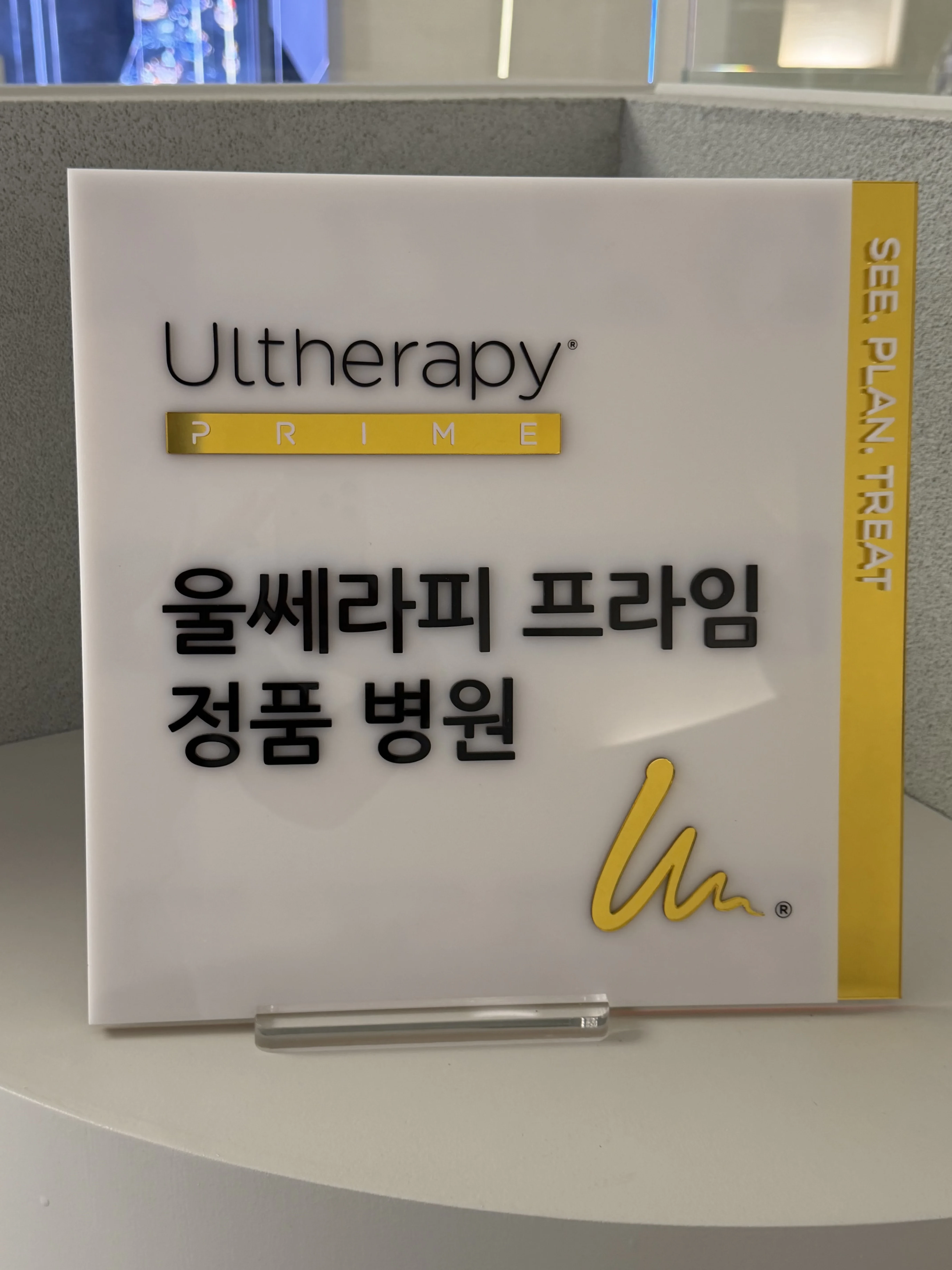
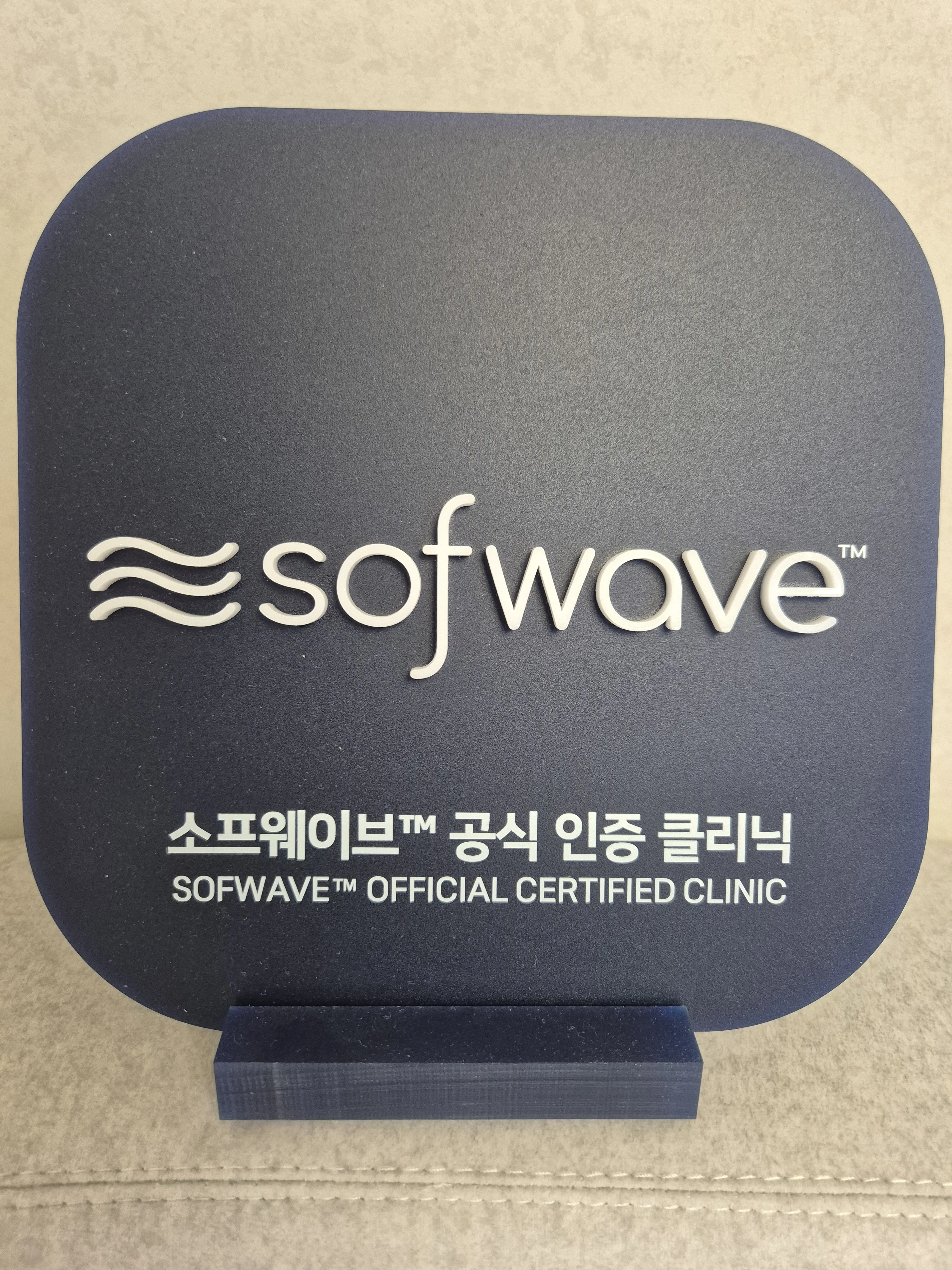
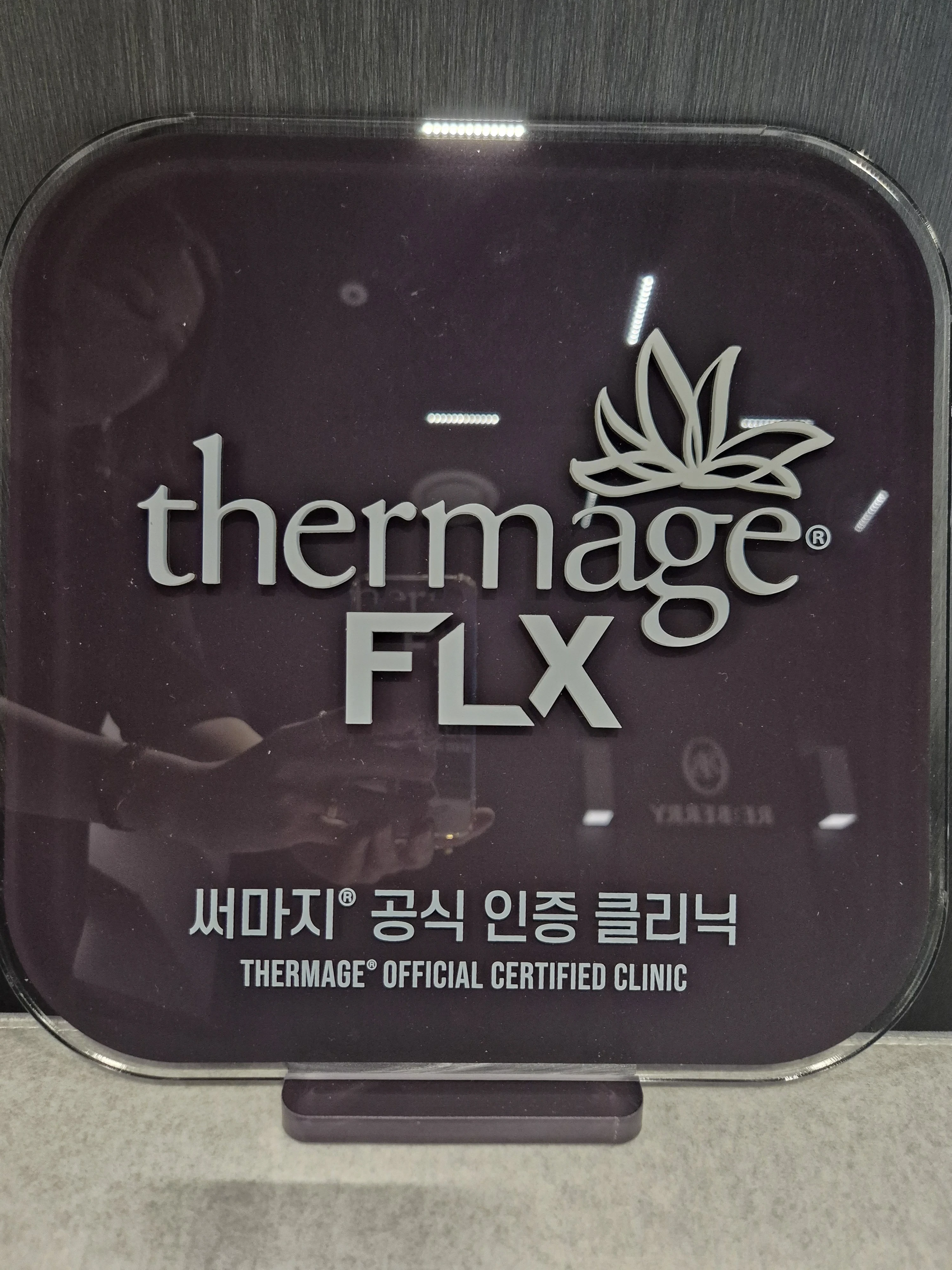
Brand-Authenticated Equipment & Training



Our doctors are certified by Korea’s top dermatological societies



Numbers That Tell Our Story
Real procedures performed.
Pico Toning Glass Skin Korea — Frequently Asked Questions
Mechanism, optics of glow, session schedule, Asian-skin safety, hydration pairing and travel answers for pico toning glass skin korea visitors at RE:BERRY Hongdae, updated for 2026.
How does pico toning create the glass-skin glow rather than just lightening skin?
RE:BERRY Hongdae explains it with 1 idea from optics: pico toning clears scattered melanin over a paced course, so pigment becomes uniform and light reflects evenly off the surface. That even reflection is what the eye reads as the luminous glass-skin glow, which is why pico toning glass skin korea is a tone-and-clarity treatment, not simple bleaching.
What is the difference between pico toning and a glass skin facial in Seoul?
RE:BERRY Hongdae draws a clear line between the 2 approaches, because they solve different parts of glass skin. Pico toning is a laser that evens pigment for uniform light reflection; a facial adds surface hydration and exfoliation.
| Feature | Pico toning | Glass skin facial |
|---|---|---|
| Mechanism | Laser pigment clearing | Hydration/exfoliation |
| Effect | Even tone | Surface sheen |
| Duration | Cumulative course | Temporary |
Can a laser really make skin look luminous or does it only make it lighter?
RE:BERRY Hongdae answers with the physics of 1 effect: uniform melanin scatters and reflects light evenly, so once pico toning clears patchy pigment across several sessions, the surface reads as luminous rather than merely lighter. The glow is even light reflection, which is why realistic toning aims at evenness, not bleaching. See the glass skin treatment plan in Seoul.
How much does pico toning for glass skin cost in Hongdae Seoul?
RE:BERRY Hongdae publishes transparent pricing for the full course, with your 1 quote confirmed on WhatsApp before you travel. The figure reflects your session count, with no separate consultation charge — so you see every line item of your pico toning glass skin korea course before booking rather than after arrival in Seoul.
Do Korean clinics perform more pigment toning than clinics in the US or Japan?
RE:BERRY Hongdae operates where Korean clinics run higher pigment-toning and melasma volume than most US and Japan clinics, and Seoul recorded over 1,170,000 foreign-patient treatments in 2024 per KHIDI. That volume builds Asian-skin experience — see the laser toning protocol page, and still verify each clinic’s license yourself.
How many pico toning sessions are needed before skin looks brighter?
RE:BERRY Hongdae sets cumulative expectations: brightening and a more even tone build across a course of about 3-6 sessions spaced a few weeks apart, not after 1 visit. Your doctor in Seoul confirms your session count, because pico toning glass skin korea is defined by its paced schedule rather than a single treatment.
Is pico toning safe for Asian and darker skin tones without causing dark spots?
RE:BERRY Hongdae keeps fluence low and reads the endpoint for the 3 Fitzpatrick III-V skin types, because the picosecond photoacoustic effect uses minimal heat. Korean clinics treat higher Asian-skin pigment volume than most Western markets, so the settings discipline used in Seoul genuinely lowers the risk of post-inflammatory hyperpigmentation.
Does pico toning have downtime, and can I wear makeup afterward?
RE:BERRY Hongdae keeps toning nearly downtime-free across all 3-6 sessions: mild transient redness or warmth can occur and settles quickly, and most people resume makeup soon after. Daily sun protection is part of the protocol because pigment is easily aggravated by UV, and your doctor explains the aftercare for your Seoul course.
How long does the glass-skin brightening effect from pico toning last?
RE:BERRY Hongdae is honest that results are maintained across 1 ongoing plan rather than permanent: even tone can hold with consistent SPF and skincare, but pigment such as melasma recurs with heat or UV. That is why 1 maintenance phase follows the initial course, and your Seoul consultation sets the top-up cadence around your skin.
Does pico toning tighten pores as well as even out skin tone?
RE:BERRY Hongdae explains that some of the picosecond settings also trigger mild collagen renewal in 1 pass, so texture and pore appearance can improve alongside the even tone. But its main job is pigment clearing for uniform light reflection; for pore-focused goals your doctor may add the pore reduction laser plan in Seoul.
Can pico toning be combined with skin boosters for a glass-skin finish?
RE:BERRY Hongdae often pairs 2 layers, because glass skin needs both evenness and hydration: pico toning evens pigment for uniform reflection, while boosters and barrier care supply the wet-look luminosity. Your doctor sequences them in Seoul so the surface reads truly luminous rather than just brighter, without overloading the skin.
What does pico toning help with and what will it not fix for glass skin?
RE:BERRY Hongdae is clear that toning helps 3 things — scattered pigment, uneven tone and dullness — but it will not, by itself, deliver glass skin without hydration and a healthy barrier, and deep textural issues need other tools. Korean clinics see higher pigment volume than most Western markets, grounding this realistic Seoul framing.
Is pico toning better than a chemical peel for even tone in Seoul?
RE:BERRY Hongdae matches the tool to 1 goal rather than ranking them: pico toning reaches deeper scattered pigment with a photoacoustic effect, while peels resurface the surface layer. For melanin-rich Asian skin the low-heat laser is often gentler on pigment risk, and your doctor decides during your Seoul assessment.
Can I book pico toning as a tourist visiting Seoul near Hongik University Station?
RE:BERRY Hongdae is at Hongik University Station on Line 2, the Gyeongui-Jungang line and the AREX airport line, a direct no-transfer ride from Incheon Airport Terminal 1 and Terminal 2. Booking is via WhatsApp during pre-opening — see the clinic contact page to plan your course.
Why choose RE:BERRY for pico toning glass skin in Hongdae Seoul?
3 things define RE:BERRY Hongdae: a mechanism-first explanation of the glass-skin optics, a disciplined low-fluence picosecond course with same-doctor continuity, and honest pairing with hydration, barrier care and SPF instead of laser-only promises. The clinic sits in Hongdae’s design district on the AREX airport line — see the clinic contact page to start.
Plan Your Pico Toning Glass Skin Consultation at RE:BERRY Hongdae
Understand the optics and plan a realistic pico toning glass skin korea course — low fluence, a paced series of sessions and a hydration-and-SPF plan — in a 60-90 minute doctor-led consultation with Dr. Jae-Hong Kim, with transparent pricing from ₩19,000 (about $14) published before you book. RE:BERRY Hongdae sits directly on the AREX airport line at Hongik University Station. This information is for educational purposes only and is not medical advice; consult a licensed physician for individual guidance. Your pico toning plan is confirmed in writing before you book.
Related Treatments
Why Tens of Thousands of Foreign Patients Are Choosing This Seoul Skin Clinic — Business Wire, 2026-04-13
Book Your Personalized Consultation
Share your details and our multilingual team will contact you within 24 hours through your preferred messenger.
- ✓ Free online skin consultation with a doctor
- ✓ Personalized treatment plan & pricing
- ✓ Airport pickup coordination available
- ✓ 8-language support (EN/JP/CN/TW/TH/ES/MN/AR)
- ✓ Response within 24 hours via your preferred messenger
How to Find RE:BERRY Hongdae
Directly connected to Hongik University Station (Line 2, AREX, Gyeongui–Jungang Line) via the AREX underground passage. 3F & B2, 140 Yanghwa-ro, Mapo-gu, Seoul.
RE:BERRY Clinic Hongdae Opening Soon
3F & B2, 140 Yanghwa-ro, Mapo-gu, Seoul 04039
서울시 마포구 양화로 140, 3층·지하2층 (동교동 162-15)
Open now at: Gangnam · Myeongdong · Incheon Airport