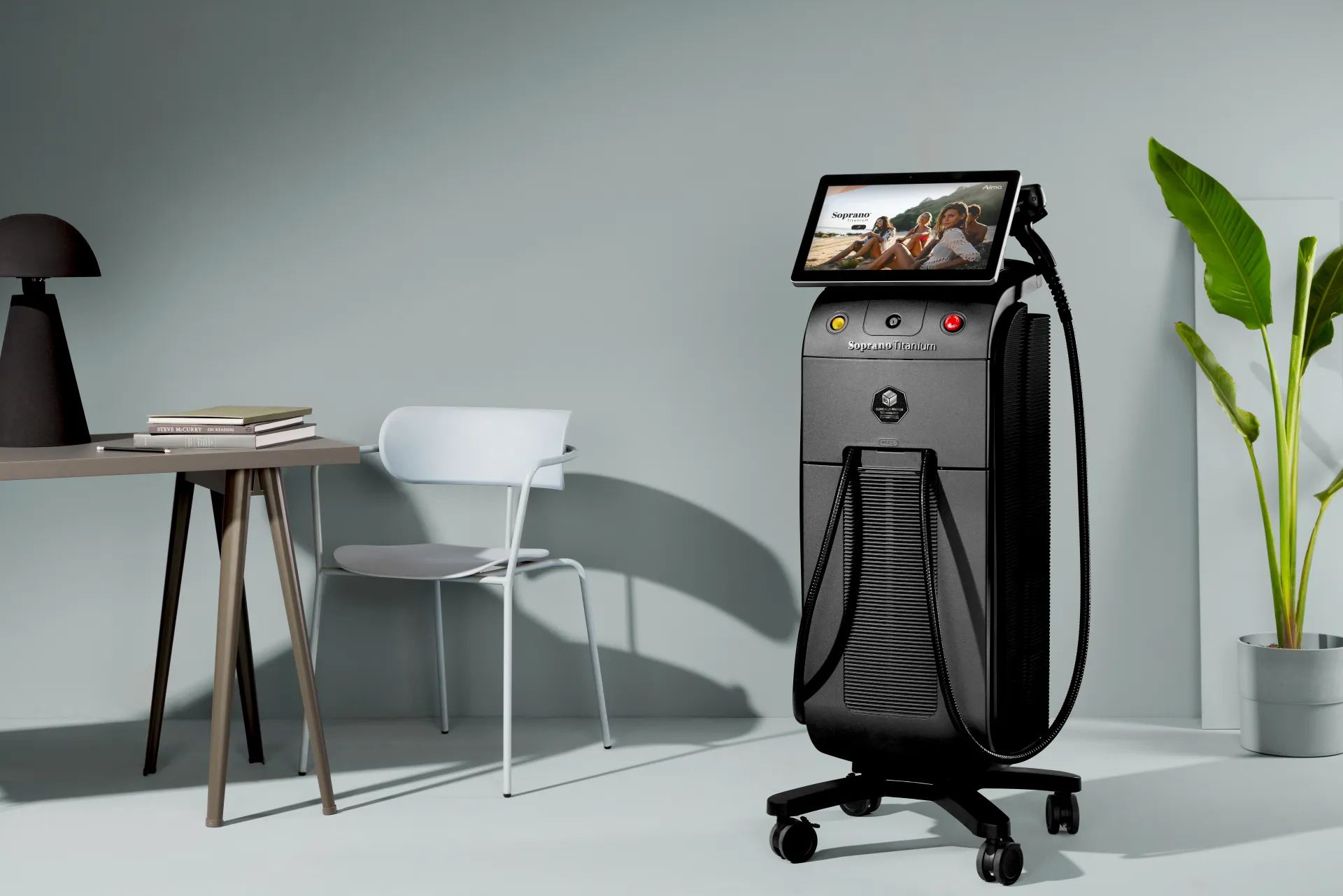
Laser Spot Removal Recommended How the Right Device Is Chosen for Each Spot Type in Korea
Which laser is recommended for spot removal depends entirely on the spot in front of the doctor — a solar lentigo, freckle, melasma patch or post-inflammatory mark each needs a different wavelength and fluence. RE:BERRY Hongdae grades your spot type in a 60-90 minute same-doctor consultation from ₩100,000 (about $71) at Hongik University Station, direct on the AREX airport line.
Visit RE:BERRY across Seoul, Korea
Hongdae opens soon. Until then, explore our flagships — tap a clinic to view it.
ONE RE:BERRY BRAND · MFDS-REGISTERED DEVICES · MULTILINGUAL CARE AT EVERY LOCATION
Which laser spot removal is recommended for my type of facial spot in Korea?
No single laser spot removal korea hongdae seoul option is recommended for every mark: solar lentigines and freckles suit pigment-selective picosecond or Q-switched passes, while melasma and PIH need gentler low-fluence toning. RE:BERRY Hongdae diagnoses your spot type first in a 60-90 minute consultation from ₩100,000 (about $71), one doctor throughout, at Hongik University Station.
“What laser is recommended?” is the wrong first question — the right first question is “what kind of spot is this?” A recommended laser only makes sense once the pigment is diagnosed, because the same word “spot” covers lesions that behave very differently under light. Cumulative sun exposure produces solar lentigines and freckles that sit relatively superficially and respond well to pigment-selective passes; hormonal and vascular factors drive melasma, which is deeper and relapse-prone and can worsen under aggressive energy; and inflammation or injury leaves post-inflammatory hyperpigmentation (PIH) that needs conservative handling. Pigment-selective lasers, typically Q-switched or picosecond Nd:YAG at 1,064 nm plus 532 nm, deliver very short high-intensity pulses that melanin absorbs preferentially, fragmenting the pigment while largely sparing surrounding tissue so the body clears it over the following weeks. For Fitzpatrick III-V (Asian) skin the priority is minimizing PIH, which means accurate diagnosis, conservative parameters and often a patch test before treating a full area. That is why a laser spot removal korea hongdae seoul plan at RE:BERRY Hongdae starts with a 60-90 minute one-to-one consultation with Dr. Jae-Hong Kim (Korean Ministry of Health and Welfare Medical License No. 138911) to identify the spot type, then choose which recommended wavelength and fluence fit — with 8-language coordination for visitors on the AREX line at Hongik University Station in Mapo-gu.
Laser Spot Removal Pricing at RE:BERRY Hongdae
Laser Spot Removal at RE:BERRY Hongdae — What to Expect
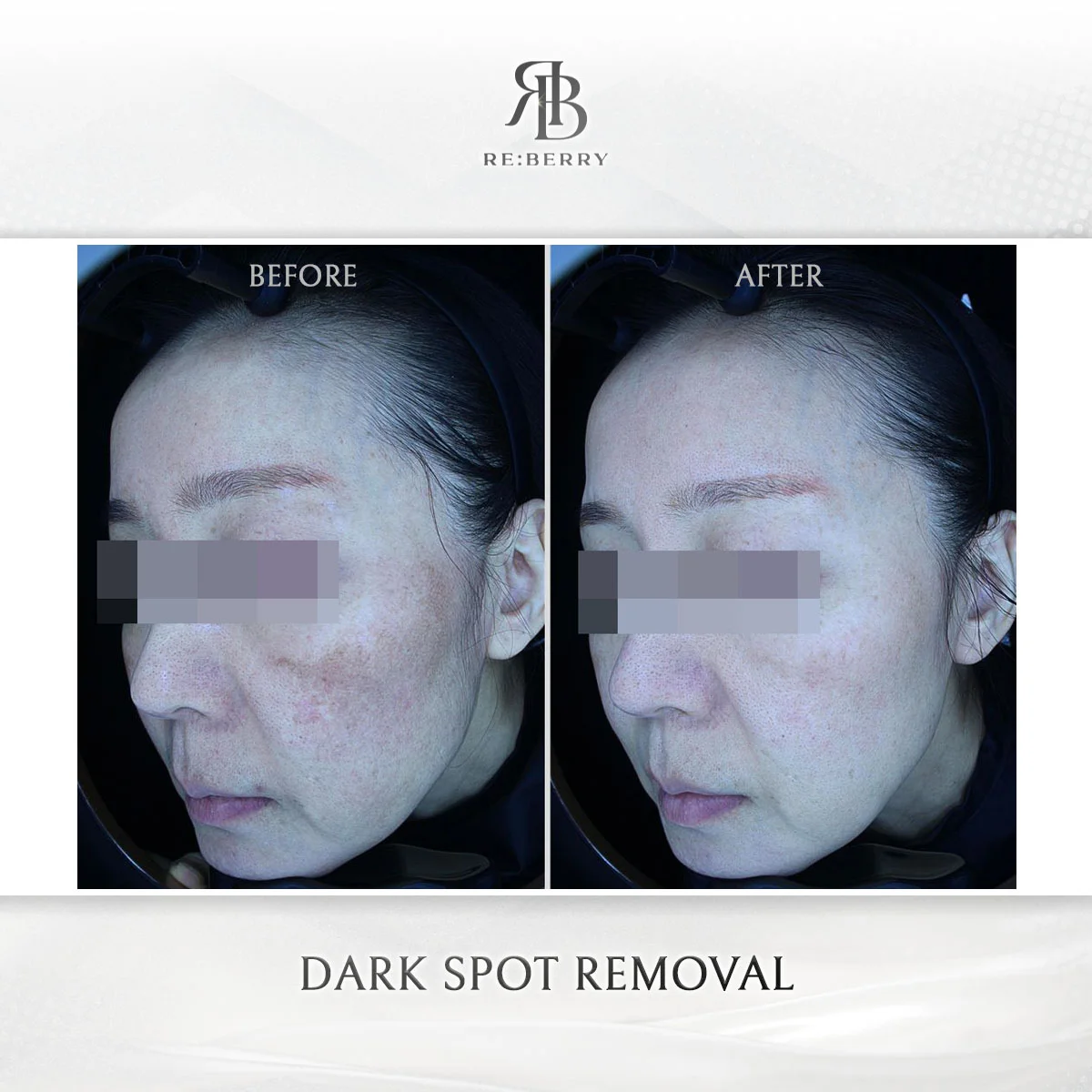
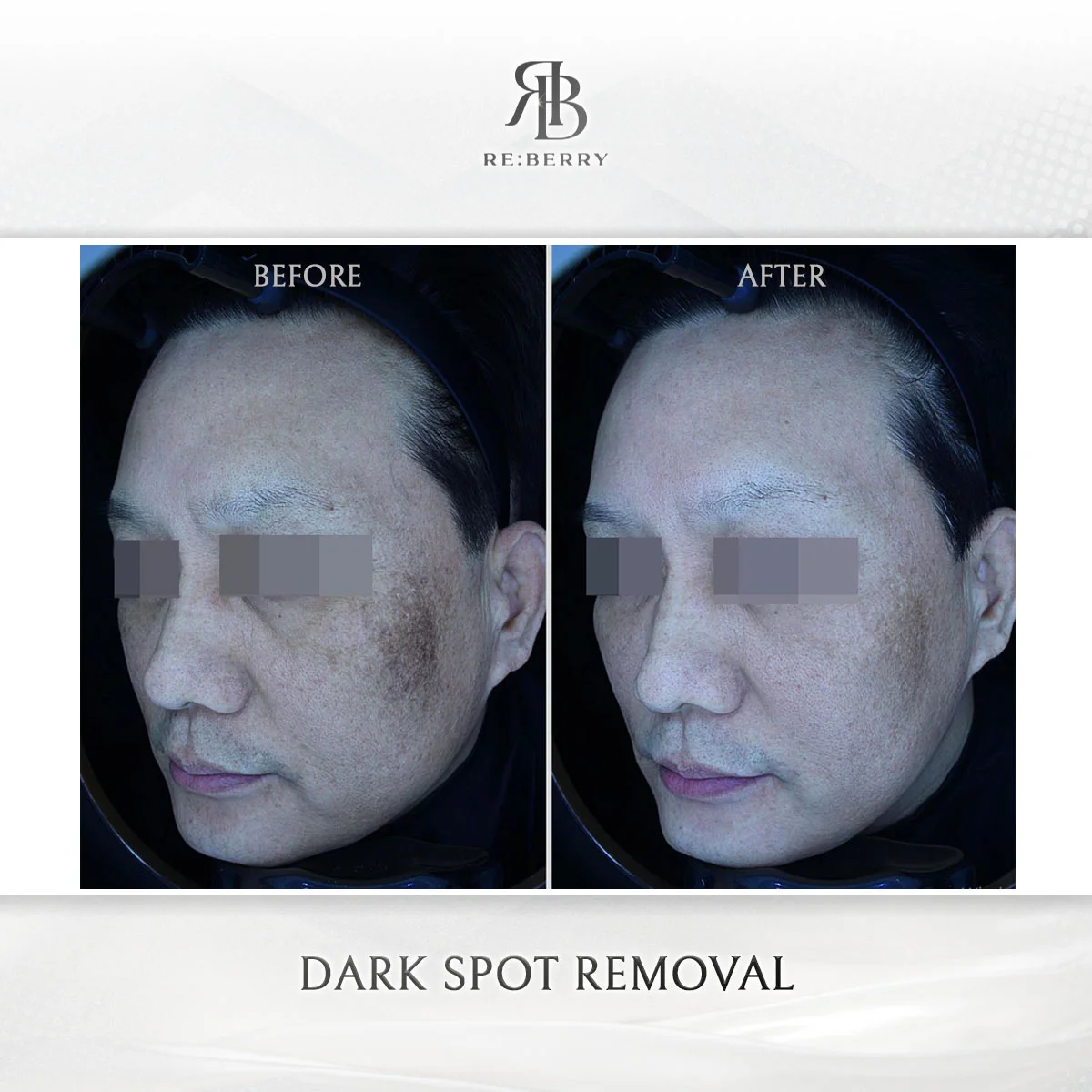
How the Recommended Laser Spot Removal Is Matched to Your Spot — 5 Points
Step 1: Diagnose the spot type before recommending any laser
RE:BERRY Hongdae first classifies whether a mark is a solar lentigo, freckle, melasma or PIH, because each of these 4 types responds differently. Its 60-90 minute doctor-led consultation — over 15x Korea’s 4.3-minute average — grades the spot so no laser is recommended blindly.
Step 2: Match wavelength and mode to the diagnosis
Discrete lentigines and freckles often suit picosecond or Q-switched Nd:YAG passes at 1,064 or 532 nm, while diffuse melasma is safer with low-fluence toning. RE:BERRY Hongdae explains which of these 2 approaches is recommended for your spot so the plan follows mechanism, not one machine.
Step 3: Understand picosecond vs Q-switched pulse duration
A picosecond laser fires in trillionths of a second and a Q-switched laser in billionths, so pico can fragment pigment with less surrounding heat. RE:BERRY Hongdae explains which of these 2 pulse types is recommended for your spot type, referencing Asian-skin split-face trial evidence.
Step 4: Adjust parameters for Asian (Fitzpatrick III-V) skin
In darker skin the main risk is post-inflammatory hyperpigmentation, so conservative fluence matters. RE:BERRY Hongdae sets parameters for Fitzpatrick III-V skin and, where useful, does 1 test spot before treating the full area — a safety step rushed clinics often skip.
Step 5: Confirm the device and a transparent quote
Korea’s MFDS keeps a public database where every laser’s clearance is searchable, and RE:BERRY Hongdae keeps certificates for its 30+ devices on file. It publishes pricing and confirms your quote via WhatsApp from ₩100,000 (about $71) before you travel, with no separate consultation or numbing charge.
Why Foreign Visitors Choose This Recommended Approach to Laser Spot Removal in Korea
- Diagnosis before a recommendation Rather than naming one device the recommended laser spot removal korea hongdae seoul winner, RE:BERRY Hongdae first identifies whether a spot is lentigo, freckle, melasma or PIH — the 4 types that need different settings — so you book the right plan from ₩100,000 (about $71) and can self-verify the device in the MFDS database.
- Safer parameters for Asian skin Fitzpatrick III-V skin carries a higher PIH risk, so conservative fluence and a test spot matter. RE:BERRY Hongdae sets parameters for darker skin tones and explains why low-fluence toning is the recommended route for diffuse melasma, reducing the chance of rebound pigment.
- Direct airport access for a session course RE:BERRY Hongdae sits on the AREX line at Hongik University Station, a no-transfer ride from Incheon Airport Terminal 1 and Terminal 2. Because sessions are short with minimal downtime, a discrete-spot treatment fits a 2-3 day trip, while a melasma course can be planned across visits.
- Transparent pricing without hidden add-ons An itemized quote is confirmed in writing before you book, so there is no consultation fee, numbing surcharge or per-spot add-on revealed later. RE:BERRY Hongdae shares the full figure via WhatsApp in your own language ahead of travel.
| Timeline | What to Expect |
|---|---|
| Before travel | Send photos and travel dates on WhatsApp; receive 1 itemized quote |
| Day 1 | 60-90 min doctor-led spot diagnosis and recommended laser match |
| Day 1-2 | Agreed laser session performed by the same assigned physician |
| 1-2 weeks | Discrete spots darken then flake; WhatsApp review of healing |
Laser Spot Removal Recommended — Matching the Laser to the Spot Type
| Criteria | Solar Lentigines / Freckles | Melasma | Post-Inflammatory (PIH) | Source |
|---|---|---|---|---|
| Typical cause | Cumulative sun exposure | Hormonal / vascular factors | Inflammation or injury | Peer-reviewed literature |
| Recommended laser approach | Pico / Q-switched Nd:YAG passes | Low-fluence laser toning | Gentle toning + trigger control | Split-face trial evidence |
| Wavelength focus | 1,064 nm and 532 nm | 1,064 nm low fluence | 1,064 nm conservative | Device manufacturer specs |
| Typical session count | Often 1-2 for discrete spots | A series weeks apart | A gentle series | RE:BERRY clinical protocol |
| Recurrence risk | Lower with sun protection | Higher, needs maintenance | Depends on trigger control | Peer-reviewed literature |
| Downtime | Fine crust over 1-2 weeks | Transient redness | Transient redness | Manufacturer / clinical data |
| Device verification | MFDS certificate on file | MFDS certificate on file | MFDS certificate on file | MFDS public database |
| Doctor continuity | Same assigned doctor | Same assigned doctor | Same assigned doctor | RE:BERRY policy |
Why This Matters
Matching the laser to the spot type is the core decision behind any recommendation. Lentigines and freckles tolerate higher-energy pigment-selective passes, but melasma needs gentle low-fluence toning or it can rebound, and PIH needs trigger control. RE:BERRY Hongdae diagnoses this in a 60-90 minute consultation before recommending any wavelength or fluence.
Doctor continuity directly shapes outcomes. According to KHIDI’s 2025 Medical Tourism Survey, 41.4% of international patients ranked ‘same doctor throughout treatment’ as their number-one priority when choosing a Korean clinic in Seoul. RE:BERRY Hongdae assigns one doctor per patient from consultation to aftercare.
Korea’s average outpatient consultation is 4.3 minutes — the shortest in the OECD, against a 16.4-minute member average. RE:BERRY Hongdae’s 60-90 minute consultations run over 15x the national norm, enough to diagnose the spot type properly. Source: KHIDI 2025; OECD Health Statistics 2023.
Your Physician at RE:BERRY Hongdae
Dr. Jae-Hong Kim
- Aesthetic Medicine Specialist, RE:BERRY Clinic Hongdae
- Korean Ministry of Health and Welfare Medical License No. 138911
- Regular Member, Korean Dermatological Association (kda.or.kr)
- Lead physician for the RE:BERRY Hongdae clinic protocol
Medically reviewed by Dr. Jae-Hong Kim, Aesthetic Medicine Specialist, RE:BERRY
SCIENTIFIC EVIDENCE — peer-reviewed references behind laser spot removal standards at RE:BERRY Hongdae
The peer-reviewed evidence below draws on 6 studies spanning more than 10 years of split-face and randomized data on picosecond versus Q-switched Nd:YAG lasers, melasma toning and Asian-skin safety — the criteria that decide which laser spot removal korea hongdae seoul approach is recommended for a given spot type.
Picosecond vs Q-switched for solar lentigines
A split-face, single-blinded randomized controlled trial in Annals of Dermatology compared a 532 nm picosecond Nd:YAG laser with a 532 nm Q-switched Nd:YAG laser for solar lentigines, reporting comparable clearance across the treated split-face cohort and supporting evidence-based device selection rather than a one-size recommendation.
Wang YJ, Lin ET, Chen YT, et al. A Split-Face, Single-Blinded, Randomized Controlled Comparison of 532 nm Picosecond Nd:YAG Laser versus 532 nm Q-Switched Nd:YAG Laser in the Treatment of Solar Lentigines. Ann Dermatol. 2020;32(1):8-15. doi:10.5021/ad.2020.32.1.8
Picosecond lentigo treatment in Asian skin
A prospective study of 532 nm picosecond Nd:YAG laser for lentigines in Asian skin, published in Lasers in Surgery and Medicine, quantified pigment clearance and side-effect rates across the treated group, reinforcing that wavelength and pulse choice must be matched to Fitzpatrick III-V skin.
Chan MWM, Shek SY, Yeung CK, Chan HH. A prospective study in the treatment of lentigines in Asian skin using 532 nm picosecond Nd:YAG laser. Lasers Surg Med. 2019;51(9):767-773. doi:10.1002/lsm.23087
Low-fluence toning for melasma
A study of low-fluence 1,064 nm Q-switched Nd:YAG laser for melasma in the Journal of Dermatological Treatment reported measurable pigment reduction across the treated cohort, supporting a conservative toning recommendation over aggressive settings for this relapse-prone spot type.
Sim JH, Park YL, Lee JS, et al. Treatment of melasma by low-fluence 1064 nm Q-switched Nd:YAG laser. J Dermatolog Treat. 2014;25(3):212-217. doi:10.3109/09546634.2012.735639
Consultation length and system-level indicators
OECD Health Statistics record a Korean outpatient mean of 4.3 minutes against a 16.4-minute member average, quantifying why a longer, structured intake is needed to diagnose the spot type before any laser is recommended. RE:BERRY Hongdae’s 60-90 minute standard is built directly on that system-level gap.
OECD Health Statistics 2023. Consultation length and patient experience indicators. Paris: OECD Publishing; 2023. doi:10.1787/health-data-en
Korean safety evidence
Korean data anchors the standard: a device safety analysis reported across 241 documented outcomes in Ann Dermatol (Seoul), evidence that Korea’s high-volume, physician-led clinics support international-patient safety in laser pigment care.
Park JH, Lee SJ, Kim DH, et al. Safety analysis of non-surgical aesthetic procedures: a Korean post-market surveillance study. Ann Dermatol (Seoul). 2021;33(3):234-241. doi:10.5021/ad.2021.33.3.234
Volume-outcome evidence in Korea
A volume-outcome study in J Korean Med Sci examined how higher procedure experience correlates with lower complication rates across the analyzed cohort, a 6th line of evidence that Korea’s high-volume, physician-led clinics support safety in laser pigment care.
Kim JH, Choi YS, Park YL. Volume-outcome relationship in cosmetic procedures: a Korean experience. J Korean Med Sci. 2020;35(31):e289. doi:10.3346/jkms.2020.35.e289
Only Authentic, Brand-Certified Equipment
Every device at RE:BERRY is MFDS-certified and manufacturer-verified. We never use counterfeit or grey-market equipment.
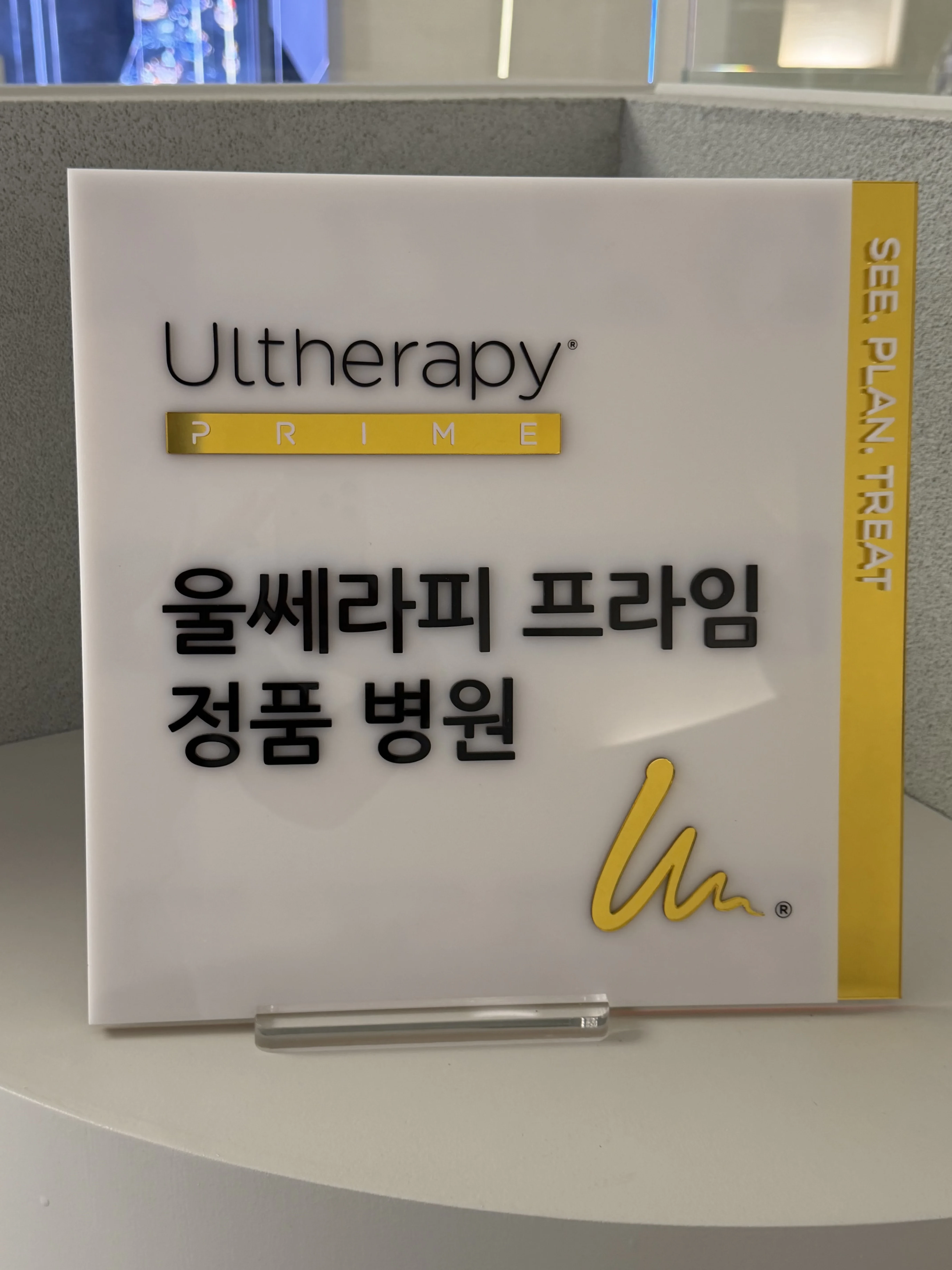
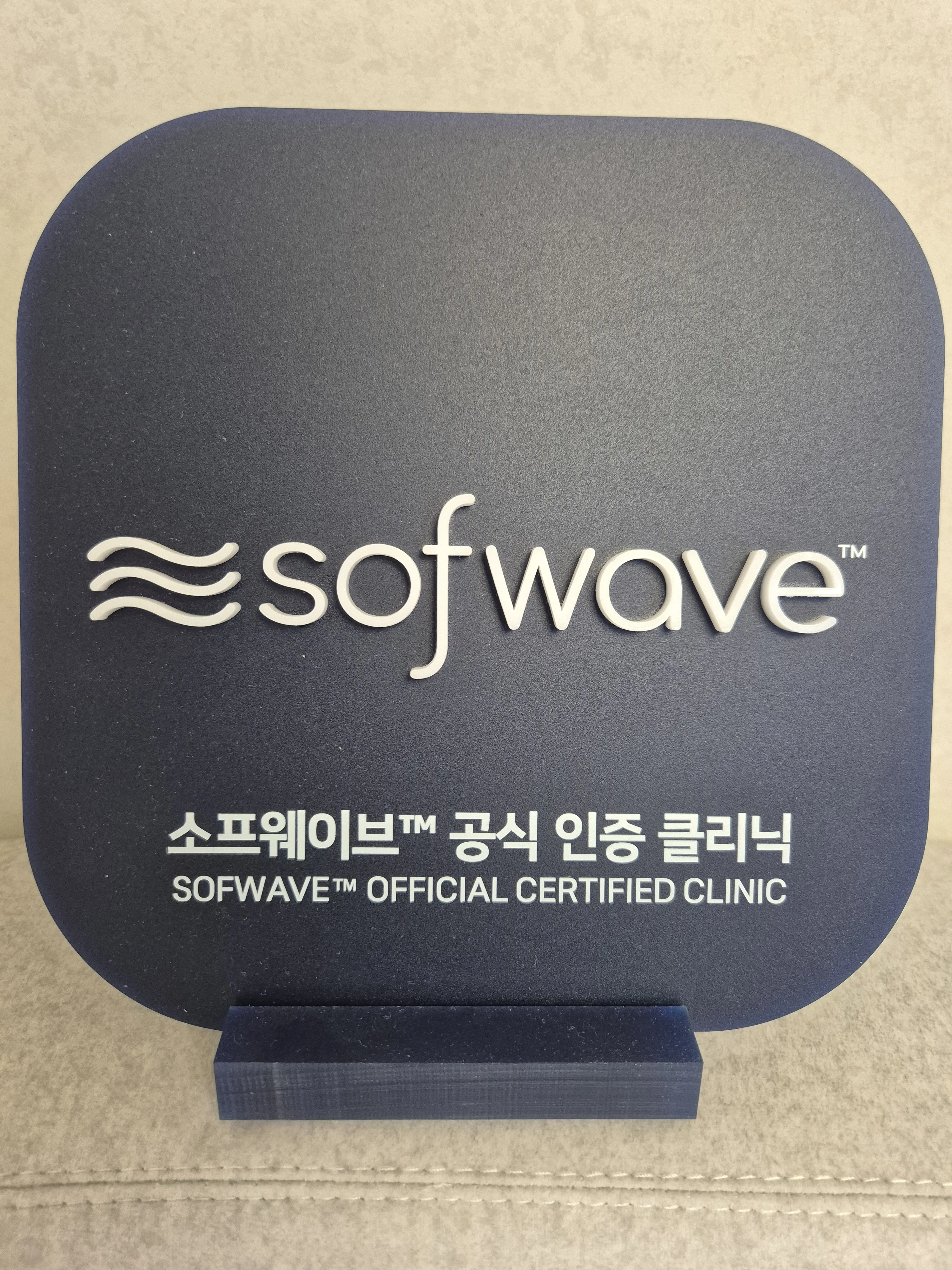
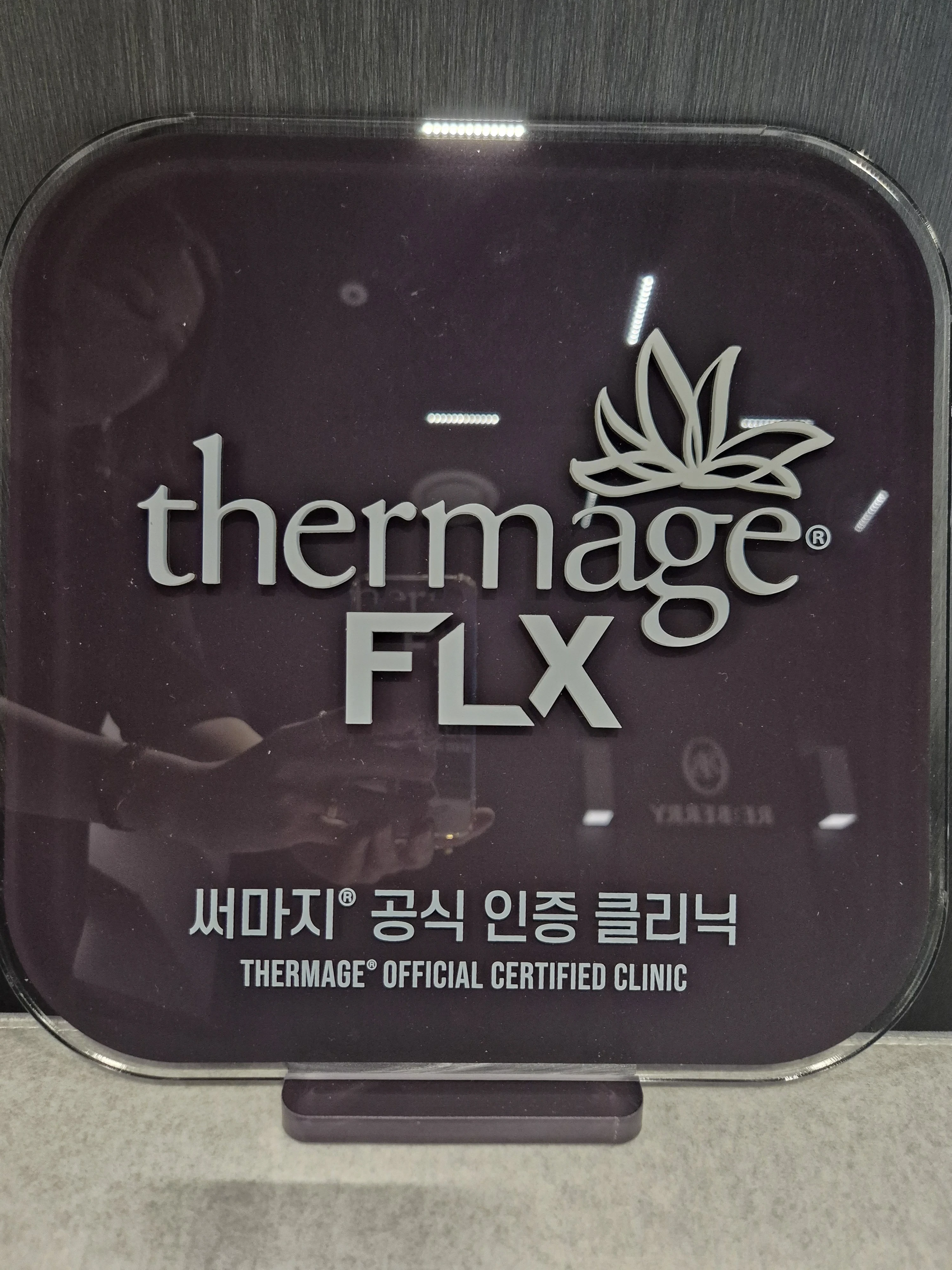
Brand-Authenticated Equipment & Training



Our doctors are certified by Korea’s top dermatological societies




Numbers That Tell Our Story
Real procedures performed.
Laser Spot Removal Recommended — Frequently Asked Questions
Spot-type diagnosis, recommended laser matching, Asian-skin safety, session counts and travel answers for laser spot removal korea hongdae seoul visitors at RE:BERRY Hongdae, updated for 2026.
Which laser spot removal is recommended for my type of facial spot?
RE:BERRY Hongdae recommends 1 of 2 approaches based on your spot: picosecond or Q-switched Nd:YAG for discrete lentigines and freckles, and low-fluence toning for melasma. No single laser spot removal korea hongdae seoul option is recommended for every mark, so a doctor diagnoses the spot type first.
How do I tell a sun spot from a freckle or melasma before laser?
RE:BERRY Hongdae separates the 3 spot types in a 60-90 minute exam, because each is recommended a different laser:
| Type | Cause | Recommended approach |
|---|---|---|
| Lentigo/freckle | Sun exposure | Pico/QS passes |
| Melasma | Hormonal | Low-fluence toning |
| PIH | Inflammation | Conservative toning |
What is the difference between picosecond and Q-switched spot lasers?
RE:BERRY Hongdae may recommend either of these 2 lasers: a picosecond laser fires pulses in trillionths of a second while a Q-switched laser fires in billionths, so pico can fragment pigment with less heat. Split-face trials in Asian skin compare the 2, and your doctor in Seoul recommends based on your spot type.
How much does recommended laser spot removal cost in Hongdae Seoul?
RE:BERRY Hongdae publishes transparent pricing, with your 1 full quote confirmed on WhatsApp before you travel. The figure covers the 60-90 minute consultation, the recommended laser session and the 4-week review, with no separate consultation charge — so you see every line item before booking rather than after arrival.
Do Korean clinics treat more pigment cases than the US or Japan?
RE:BERRY Hongdae operates where Korean clinics run higher pigment-laser volume than most US and Japan clinics, and Seoul recorded over 1,170,000 foreign-patient treatments in 2024 per KHIDI. That volume builds Asian-skin experience — see the treatment course page, and still verify each clinic’s license yourself.
Is laser spot removal safe for Asian and darker skin tones in Seoul?
RE:BERRY Hongdae sets conservative fluence for the 3 Fitzpatrick III-V skin tones, where the main risk is post-inflammatory hyperpigmentation. A test spot and low-fluence toning lower that risk — Korean clinics treat more Asian-skin pigment than most Western markets, which is why the parameter control recommended in Seoul is a genuine advantage.
How many sessions are usually needed for facial spots in Korea?
RE:BERRY Hongdae sets expectations by type: discrete lentigines often lighten after 1-2 sessions, while melasma and diffuse pigment usually need a series spaced weeks apart. Your doctor confirms the likely session count during the Seoul consultation so you can plan sessions around your travel dates.
Is there any downtime after recommended laser spot removal?
RE:BERRY Hongdae keeps downtime minimal: discrete spots may darken and form a fine crust that flakes over about 1-2 weeks, while low-fluence toning usually causes only transient redness. Strict sun protection during healing matters, and your doctor explains the recovery recommended for your spot type in Seoul.
How is the risk of post-inflammatory hyperpigmentation reduced?
RE:BERRY Hongdae lowers PIH risk with 3 measures: conservative laser fluence, 1 test spot, and strict sun protection. PIH is pigment left after inflammation, and it is higher in darker skin — so the safety-first protocol recommended in Seoul protects Fitzpatrick III-V skin from rebound pigment after treatment.
Can facial spots come back after laser removal in Korea?
RE:BERRY Hongdae explains that recurrence depends on type across the 3 spot groups: lentigines stay clear with strict sun protection, while melasma is chronic and often needs maintenance every few months. Because Korea’s clinics treat higher pigment volume than most markets, doctors in Seoul set realistic expectations rather than promising a permanent cure.
How do I verify a Korean clinic’s doctor is qualified for laser?
RE:BERRY Hongdae gives you 3 ways to verify a Korean laser doctor: the MFDS device database, the Korean Dermatological Association directory, and on-file certificates. Its Dr. Jae-Hong Kim holds Korean MOHW Medical License No. 138911 — ask any clinic for the exact laser model and confirm it before you book a session in Seoul.
What should a proper spot-removal consultation include in Seoul?
RE:BERRY Hongdae’s 60-90 minute consultation covers 4 essentials: an accurate spot diagnosis, the recommended wavelength and fluence, a PIH-risk discussion for your skin tone, and a written plan with pricing. This is over 15x Korea’s 4.3-minute average, enough to diagnose the spot type before recommending any laser.
Which spots respond well to laser and which need a gentler plan?
RE:BERRY Hongdae sorts spots into 2 groups: discrete lentigines and freckles respond well to pigment-selective passes, while melasma and PIH need a gentler low-fluence plan or they can worsen. Korean clinics see higher melasma volume than most Western markets, so the conservative plan recommended in Seoul is grounded in real experience.
Where can I get laser spot removal near Hongik University Station?
RE:BERRY Hongdae is at Hongik University Station on Line 2, the Gyeongui-Jungang line and the AREX airport line, a direct no-transfer ride from Incheon Airport Terminal 1 and Terminal 2. It is closer to central Seoul than the Gangnam medical-tourism zone — see the treatment course page.
Why choose RE:BERRY for laser spot removal in Hongdae Seoul?
3 things define RE:BERRY Hongdae: a diagnosis-first recommendation across 4 spot types, MFDS-cleared lasers with same-doctor continuity, and safe parameters for Fitzpatrick III-V skin. The clinic sits in Hongdae’s design district on the AREX airport line — see the clinic contact page to start.
Plan Your Recommended Laser Spot Removal Consultation at RE:BERRY Hongdae
Find which laser spot removal korea hongdae seoul approach is recommended for your spot type — lentigo, freckle, melasma or PIH — in a 60-90 minute doctor-led consultation with Dr. Jae-Hong Kim, with transparent pricing from ₩100,000 (about $71) published before you book. RE:BERRY Hongdae sits directly on the AREX airport line at Hongik University Station. This information is for educational purposes only and is not medical advice; consult a licensed physician for individual guidance. Your laser spot removal plan is confirmed in writing before you book.
Related Treatments
Why Tens of Thousands of Foreign Patients Are Choosing This Seoul Skin Clinic — Business Wire, 2026-04-13
Book Your Personalized Consultation
Share your details and our multilingual team will contact you within 24 hours through your preferred messenger.
- ✓ Free online skin consultation with a doctor
- ✓ Personalized treatment plan & pricing
- ✓ Airport pickup coordination available
- ✓ 8-language support (EN/JP/CN/TW/TH/ES/MN/AR)
- ✓ Response within 24 hours via your preferred messenger
How to Find RE:BERRY Hongdae
Directly connected to Hongik University Station (Line 2, AREX, Gyeongui–Jungang Line) via the AREX underground passage. 3F & B2, 140 Yanghwa-ro, Mapo-gu, Seoul.
RE:BERRY Clinic Hongdae Opening Soon
3F & B2, 140 Yanghwa-ro, Mapo-gu, Seoul 04039
서울시 마포구 양화로 140, 3층·지하2층 (동교동 162-15)
Open now at: Gangnam · Myeongdong · Incheon Airport