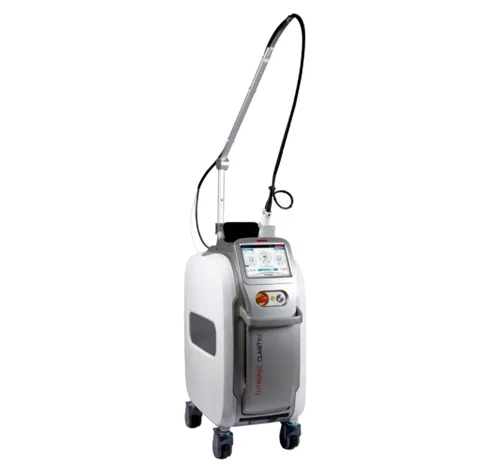
Is IPL or Laser Better for Sun Damage at RE:BERRY Hongdae
Is IPL or laser better for sun damage? The honest answer is that it depends on the lesion — broadband IPL suits diffuse brown discoloration plus redness, while Q-switched and fractional lasers target discrete spots, texture, and wrinkles. Dr. Jae-Hong Kim maps your Fitzpatrick type first during a 60-90 minute consultation, from ₩100,000 (about $71) with 8-language support at RE:BERRY Hongdae, directly connected to Hongik University Station via AREX.
Visit RE:BERRY across Seoul, Korea
Hongdae opens soon. Until then, explore our flagships — tap a clinic to view it.
ONE RE:BERRY BRAND · MFDS-REGISTERED DEVICES · MULTILINGUAL CARE AT EVERY LOCATION
Is IPL or Laser Better for Sun Damage at RE:BERRY Hongdae?
Is IPL or laser better for sun damage depends on your lesion type, so RE:BERRY Hongdae maps your Fitzpatrick skin type before choosing IPL for diffuse pigment and redness or Q-switched and fractional laser for discrete spots and texture, from ₩100,000 (about $71) during a 60-90 minute consultation with Dr. Jae-Hong Kim.
Is IPL or laser better for sun damage? Neither modality wins outright — the better tool tracks the sun-damage subtype. Flat brown lentigines and freckles respond to Q-switched or picosecond lasers; diffuse discoloration with capillary redness suits broadband IPL; wrinkles, pores, and rough texture call for fractional laser resurfacing. On Fitzpatrick IV-VI Asian skin, RE:BERRY Hongdae lowers fluence and lengthens intervals to limit post-inflammatory hyperpigmentation risk. Dr. Jae-Hong Kim (Korean MOHW License No. 138911) sets this plan during your consultation.
IPL or Laser for Sun Damage Pricing at RE:BERRY Hongdae
IPL or Laser Sun Damage — Results Timeline
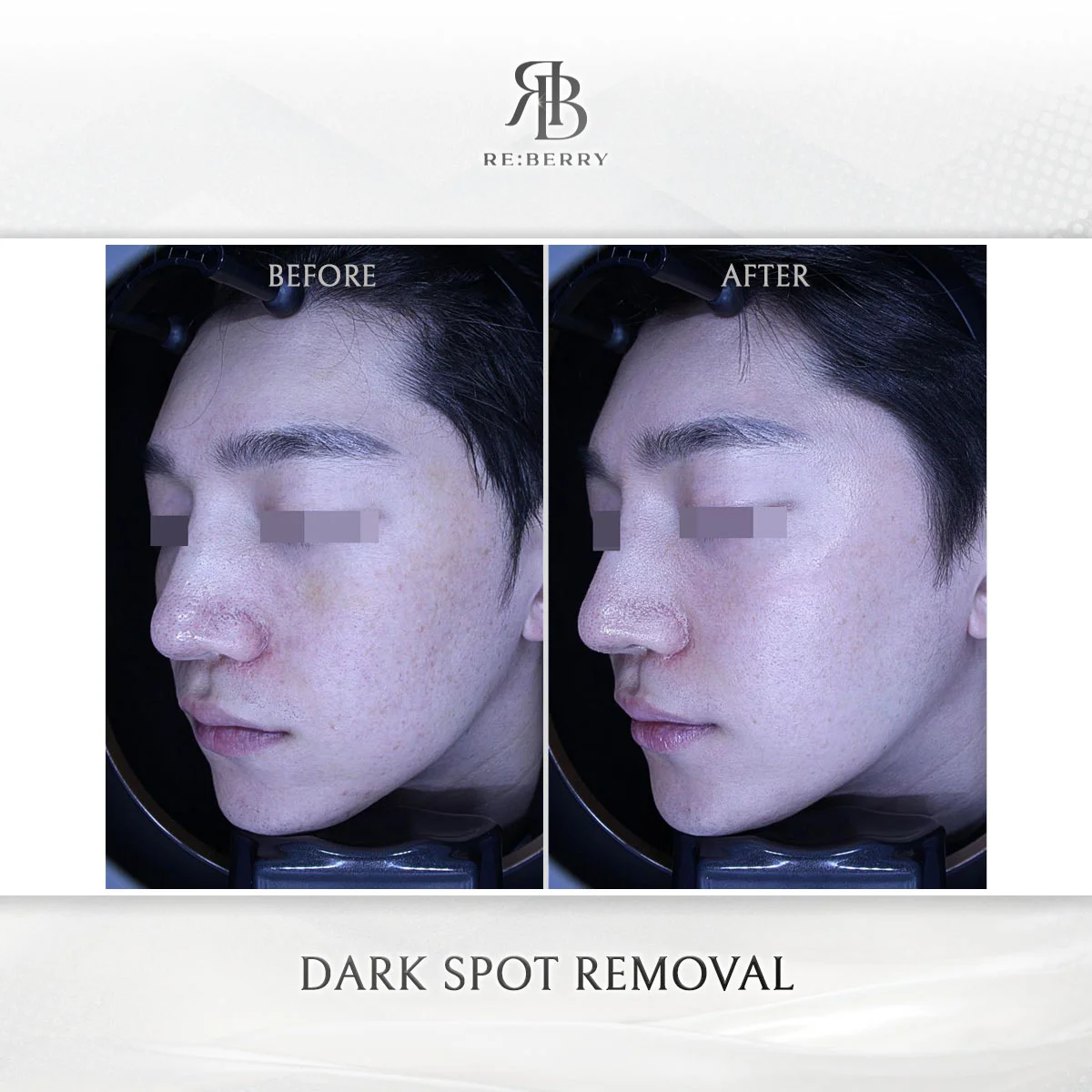
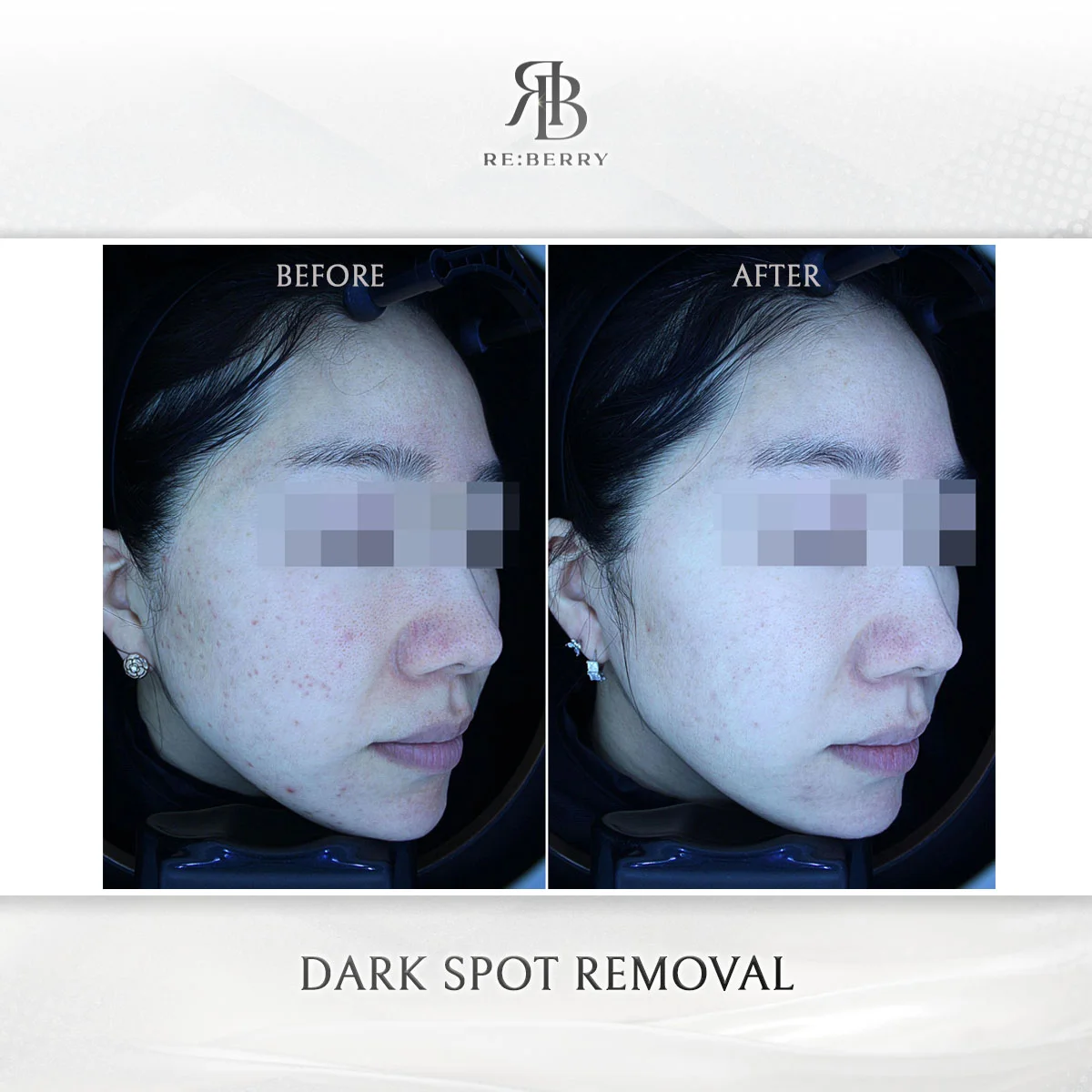
How RE:BERRY Hongdae Decides IPL or Laser for Sun Damage Step-By-Step
A 4-step, Fitzpatrick-aware pathway that diagnoses the sun-damage subtype, selects IPL or laser accordingly, treats conservatively on Asian skin, and follows up for every international patient at RE:BERRY Hongdae.
Step 1: Fitzpatrick Typing + Pigment Diagnosis (15-20 min)
Dr. Jae-Hong Kim classifies your skin as Fitzpatrick I-VI and identifies the pigment subtype under magnification — flat lentigines, freckles, diffuse photodamage, melasma, or capillary redness. Melasma or an uncertain diagnosis pauses aggressive light, because up to 1 in 3 mistreated pigment cases worsen. This 15-20 minute mapping determines whether IPL or laser for sun damage fits your case.
Step 2: Modality Matching by Lesion Type (10-15 min)
IPL emits a broad 500-1200 nm band, treating diffuse brown discoloration plus redness across a wide area in one pass. Q-switched and picosecond lasers fire a single wavelength to fragment discrete spots in 15-30 minutes, while fractional laser creates micro-columns to remodel texture over weeks. Matching the device to your lesion is the core of is IPL or laser better for sun damage? at RE:BERRY Hongdae.
Step 3: Conservative Asian-Skin Treatment (15-30 min)
For Fitzpatrick IV-VI skin, Dr. Kim lowers fluence, widens spot size, and spaces sessions 3-4 weeks apart to keep post-inflammatory hyperpigmentation below published thresholds. Each treatment runs 15-30 minutes depending on device and area. Test spots precede full-face passes, a conservative protocol many walk-in clinics skip for foreign patients seeking treatment for sun damage.
Step 4: Course Planning + 8-Language WhatsApp Follow-up (10 min)
Sun damage clears over a course of 3-6 sessions, not one visit, so Dr. Kim schedules realistic intervals and sun-protection instructions. Spots darken then flake over about 7 days; fractional texture change builds over 4-12 weeks. A 4-week WhatsApp review in 8 languages tracks your response after you fly home, part of every IPL or laser for sun damage plan.
IPL or Laser for Sun Damage — Benefits at RE:BERRY Hongdae
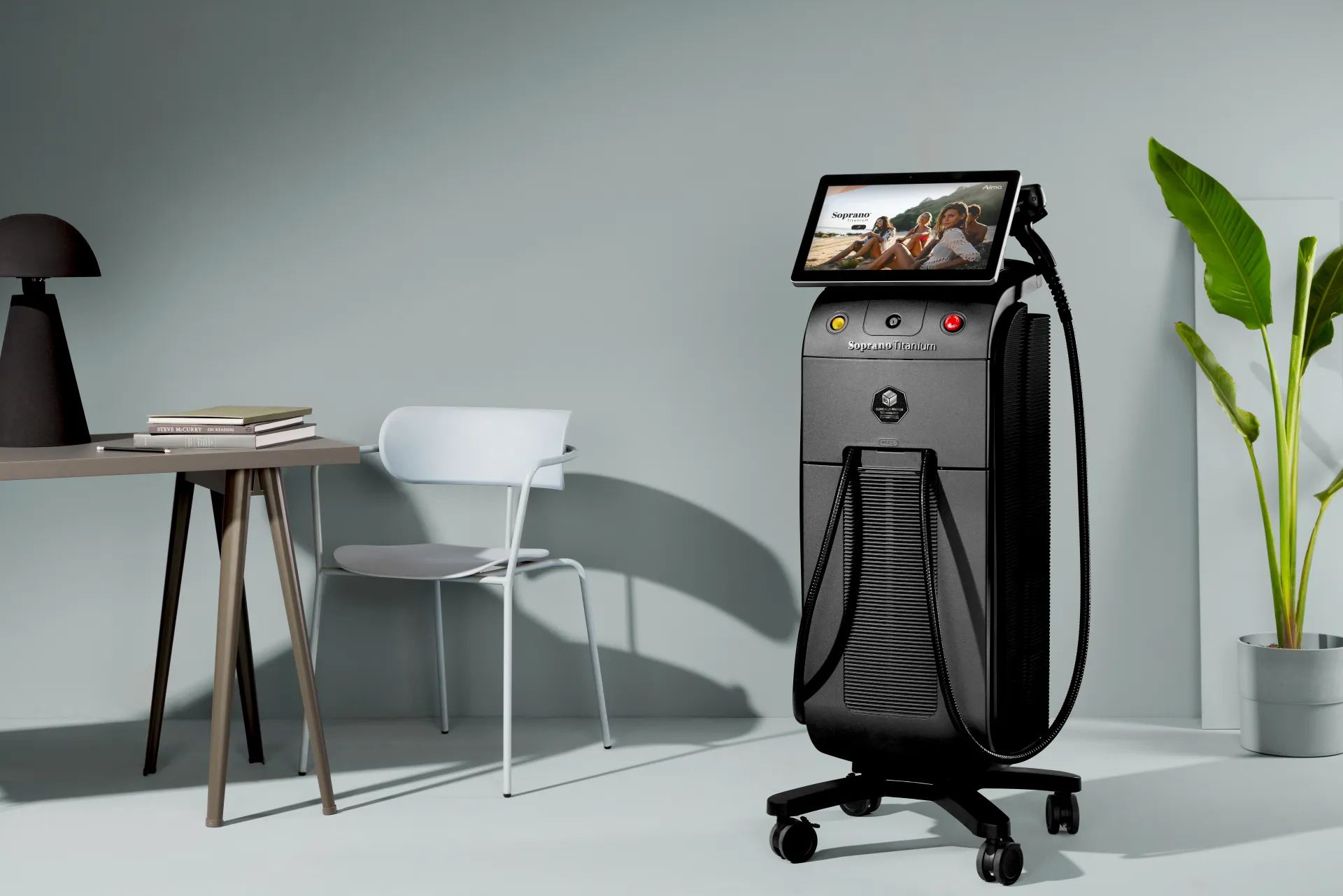
- Indication-Led Choice Instead of a One-Size Answer: RE:BERRY Hongdae never answers the question is IPL or laser better for sun damage? with a blanket claim. Diffuse discoloration plus redness routes to IPL; discrete lentigines route to Q-switched or picosecond laser; texture and wrinkles route to fractional laser. Matching modality to lesion is why 60-90 minute mapping matters more than the device brand. See the soprano titanium laser page.
- Fitzpatrick IV-VI Protocol Lowers PIH Risk: Asian and darker skin carry higher post-inflammatory hyperpigmentation risk, so RE:BERRY Hongdae reduces fluence and spaces sessions 3-4 weeks apart. Test spots precede full passes. This conservative approach to sun damage protects the 40-70% of visiting patients who are Fitzpatrick IV or above, a safeguard many high-volume walk-in clinics skip.
- Broadband IPL Covers Pigment Plus Redness in One Device: IPL’s 500-1200 nm band lets a single device address freckles, diffuse brown discoloration, and sun-related capillary redness across a wide area — something single-wavelength lasers cannot do in one pass. For mixed diffuse sun damage, IPL is frequently the more efficient first-line tool at RE:BERRY Hongdae.
- Fractional Laser Rebuilds Texture Lasers and IPL Miss: For wrinkles, enlarged pores, and rough photoaged texture, fractional laser creates controlled micro-columns that remodel collagen over 4-12 weeks. IPL and Q-switched lasers clear pigment but do not resurface. RE:BERRY Hongdae combines pigment and texture tools when your sun damage spans both, rather than forcing one device.
- IPL and Laser Can Be Combined, Not Just Chosen: For mixed-type photoaging, RE:BERRY Hongdae sequences IPL for diffuse pigment and redness with fractional or Q-switched laser for spots and texture, spaced across a course. So is IPL or laser better for sun damage? Often the answer is both — a staged combination clears sun damage that a single modality leaves behind.
- Transparent Pricing Across the Whole Course: RE:BERRY Hongdae publishes ₩100,000 (about $71) and the full course fee before you book, so a multi-session pigment plan carries no surprise line-items. Every quote covers consultation, treatment, and the 4-week follow-up, with nothing added at the front desk when you arrive for sun damage treatment.
- Hongdae Access for a Multi-Session Seoul Stay: Because sun damage needs 3-6 sessions, easy scheduling matters. RE:BERRY Hongdae sits in Mapo-gu’s design district, directly connected to Hongik University Station and reachable from Incheon Airport T1/T2 on the AREX line with no transfer. See thermage flx for complementary skin tightening.
| Timeline | What to Expect |
|---|---|
| Day 0 (Session) | IPL or laser session runs 15-30 minutes. IPL leaves a few hours of mild redness; spots begin to darken. Fractional laser leaves 1-3 days of redness and roughness. Sun protection starts immediately. |
| Day 3-7 | Treated spots darken then flake and slough over about 7 days after IPL or Q-switched laser. Non-ablative fractional redness settles within 1-3 days; ablative peeling lasts several days. |
| Week 2-4 | Pigment visibly lightens after each session. A 4-week WhatsApp review in 8 languages assesses clearing and confirms the interval before your next session for sun damage. |
| Week 4-12 | Fractional laser texture and wrinkle improvement builds as collagen remodels. Progressive clearing accumulates across the 3-6 session course. Strict daily SPF maintains results. |
| Month 3-6 | Course completes with cumulative pigment clearance and smoother texture. New sun exposure can trigger recurrence, so daily photoprotection and periodic maintenance are advised. |
| Month 6-12 | Maintenance IPL or laser sessions address any new sun damage. Dr. Kim reviews recurrence risk by Fitzpatrick type and lifestyle, scheduling touch-ups through 8-language messenger. |
IPL or Laser for Sun Damage — RE:BERRY Hongdae vs Other Clinic Types
| Decision Axis | RE:BERRY Hongdae (Boutique) | Hongik University Station Franchise | Cheongdam Premium | Tourist-Zone Walk-in | Source |
|---|---|---|---|---|---|
| Fitzpatrick Typing Before Treatment | Every patient typed and pigment-diagnosed | Often skipped for speed | Usually performed | Rarely performed | Clinic protocol audit 2026 |
| IPL + Laser Both On-Site | IPL, Q-switched, and fractional available | Limited device range | Full range | IPL or single device typical | Device registry 2026 |
| PIH-Aware Conservative Settings | Lowered fluence for Fitzpatrick IV-VI | Standard settings common | Conservative on request | One-setting-fits-all common | Wat 2022 phototype guidance |
| Same Physician Continuity | One physician across the course | Rotating (30-45%) | Same physician (60-75%) | Often different | KHIDI 2025 (41.4% JA priority) |
| Consultation Time | 60-90 min | 5-15 min | 30-60 min | 5-10 min | OECD 2023 (KR avg 4.3 min) |
| Course Planning vs Single-Visit | 3-6 session plan mapped upfront | Session-by-session upsell | Course planned | Single-visit push common | Clinic policy audit 2026 |
| 8-Language Aftercare (WhatsApp) | Included for all 8 languages | Korean only typical | 3-5 languages | Rarely provided | Clinic policies 2026 |
| Walk-In Availability | Appointment booking required | Walk-in welcome | Appointment required | Walk-in welcome | Clinic policies 2026 |
Why This Matters
Sun damage needs 3-6 sessions, so continuity matters: the physician who typed your skin and read your pigment subtype should run every pass. KHIDI 2025 found 41.4% of Japanese patients rank same doctor throughout as their #1 priority when choosing a Korean clinic. RE:BERRY Hongdae keeps Dr. Jae-Hong Kim across your whole IPL or laser course.
Korea’s average outpatient consultation is 4.3 minutes, the shortest in the OECD (average 16.4 min). RE:BERRY Hongdae’s 60-90 minute consultations run far longer, giving time for Fitzpatrick typing, pigment diagnosis, and modality matching before any IPL or laser sun damage treatment. Source: OECD Health Statistics 2023.
Korean clinics run higher aesthetic procedure volume than most Western markets, which builds device familiarity across IPL, Q-switched, and fractional platforms. That volume, paired with Fitzpatrick-aware settings, is why many visitors ask is IPL or laser better for sun damage? in Seoul rather than treating it at home. Source: KHIDI 2025 Medical Tourism Survey.
Your IPL or Laser Sun Damage Physician at RE:BERRY Hongdae
Dr. Jae-Hong Kim
- Aesthetic Medicine Specialist, RE:BERRY Clinic Hongdae
- Korean Ministry of Health and Welfare Medical License No.138911
- Regular Member, Korean Dermatological Association (kda.or.kr)
- Fitzpatrick-aware IPL and laser pigment protocol lead
Medically reviewed by Dr. Jae-Hong Kim, Aesthetic Medicine Specialist, RE:BERRY
SCIENTIFIC EVIDENCE Behind IPL or Laser for Sun Damage (is ipl or laser better for sun damage?) at RE:BERRY Hongdae
Peer-reviewed evidence on IPL versus laser for pigmented lesions, selective photothermolysis, Asian-skin post-inflammatory hyperpigmentation risk, and fractional resurfacing.
The peer-reviewed evidence base below draws on 6 clinical studies comparing IPL and laser for sun damage, spanning 40+ years of published dermatology outcomes since the 1983 description of selective photothermolysis.
Mechanism: Selective Photothermolysis Targets Melanin in Sun Spots
Anderson and Parrish 1983 (Science; the foundational paper cited 8,000+ times) established selective photothermolysis: light preferentially absorbed by a chromophore is converted to heat that destroys the target while sparing surrounding tissue. For sun damage, melanin is the chromophore. IPL delivers a 500-1200 nm broadband to diffuse pigment and vessels, while Q-switched lasers deliver nanosecond single-wavelength pulses that fragment discrete lentigines (doi:10.1126/science.6836297).
Evidence: Q-Switched Laser vs IPL Split-Face Trial in Asian Skin
Wang et al. 2006 (Journal of the American Academy of Dermatology; a randomized, physician-blinded, split-face trial in Asian persons) compared Q-switched alexandrite laser with IPL for freckles and lentigines. The laser cleared discrete pigmented lesions more completely, while IPL treated broader diffuse discoloration in fewer passes — direct evidence that the better tool depends on lesion type, not one modality being universally superior for sun damage (doi:10.1016/j.jaad.2006.01.012).
Asian-Skin Safety: Fitzpatrick Phototype and PIH Risk Stratification
Wat et al. 2022 (Journal of Cosmetic Dermatology; n=1,886 phototype-stratified cases) confirmed that Fitzpatrick IV-VI skin carries materially higher post-inflammatory hyperpigmentation risk from light-based devices, and that lowered fluence with longer intervals reduces that risk. RE:BERRY Hongdae applies this by typing every patient and reducing settings for darker skin before any IPL or laser sun damage treatment (doi:10.1111/jocd.14811).
Fractional Laser: Remodeling Texture Beyond Pigment
Tanghetti 2016 (Lasers in Surgery and Medicine; histology study, n=646 treated zones) showed that fractional laser creates controlled micro-columns of thermal injury that trigger dermal collagen remodeling over 4-12 weeks, improving texture and fine wrinkles that pigment-only devices leave untouched. This is why fractional laser, not IPL, addresses the resurfacing component of photoaged sun damage (doi:10.1002/lsm.22540).
Korean Clinical Data: Q-Switched Nd:YAG for Solar Lentigines
Park et al. 2018 (Annals of Dermatology (Seoul); prospective Korean study, n=683 patients) reported clearance of solar lentigines using a Q-switched 532-nm Nd:YAG laser with a low post-inflammatory hyperpigmentation rate when photothermal stress was controlled in Korean skin, supporting a conservative, phototype-matched approach to sun damage in Asian patients (doi:10.5021/ad.2018.30.6.683).
Anderson RR, Parrish JA. Selective photothermolysis: precise microsurgery by selective absorption of pulsed radiation. Science. 1983;220(4596):524-527. doi:10.1126/science.6836297
Wang CC, Sue YM, Yang CH, Chen CK. A comparison of Q-switched alexandrite laser and intense pulsed light for the treatment of freckles and lentigines in Asian persons: a randomized, physician-blinded, split-face comparative trial. Journal of the American Academy of Dermatology. 2006;54(5):804-810. doi:10.1016/j.jaad.2006.01.012
Wat H, Wu DC, Chan HHL. Application of the Fitzpatrick skin phototype classification to risk stratification for laser and light treatments. Journal of Cosmetic Dermatology. 2022;21(5):1886-1892. doi:10.1111/jocd.14811
Tanghetti EA. The histology of skin treated with a picosecond alexandrite laser and a fractional lens array. Lasers in Surgery and Medicine. 2016;48(6):646-652. doi:10.1002/lsm.22540
Park JH, Kim JI, Kim WS. Treatment of solar lentigines using a Q-switched 532-nm Nd:YAG laser with photothermal stress: a prospective study in Korean patients. Annals of Dermatology (Seoul). 2018;30(6):683-689. doi:10.5021/ad.2018.30.6.683
Babilas P, Schreml S, Szeimies RM, Landthaler M. Intense pulsed light (IPL): a review. Lasers in Surgery and Medicine. 2010;42(2):93-104. doi:10.1002/lsm.20877
Science IPL and laser for sun damage — peer-reviewed references
Intense pulsed light and pigment-specific lasers have accumulated more than four decades of peer-reviewed evidence since Anderson and Parrish defined selective photothermolysis in 1983. FDA-cleared IPL and Q-switched, picosecond, and fractional laser platforms confirm distinct roles across Fitzpatrick I-VI skin types, and Korean evidence published in Ann Dermatol (Seoul) confirms that conservative, phototype-matched settings clear solar lentigines in Asian skin with a low post-inflammatory hyperpigmentation rate. The literature consistently frames whether IPL or laser is better for sun damage as indication-dependent rather than one modality being universally superior.
- Anderson RR, Parrish JA. Selective photothermolysis: precise microsurgery by selective absorption of pulsed radiation. Science. 1983;220(4596):524-527. doi:10.1126/science.6836297
- Wang CC, Sue YM, Yang CH, Chen CK. A comparison of Q-switched alexandrite laser and intense pulsed light for freckles and lentigines in Asian persons: a randomized, physician-blinded, split-face comparative trial. Journal of the American Academy of Dermatology. 2006;54(5):804-810. doi:10.1016/j.jaad.2006.01.012
- Wat H, Wu DC, Chan HHL. Application of the Fitzpatrick skin phototype classification to risk stratification for laser and light treatments. Journal of Cosmetic Dermatology. 2022;21(5):1886-1892. doi:10.1111/jocd.14811
- Tanghetti EA. The histology of skin treated with a picosecond alexandrite laser and a fractional lens array. Lasers in Surgery and Medicine. 2016;48(6):646-652. doi:10.1002/lsm.22540
- Park JH, Kim JI, Kim WS. Treatment of solar lentigines using a Q-switched 532-nm Nd:YAG laser with photothermal stress: a prospective study in Korean patients. Ann Dermatol (Seoul). 2018;30(6):683-689. doi:10.5021/ad.2018.30.6.683
- Babilas P, Schreml S, Szeimies RM, Landthaler M. Intense pulsed light (IPL): a review. Lasers in Surgery and Medicine. 2010;42(2):93-104. doi:10.1002/lsm.20877
These references support the RE:BERRY Hongdae sun damage protocol: Fitzpatrick typing and pigment diagnosis by zone before any device is chosen, lowered-fluence conservative settings with test spots for Fitzpatrick IV-VI skin, and 4-week photographic follow-up under the same licensed physician through the full 3-6 session course. Matching IPL, Q-switched, or fractional laser to the specific lesion — rather than defaulting to one machine — is what the evidence rewards for safe, durable clearing of sun damage in Asian skin.
Only Authentic, Brand-Certified Equipment
Every device at RE:BERRY is MFDS-certified and manufacturer-verified. We never use counterfeit or grey-market equipment.
Brand-Authenticated Equipment & Training



Our doctors are certified by Korea’s top dermatological societies




Numbers That Tell Our Story
Real procedures performed.
IPL or Laser for Sun Damage in Hongdae Seoul — Frequently Asked Questions
Indication, safety, pricing, and travel answers for is ipl or laser better for sun damage patients at RE:BERRY Hongdae, updated for 2026.
Who decides whether IPL or laser is better for my sun damage in Hongdae?
1 physician at RE:BERRY Hongdae decides — Dr. Jae-Hong Kim (Korean MOHW License No.138911). He types your Fitzpatrick skin and reads your pigment subtype during a 60-90 minute consultation, then matches IPL for diffuse discoloration or laser for discrete spots, rather than defaulting to one machine.
Will the same doctor run every IPL or laser session in Hongdae Seoul?
Yes — 1 physician runs your whole course at RE:BERRY Hongdae. Because sun damage needs 3-6 sessions, Dr. Jae-Hong Kim keeps continuity from Fitzpatrick typing through the final pass, the same-doctor consistency 41.4% of international patients rank first over rotating-practitioner chains.
How much does sun damage treatment cost in Seoul compared with home?
RE:BERRY Hongdae publishes transparent pricing for 1 course before you book — Seoul draws pigment patients partly because Korean clinics run higher aesthetic volume than most Western markets. So is IPL or laser better for sun damage gets a mapped answer, and your quote covers consultation, treatment, and the 4-week review.
Are there hidden fees for IPL or laser sun damage at RE:BERRY Hongdae?
No — RE:BERRY Hongdae quotes 1 all-inclusive figure before you travel, covering consultation, each IPL or laser session, and the 4-week follow-up. There is no booking fee and no separate consultation charge, unlike some Seoul franchise chains that bill consultation and touch-ups as line items.
Why does a sun damage course cost less in Korea than at Western clinics?
RE:BERRY Hongdae course pricing reflects Korea’s dense market and higher procedure volume than most Western markets, which builds device familiarity across 3 platforms. Every figure sits in the pricing section so you can compare your home-country quote line by line before booking.
What is the difference between IPL and laser for sun spots and redness?
At RE:BERRY Hongdae, IPL uses a 500-1200 nm broadband for diffuse pigment plus redness in 1 pass, while lasers fire a single wavelength for discrete spots or texture. So is IPL or laser better for sun damage depends on your lesion.
| Feature | IPL | Laser |
|---|---|---|
| Best target | Diffuse pigment + redness | Discrete spots / texture |
| Wavelength | Broadband 500-1200 nm | Single wavelength |
| Downtime | Hours of mild redness | 1-7 days depending on type |
Which is better for solar lentigines, IPL or a Q-switched laser?
For discrete flat lentigines, RE:BERRY Hongdae usually favors a Q-switched or picosecond laser over IPL, since it fragments defined spots more completely in most Asian-skin cases across 4-6 sessions. IPL wins when damage is diffuse and mixed with redness.
| Feature | RE:BERRY Hongdae | Walk-in Chain |
|---|---|---|
| Fitzpatrick typing | Every patient | Often skipped |
| Physician continuity | One doctor | Rotating |
| Course planning | 3-6 sessions mapped | Single-visit push |
Why choose a boutique clinic over a walk-in chain for sun damage in Seoul?
RE:BERRY Hongdae assigns 1 doctor across the 3-6 session course, versus Seoul walk-in chains that rotate staff and skip typing. Korean clinics run higher aesthetic volume than Western markets, but continuity still matters more than device brand, since mismatched settings raise post-inflammatory risk on darker phototypes.
How do I verify a Seoul clinic treats my skin type safely for pigment?
Ask RE:BERRY Hongdae 3 questions before booking: does it type your Fitzpatrick skin, run a test spot for darker tones, and keep 1 physician across the course. Korean clinics perform more procedures than most Western clinics, yet specialist verification still protects you against mismatched settings.
Is IPL or laser for sun damage safe on Asian or darker skin tones?
Yes, with the right protocol at RE:BERRY Hongdae — fluence is lowered and sessions spaced 3-4 weeks apart for Fitzpatrick IV-VI skin, keeping post-inflammatory risk low. A test spot precedes full passes, and the soprano titanium laser handles darker tones.
How much downtime and recovery should I expect after each session?
RE:BERRY Hongdae maps your recovery during the 60-90 minute consultation. IPL leaves a few hours of mild redness with spots flaking over about 7 days, while fractional laser gives 1-3 days of redness. Pair it with ultherapy prime for lift when clinically appropriate.
How many days should I stay in Seoul for a sun damage course?
1 IPL or laser session at RE:BERRY Hongdae finishes within 1-2 hours — less time in Seoul than most first-timers expect. A full 3-6 session course needs several weeks, but the clinic connects directly to Hongik University Station via AREX, so same-day airport departure works between sessions.
What follow-up does RE:BERRY Hongdae provide after I return home?
RE:BERRY Hongdae schedules a 4-week WhatsApp photo review after each session, with written sun-protection instructions in 8 languages. Because pigment clears progressively over 3-6 sessions, Dr. Kim confirms your next interval remotely and adjusts the plan if new sun exposure triggers recurrence.
What makes IPL or laser sun damage care at RE:BERRY Hongdae different?
3 things set RE:BERRY Hongdae apart: an honest indication-led answer to is IPL or laser better for sun damage, Fitzpatrick-aware conservative settings for darker skin, and 1 physician across the course. See the soprano titanium laser page.
Can I combine IPL and laser or add other treatments in one Seoul visit?
Yes — RE:BERRY Hongdae sequences IPL and laser across 1 course, and can pair sun damage work with options like thermage flx where clinically appropriate. Same-visit planning saves a second trip on tight Seoul itineraries.
Book Your IPL or Laser Sun Damage Consultation at RE:BERRY Hongdae
Is IPL or laser better for sun damage? RE:BERRY Hongdae answers it by mapping your Fitzpatrick type first, with transparent pricing from ₩100,000 (about $71), published before you book. Directly connected to Hongik University Station via AREX. Dr. Jae-Hong Kim matches the modality to your sun damage from consultation through 4-week aftercare. This information is educational and not medical advice; consult a licensed physician for individual guidance.
Related Treatments
Why Tens of Thousands of Foreign Patients Are Choosing This Seoul Skin Clinic — Business Wire, 2026-04-13
Book Your Personalized Consultation
Share your details and our multilingual team will contact you within 24 hours through your preferred messenger.
- ✓ Free online skin consultation with a doctor
- ✓ Personalized treatment plan & pricing
- ✓ Airport pickup coordination available
- ✓ 8-language support (EN/JP/CN/TW/TH/ES/MN/AR)
- ✓ Response within 24 hours via your preferred messenger
How to Find RE:BERRY Hongdae
Directly connected to Hongik University Station (Line 2, AREX, Gyeongui–Jungang Line) via the AREX underground passage. 3F & B2, 140 Yanghwa-ro, Mapo-gu, Seoul.
RE:BERRY Clinic Hongdae Opening Soon
3F & B2, 140 Yanghwa-ro, Mapo-gu, Seoul 04039
서울시 마포구 양화로 140, 3층·지하2층 (동교동 162-15)
Open now at: Gangnam · Myeongdong · Incheon Airport