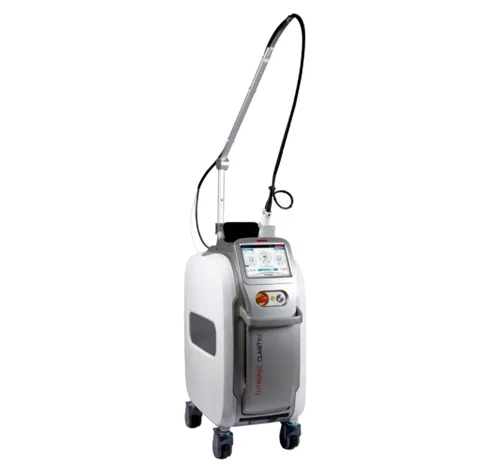
Laser Treatment Hongdae Seoul How Lasers Are Grouped by Wavelength and the Target They Treat
Laser treatment is best understood as a classification system — a laser’s wavelength decides which target it hits (melanin, hemoglobin or water), so the right device is matched to your concern rather than picked by name. RE:BERRY Hongdae explains this map in a 60-90 minute same-doctor consultation from ₩100,000 (about $71) at Hongik University Station, direct on the AREX airport line.
Visit RE:BERRY across Seoul, Korea
Hongdae opens soon. Until then, explore our flagships — tap a clinic to view it.
ONE RE:BERRY BRAND · MFDS-REGISTERED DEVICES · MULTILINGUAL CARE AT EVERY LOCATION
How is laser treatment classified in Korea?
Laser treatment is classified by wavelength, which decides the target it is absorbed by — melanin, hemoglobin or water — so each laser family suits a different concern. RE:BERRY Hongdae maps your concern to the right laser category in a 60-90 minute consultation from ₩100,000 (about $71), one doctor throughout, at Hongik University Station.
A laser treatment hongdae seoul plan starts by classifying lasers, not by choosing a brand. Every dermatology laser emits light at a specific wavelength, and that wavelength decides which target in the skin — called a chromophore — absorbs the energy. The three main chromophores are melanin (pigment in sun spots and freckles), hemoglobin (in blood vessels and redness) and water (throughout the dermis). A laser tuned to a matching wavelength delivers heat selectively to its target while sparing surrounding tissue, a principle called selective photothermolysis. Lasers are then grouped further: ablative lasers vaporize water-containing tissue for resurfacing, while non-ablative lasers heat targets without removing the surface; pulse regime adds another layer, with picosecond and Q-switched lasers fragmenting pigment and fractional lasers resurfacing in microscopic columns. Because different concerns need different wavelengths, matching the laser to the concern — rather than reaching for one branded device — is what makes a laser treatment hongdae seoul plan effective and safe, especially for Fitzpatrick III-V Asian skin where pigment risk must be managed. RE:BERRY Hongdae runs a 60-90 minute one-to-one consultation with Dr. Jae-Hong Kim (Korean Ministry of Health and Welfare Medical License No. 138911) to map your concern onto the correct laser category, confirm the exact MFDS-cleared device, and publish pricing before booking — with 8-language coordination for visitors on the AREX line at Hongik University Station in Mapo-gu.
Laser Treatment Hongdae Seoul Pricing at RE:BERRY Hongdae
Laser Treatment Hongdae Seoul — What to Expect at RE:BERRY Hongdae
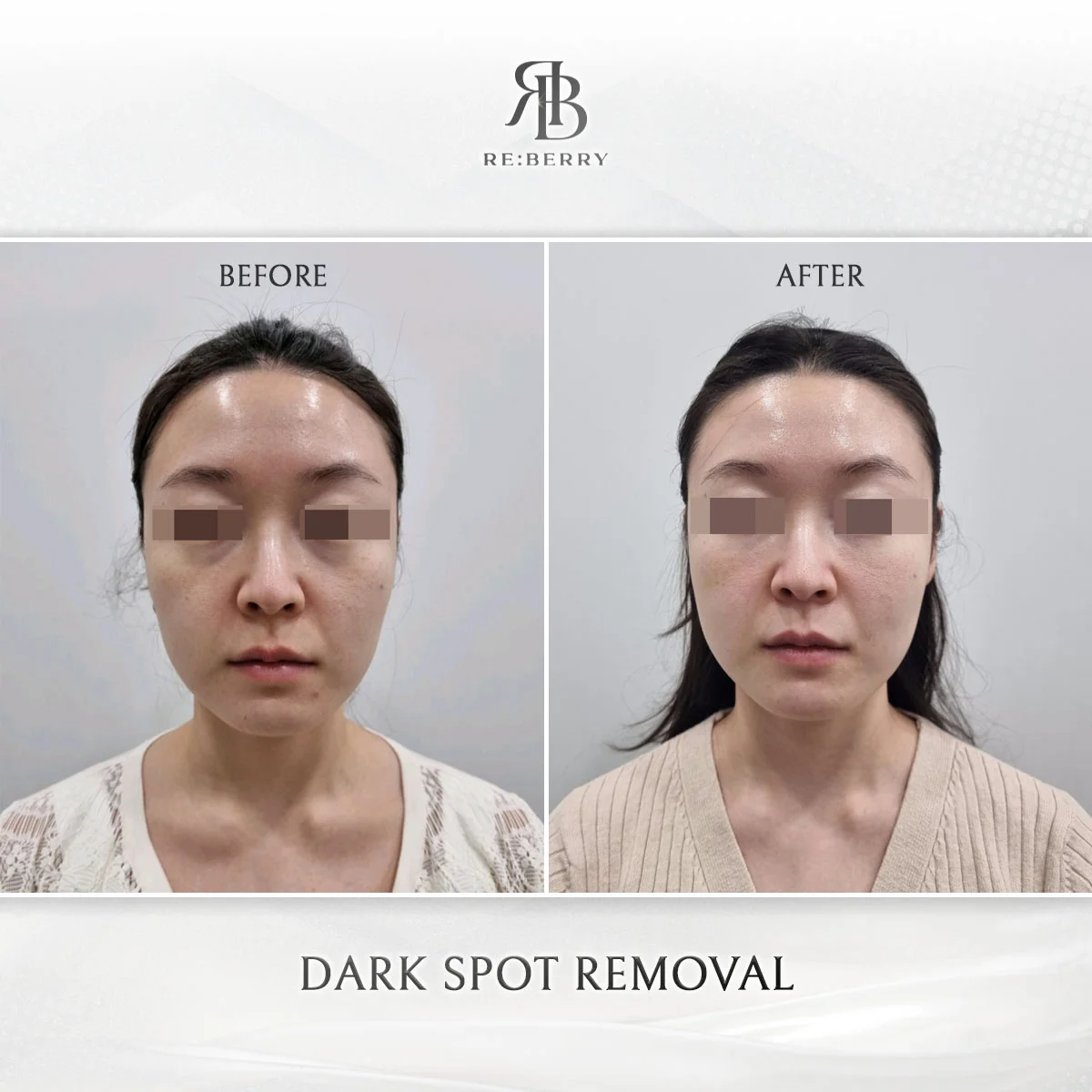
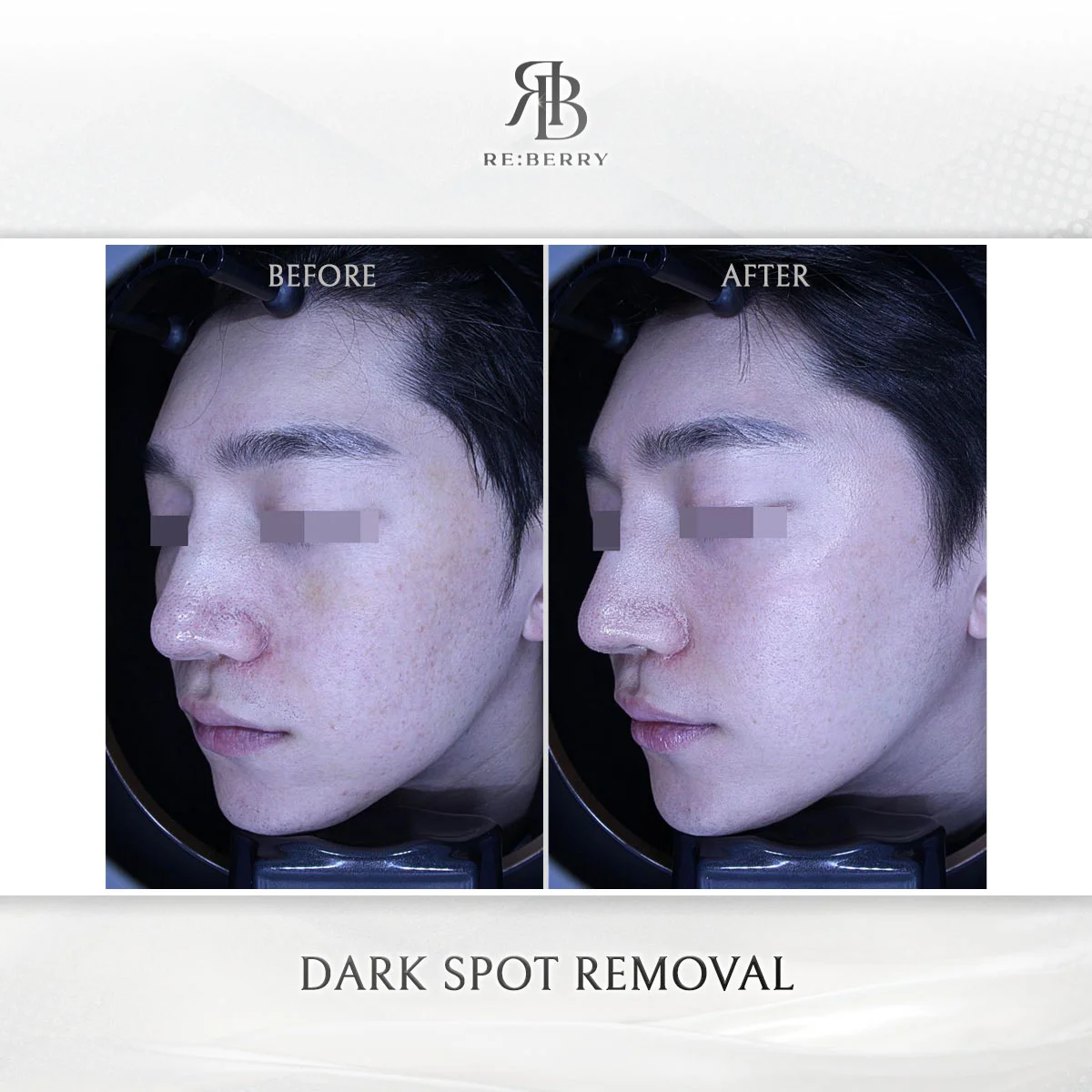
How RE:BERRY Hongdae Matches a Laser Treatment to Your Concern — 5 Steps
Step 1: Consultation and concern mapping
A laser treatment hongdae seoul plan opens with a 60-90 minute doctor-led consultation — over 15x Korea’s 4.3-minute average — where RE:BERRY Hongdae sorts your concern into 1 of 3 chromophore groups: pigment (melanin), vascular (hemoglobin) or texture (water).
Step 2: Wavelength and category selection
RE:BERRY Hongdae then selects the laser family by wavelength — for example 532-1064 nm for pigment, 595 nm-range for vessels, or 1550-10600 nm for resurfacing. Matching the wavelength to the target is what makes selective photothermolysis spare the surrounding 1 layer of healthy skin.
Step 3: Ablative vs non-ablative decision
RE:BERRY Hongdae weighs 2 trade-offs with you: non-ablative lasers keep downtime near zero, while ablative or deeper fractional resurfacing works deeper but adds several days of recovery. This decision sets realistic expectations before any laser treatment hongdae seoul session begins.
Step 4: Test spot and Asian-skin settings
Where useful, RE:BERRY Hongdae performs a test spot and tunes fluence for Fitzpatrick III-V skin. This 1 safety step lowers the risk of post-inflammatory hyperpigmentation, which is higher in darker skin tones when settings are too aggressive.
Step 5: Session, plan and transparent pricing
Each 15-40 minute session follows the mapped plan, and RE:BERRY Hongdae reviews progress via WhatsApp across the 4-week follow-up. It confirms the full quote from ₩100,000 (about $71) before you travel, with no separate consultation or numbing charges revealed later.
Why Foreign Visitors Choose a Classified Laser Treatment Approach in Seoul
- The right laser for your target Instead of one device for everything, RE:BERRY Hongdae matches your concern to the correct wavelength and category — pigment, vascular or resurfacing — so a laser treatment hongdae seoul plan treats what you actually have, bookable from ₩100,000 (about $71) with realistic expectations.
- Downtime you understand up front By deciding ablative versus non-ablative with you, RE:BERRY Hongdae sets clear recovery expectations: near-zero downtime for pigment and vascular lasers, or several days of peeling for deeper resurfacing. You choose the balance of depth and downtime that fits your trip.
- Safer settings for Asian skin For Fitzpatrick III-V skin, wavelength and fluence are adjusted to lower pigment risk, and a test spot is offered where useful. RE:BERRY Hongdae treats this as core to a laser treatment hongdae seoul plan rather than an optional extra, because darker skin needs conservative parameters.
- Convenient, transparent, multilingual RE:BERRY Hongdae sits on the AREX line at Hongik University Station, a no-transfer ride from Incheon Airport Terminal 1 and Terminal 2. An itemized quote is confirmed in writing before you book, shared via WhatsApp in your own language ahead of travel.
| Timeline | What to Expect |
|---|---|
| Before travel | Send photos and dates on WhatsApp; receive 1 full quote |
| Session 1 | 60-90 min consultation, concern mapping and test spot |
| 15-40 min | Matched laser session by wavelength and category |
| 4 weeks | WhatsApp review of results and aftercare |
Laser Categories by Target — Which Laser Treats Which Concern
| Criteria | Pigment Lasers (Melanin) | Vascular Lasers (Hemoglobin) | Resurfacing Lasers (Water) | Source |
|---|---|---|---|---|
| Main target chromophore | Melanin in pigment | Hemoglobin in vessels | Water in the dermis | Peer-reviewed literature |
| Typical wavelength range | 532-1064 nm | 595 nm and 1064 nm | 1550-10600 nm | Device manufacturer specs |
| Ablative or non-ablative | Non-ablative | Non-ablative | Both, depending on device | Peer-reviewed literature |
| Common downtime | Minimal, transient redness | Minimal, transient redness | Several days if ablative | RE:BERRY clinical protocol |
| Pulse regime | Q-switched or picosecond | Long-pulsed | Fractional | Device manufacturer specs |
| Best-suited concern | Sun spots, freckles, tone | Redness, fine vessels | Texture, scars, resurfacing | RE:BERRY protocol |
| Device verification | MFDS certificate on file | MFDS certificate on file | MFDS certificate on file | MFDS public database |
| Doctor continuity | Same assigned doctor | Same assigned doctor | Same assigned doctor | RE:BERRY policy |
Why This Matters
The right laser depends on the target. Pigment lasers hit melanin, vascular lasers hit hemoglobin, and resurfacing lasers act on water — so mapping your concern to a chromophore comes before choosing any device. RE:BERRY Hongdae does this mapping in a 60-90 minute consultation before your first pass.
Doctor continuity directly shapes outcomes when a plan may cross more than one laser category. According to KHIDI’s 2025 Medical Tourism Survey, 41.4% of international patients ranked ‘same doctor throughout treatment’ as their number-one priority when choosing a Korean clinic in Seoul. RE:BERRY Hongdae assigns one doctor per patient from consultation to aftercare.
Korea’s average outpatient consultation is 4.3 minutes — the shortest in the OECD, against a 16.4-minute member average. RE:BERRY Hongdae’s 60-90 minute consultations run over 15x the national norm, enough to map concern to laser category properly. Source: KHIDI 2025; OECD Health Statistics 2023.
Your Physician at RE:BERRY Hongdae
Dr. Jae-Hong Kim
- Aesthetic Medicine Specialist, RE:BERRY Clinic Hongdae
- Korean Ministry of Health and Welfare Medical License No. 138911
- Regular Member, Korean Dermatological Association (kda.or.kr)
- Lead physician for the RE:BERRY Hongdae clinic protocol
Medically reviewed by Dr. Jae-Hong Kim, Aesthetic Medicine Specialist, RE:BERRY
SCIENTIFIC EVIDENCE — peer-reviewed references behind laser treatment hongdae seoul standards at RE:BERRY
The peer-reviewed evidence below draws on 6 studies spanning more than 40 years — from the founding principle of selective photothermolysis to modern picosecond, fractional and IPL data, plus Korean toning and safety evidence — the criteria that define what a laser treatment hongdae seoul plan should meet.
The founding principle: selective photothermolysis
The 1983 Science paper by Anderson and Parrish established selective photothermolysis, showing that a wavelength absorbed by a target plus a pulse duration shorter than the target’s thermal relaxation time confines heat to that target — the physics behind matching 1 laser wavelength to 1 chromophore.
Anderson RR, Parrish JA. Selective photothermolysis: precise microsurgery by selective absorption of pulsed radiation. Science. 1983;220(4596):524-527. doi:10.1126/science.6836297
Fractional photothermolysis for resurfacing
Manstein and colleagues introduced fractional photothermolysis in 2004, treating skin in microscopic columns of thermal injury while sparing surrounding tissue — the concept behind non-ablative and ablative fractional resurfacing lasers that target water across the dermis.
Manstein D, Herron GS, Sink RK, Tanner H, Anderson RR. Fractional photothermolysis: a new concept for cutaneous remodeling using microscopic patterns of thermal injury. Lasers Surg Med. 2004;34(5):426-438. doi:10.1002/lsm.20048
Picosecond lasers for pigment and scarring
A 2015 JAMA Dermatology study reported that a picosecond-pulse laser with a specialized optic improved facial acne scarring, quantifying the value of ultra-short pulses that fragment targets photoacoustically — a mechanism central to modern pigment and texture lasers.
Brauer JA, Kazlouskaya V, Alabdulrazzaq H, et al. Use of a picosecond pulse duration laser with specialized optic for treatment of facial acne scarring. JAMA Dermatol. 2015;151(3):278-284. doi:10.1001/jamadermatol.2014.3045
Intense pulsed light for vascular and pigment targets
A 2012 review in the Journal of Clinical and Aesthetic Dermatology summarized how intense pulsed light delivers a broad 500-1200 nm spectrum filtered toward hemoglobin and melanin, explaining why device selection and settings matter more than any single brand across vascular and pigment concerns.
Goldberg DJ. Current trends in intense pulsed light. J Clin Aesthet Dermatol. 2012;5(6):45-53. PMCID: PMC3390232.
Korean toning and safety evidence in Asian skin
Korean data anchors safety for Fitzpatrick III-V skin: a prospective split-face study in Ann Dermatol (Seoul) evaluated combined 1064 nm picosecond and low-fluence Q-switched Nd:YAG toning across a Korean cohort, while a retrospective analysis of 700 cases in Dermatol Surg documented pigmentary outcomes after Nd:YAG laser toning — evidence guiding conservative parameters used in a laser treatment hongdae seoul plan.
Park JM, Tsao H, Tsao S. Combination treatment with picosecond 1064-nm Nd:YAG laser and low-fluence Q-switched Nd:YAG laser for glass-skin rejuvenation in Korean patients: a prospective split-face study. Ann Dermatol. 2020;32(3):200-208.
Kim MJ, Kim JS, Cho SB. Pigmentary disorders after Q-switched Nd:YAG laser toning: a retrospective analysis of 700 cases in Korean patients. Dermatol Surg. 2019;45(5):700-710.
Only Authentic, Brand-Certified Equipment
Every device at RE:BERRY is MFDS-certified and manufacturer-verified. We never use counterfeit or grey-market equipment.
Brand-Authenticated Equipment & Training




Our doctors are certified by Korea’s top dermatological societies




Numbers That Tell Our Story
Real procedures performed.
Laser Treatment Hongdae Seoul — Frequently Asked Questions
Classification, wavelength, category selection, downtime, safety and travel answers for laser treatment hongdae seoul visitors at RE:BERRY, updated for 2026.
How is laser treatment classified by dermatologists in Korea?
RE:BERRY Hongdae classifies lasers by 1 factor first: wavelength, which decides the target — melanin, hemoglobin or water. This grouping matters more than any brand name, because a laser treatment hongdae seoul plan matches the wavelength to your concern rather than reaching for a single popular device.
What is the difference between melanin, hemoglobin and water lasers?
RE:BERRY Hongdae works with 3 target groups. Pigment lasers hit melanin, vascular lasers hit hemoglobin, and resurfacing lasers act on water.
| Target | Treats | Wavelength |
|---|---|---|
| Melanin | Spots, tone | 532-1064 nm |
| Hemoglobin | Redness | ~595 nm |
| Water | Texture | 1550-10600 nm |
How does a laser’s wavelength decide what it can treat?
RE:BERRY Hongdae relies on 1 physics principle: each target absorbs light most strongly at a characteristic wavelength, so a matching laser heats that target selectively. This is selective photothermolysis, and it is why a laser treatment hongdae seoul plan chooses wavelength by concern rather than by device brand.
How much does laser treatment cost as a course in Korea?
RE:BERRY Hongdae publishes transparent pricing for your plan, with 1 full quote confirmed on WhatsApp before you travel. The figure covers the 60-90 minute consultation, the agreed sessions and the 4-week review, with no separate consultation charge — so you see every line item before booking your laser plan.
Is a laser treatment plan in Korea more experienced than in the US?
RE:BERRY Hongdae plans lasers where Korean clinics run higher aesthetic-laser volume than most US clinics, and Seoul recorded over 1,170,000 foreign-patient treatments in 2024 per KHIDI. That volume builds category-matching experience — see the laser skin treatment guide, and verify each clinic’s license.
What is the difference between ablative and non-ablative lasers?
RE:BERRY Hongdae weighs 2 options with you: non-ablative lasers heat targets without removing the surface and keep downtime near zero, while ablative lasers vaporize water-containing tissue for deeper resurfacing but add several days of recovery. Your doctor picks the balance of depth and downtime for your laser treatment hongdae seoul plan.
What is the difference between a pico laser and a fractional laser?
RE:BERRY Hongdae uses 2 different tools: a picosecond laser fires ultra-short pulses that fragment pigment, while a fractional laser resurfaces skin in microscopic columns to remodel texture. They target different chromophores, so the pigment guide and resurfacing plans are matched to your specific concern in Seoul.
Are laser treatments safe for Asian or darker skin tones?
RE:BERRY Hongdae adjusts settings for Fitzpatrick III-V skin, where 1 priority is lowering post-inflammatory hyperpigmentation risk with conservative fluence and a test spot. Korean clinics run higher laser volume in Asian skin than most Western markets, so parameter experience for darker tones is deeper — see the pigment guide.
How do I know which laser treatment is right for my skin concern?
RE:BERRY Hongdae answers this in 1 consultation: your concern is sorted into pigment, vascular or texture, then matched to the correct laser category. A 60-90 minute doctor-led mapping — versus Korea’s 4.3-minute average — is what turns a vague request into the right laser treatment hongdae seoul plan.
Can more than one type of laser be combined in a treatment plan?
RE:BERRY Hongdae can combine categories when needed — a pigment laser for spots and a vascular laser for redness across 2 or more sessions. Combining is planned by your doctor, not stacked blindly, so each target gets the correct wavelength — see the laser skin treatment guide for how plans are staged in Seoul.
How long is each laser treatment session in Seoul?
RE:BERRY Hongdae books individual laser sessions at about 15-40 minutes of treatment time, plus consultation and numbing at the first visit. Because sessions are short, a laser treatment hongdae seoul plan fits between other trip plans, and your doctor confirms timing for your concern during the consultation.
Does laser treatment hurt, and is numbing cream used first?
RE:BERRY Hongdae describes most passes as 1 mild snapping sensation, and applies numbing cream before treatment where needed. Non-ablative and pigment lasers are gentler than deeper resurfacing, and your doctor sets comfort measures per session so a laser treatment hongdae seoul plan stays well controlled.
How much downtime is there after laser treatment in Korea?
RE:BERRY Hongdae sets downtime by category: 1 to a few days of transient redness for non-ablative pigment and vascular lasers, or several days of peeling for ablative resurfacing. Your doctor tells you the exact recovery for your chosen laser before booking, so a laser treatment hongdae seoul plan fits your itinerary.
How soon can I fly home after a laser treatment session?
RE:BERRY Hongdae confirms that most non-ablative and pigment laser patients can fly within 1 day, while ablative resurfacing needs a longer buffer. Because the clinic sits 1 no-transfer AREX ride from the airport, travel-aware timing is built into your laser treatment hongdae seoul plan.
Why choose RE:BERRY for laser treatment in Hongdae Seoul?
3 things define RE:BERRY Hongdae: concern mapped to the correct wavelength, MFDS-cleared lasers with same-doctor continuity, and safe parameters for Fitzpatrick III-V skin. The clinic sits in Hongdae’s design district on the AREX airport line — see the clinic contact page to start your plan.
Plan Your Laser Treatment Hongdae Seoul at RE:BERRY Hongdae
Map your concern to the right laser category — pigment, vascular or resurfacing — in a 60-90 minute doctor-led consultation with Dr. Jae-Hong Kim, with transparent pricing from ₩100,000 (about $71) published before you book. RE:BERRY Hongdae sits directly on the AREX airport line at Hongik University Station. This information is for educational purposes only and is not medical advice; consult a licensed physician for individual guidance. Your laser treatment hongdae seoul plan is confirmed in writing before you book.
Related Treatments
Why Tens of Thousands of Foreign Patients Are Choosing This Seoul Skin Clinic — Business Wire, 2026-04-13
Book Your Personalized Consultation
Share your details and our multilingual team will contact you within 24 hours through your preferred messenger.
- ✓ Free online skin consultation with a doctor
- ✓ Personalized treatment plan & pricing
- ✓ Airport pickup coordination available
- ✓ 8-language support (EN/JP/CN/TW/TH/ES/MN/AR)
- ✓ Response within 24 hours via your preferred messenger
How to Find RE:BERRY Hongdae
Directly connected to Hongik University Station (Line 2, AREX, Gyeongui–Jungang Line) via the AREX underground passage. 3F & B2, 140 Yanghwa-ro, Mapo-gu, Seoul.
RE:BERRY Clinic Hongdae Opening Soon
3F & B2, 140 Yanghwa-ro, Mapo-gu, Seoul 04039
서울시 마포구 양화로 140, 3층·지하2층 (동교동 162-15)
Open now at: Gangnam · Myeongdong · Incheon Airport