Fractional Laser Korea in Hongdae Seoul — Ablative vs Non-Ablative
A fractional laser korea is a category, not one machine — ablative CO2/Er:YAG resurfaces deeper for scars while non-ablative 1540/1550 nm remodels collagen with lower downtime. Physician-led family selection from ₩19,000 (about $14) at RE:BERRY Hongdae, with 60-90 minute consultations and one doctor from assessment to aftercare, directly on the AREX line from Incheon Airport.
What Is a Fractional Laser Korea at RE:BERRY Hongdae?
A fractional laser korea is a category of resurfacing lasers, not one device — it divides into ablative and non-ablative families, so RE:BERRY Hongdae maps the right family by Dr. Jae-Hong Kim (License 138911) in a 60-90 minute consultation, from ₩19,000 (about $14) published before you book, with a 4-week WhatsApp follow-up in 8 languages.
A fractional laser korea is best understood as an umbrella category rather than a single machine. Every fractional laser works by fractional photothermolysis: instead of treating the whole surface, it delivers energy in a grid of thousands of microscopic treatment zones while leaving the skin between them intact, so healing is faster than fully ablative resurfacing. The category then splits into two families. Ablative fractional lasers — most commonly CO2 at 10,600 nm and Er:YAG at 2,940 nm — vaporize microcolumns of tissue for stronger resurfacing of scars and deep texture, at the cost of more downtime. Non-ablative fractional lasers, such as 1,540/1,550 nm erbium-glass systems, heat columns in the dermis without removing the epidermis, stimulating collagen with a milder recovery.
So the right fractional laser korea depends on your concern, your skin tone and how much downtime you can accept. RE:BERRY Hongdae reframes the fractional laser korea question around your skin rather than one winning device: Dr. Jae-Hong Kim first classifies the goal (acne scars versus pigment versus fine texture), then chooses the ablative or non-ablative family, keeps settings conservative for Fitzpatrick III-V skin to limit post-inflammatory hyperpigmentation, and plans a series with strict sun protection across a 4-week WhatsApp review.
Fractional Laser Pricing at RE:BERRY Hongdae
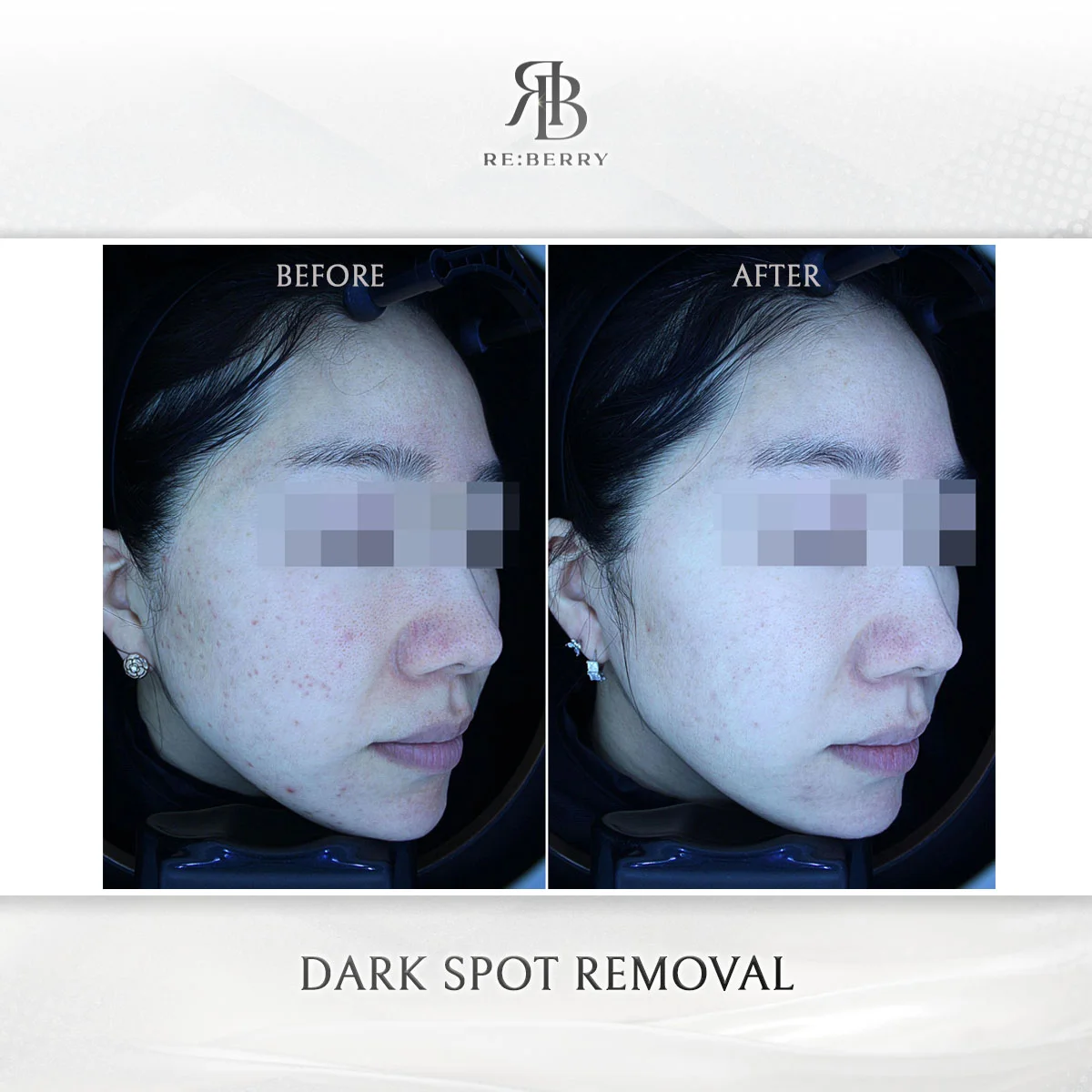
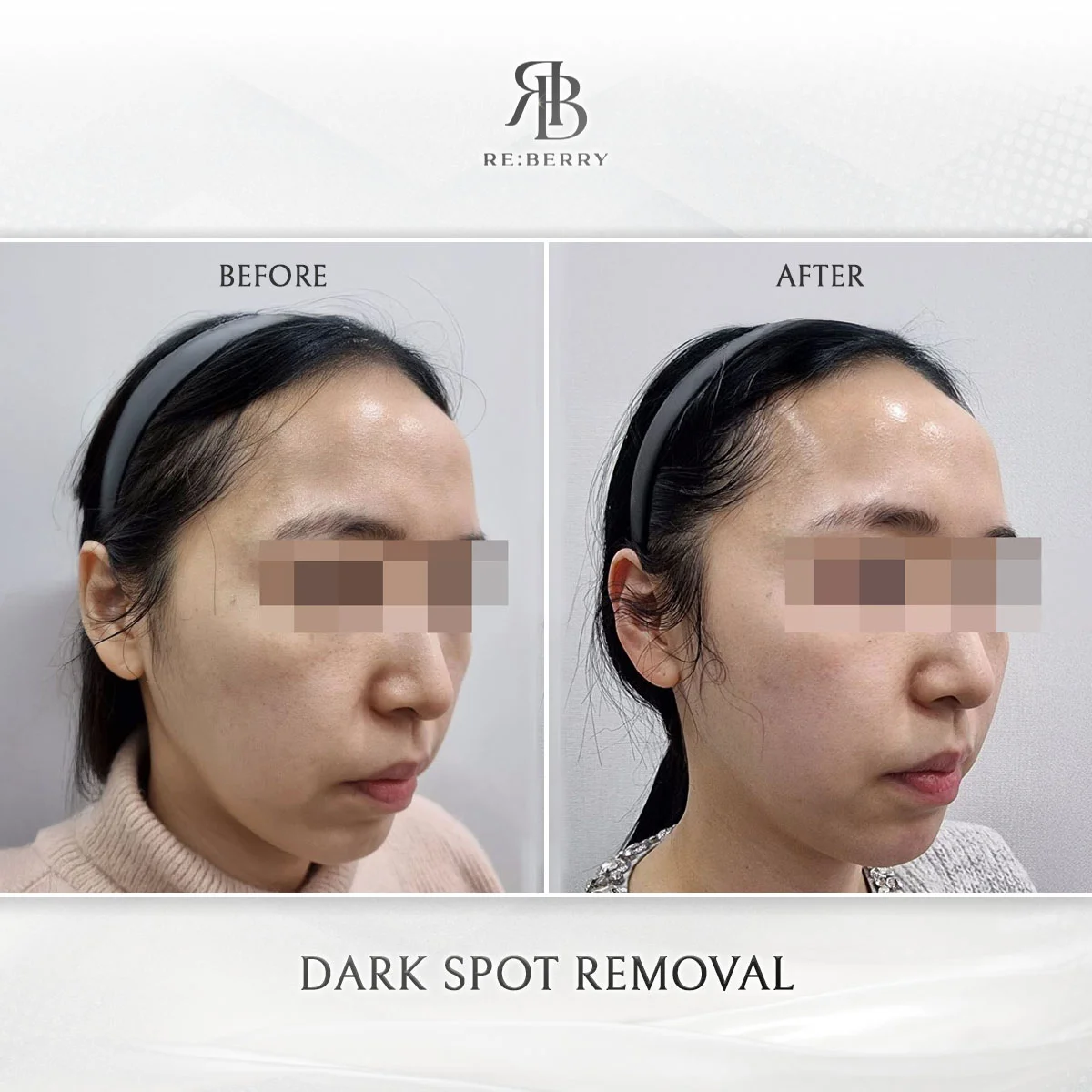
Fractional Laser Korea Before and After
How Your Fractional Laser Korea Family Is Mapped Step by Step at RE:BERRY Hongdae
Step 1: Concern and Skin-Tone Assessment (15-20 min)
Your physician defines the primary concern — acne scars, texture or pigment — and records Fitzpatrick type (I-VI), because a fractional laser korea is a category and each concern maps to a different family. Dr. Jae-Hong Kim uses this typing to decide between the ablative and non-ablative approach for you.
Step 2: Family and Parameter Selection (10-15 min)
Based on the concern, the physician selects an ablative CO2/Er:YAG family for deeper resurfacing or a non-ablative 1,540/1,550 nm family for lower downtime, and sets conservative density and fluence for darker skin to reduce PIH. Topical numbing is applied for 30-60 minutes before treatment.
Step 3: Fractional Laser Pass (20-45 min)
The physician delivers the chosen fractional laser korea pass in about 20-45 minutes, creating microscopic treatment columns that trigger the wound-healing cascade and neocollagenesis. The same doctor performs every session — no rotating staff — so the ablative or non-ablative plan stays consistent across the whole 3-5 session series.
Step 4: Downtime Planning and 4-Week Follow-up (10 min)
The physician maps your downtime window — a few days of redness and flaking for non-ablative, longer re-epithelialization for ablative — and prescribes strict SPF 50+. RE:BERRY Hongdae gives aftercare in 8 languages and schedules a 4-week WhatsApp photo review to track collagen remodeling over 2-3 months.
Fractional Laser Korea Benefits and Recovery Timeline
- Category-level guidance — ablative and non-ablative families explained before choosing
- Ablative CO2/Er:YAG matched to deeper acne scars and texture
- Non-ablative 1,540/1,550 nm matched to lower-downtime collagen remodeling
- Conservative density and fluence selected for Asian and darker skin
- Fractional photothermolysis spares surrounding skin for faster healing than full resurfacing
- Strict sun protection built in to limit post-inflammatory hyperpigmentation
| Timeline | What to Expect |
|---|---|
| Fractional laser session completed in about 20-45 minutes. Non-ablative treatment leaves a few days of redness and a bronzed, sandpaper texture; ablative treatment leaves more redness and swelling. | |
| Non-ablative flaking resolves within 3-7 days; ablative oozing or crusting takes longer to re-epithelialize. Strict sun protection during this healing window lowers PIH risk in darker skin. | |
| Skin usually looks fresher within 1 to 2 weeks as flaking or crusting resolves. A course of several sessions spaced weeks apart is commonly recommended for non-ablative devices. | |
| Collagen remodeling continues over 2 to 3 months (and longer for deeper ablative work), when maximum improvement in scars and texture is typically seen. | |
| Durable results depend on sun protection and, for scars, a completed series. RE:BERRY Hongdae adjusts the ablative or non-ablative plan to your response at each 4-week review. |
Fractional Laser in Hongdae Seoul: How RE:BERRY Compares
| Feature | RE:BERRY Hongdae | Hongik University Station Franchise Clinic | Tourist-Zone Walk-in Clinic | Source |
|---|---|---|---|---|
| Category Framing | ‘Ablative vs non-ablative family for your concern’, not one machine | Marketed as a single best fractional device | One-off session, family not explained | RE:BERRY protocol |
| Concern Typing | Acne scars vs pigment vs texture defined before treatment | Rarely differentiated | Not assessed for throughput | RE:BERRY protocol |
| Family Selection | Ablative CO2/Er:YAG or non-ablative 1,540/1,550 nm chosen individually | Fixed device applied to all concerns | Default setting only | Elsaie 2018; RE:BERRY |
| Same Doctor Continuity | Same doctor from assessment to aftercare | Doctor rotation common (3-5 doctors per shift) | Walk-in assigned, no continuity guarantee | KHIDI 2025 |
| Consultation Time | 60-90 min initial assessment | 10-15 min consultation | 5-10 min walk-in assessment | OECD 2023; RE:BERRY |
| Downtime Planning | Ablative vs non-ablative window mapped for your trip | Add-on, inconsistently explained | Rarely planned | RE:BERRY protocol |
| Pricing Transparency | Full quote published before you book, no add-ons | Consultation and touch-up fees may be added | Extra line-item fees vary by session | RE:BERRY; public data |
Why This Matters
The honest answer to which fractional laser korea is best is that it depends on the concern and skin tone. A split-face trial in post-acne scars compared ablative CO2 with non-ablative 1,540 nm erbium-glass, showing the ablative family gave stronger scar improvement while the non-ablative family meant less downtime. RE:BERRY Hongdae therefore types the concern first and selects the family individually rather than naming one winner.
Doctor continuity matters because scar and texture improvement runs across a series that needs consistent parameter judgment. According to KHIDI’s 2025 Medical Tourism Survey, 41.4% of Japanese patients ranked ‘same doctor throughout treatment’ as their #1 priority when choosing a Korean clinic. RE:BERRY Hongdae assigns one physician per patient for the full plan.
Korea’s average outpatient consultation is 4.3 minutes — the shortest in the OECD, whose average is 16.4 minutes. RE:BERRY Hongdae’s 60-90 minute consultations represent 15-20x the national average, allowing the physician to type the concern and choose the family carefully. Source: KHIDI 2025; OECD Health Statistics 2023.
Your Fractional Laser Physician in Hongdae
Dr. Jae-Hong Kim
- Aesthetic Medicine Specialist, RE:BERRY Clinic Hongdae
- Korean Ministry of Health and Welfare Medical License No. 138911
- Regular Member, Korean Dermatological Association (kda.or.kr)
- Ablative and non-ablative fractional resurfacing protocol lead
Medically reviewed by Dr. Jae-Hong Kim, Aesthetic Medicine Specialist, RE:BERRY
SCIENTIFIC EVIDENCE Behind Fractional Laser Korea (fractional laser hongdae seoul) at RE:BERRY
The peer-reviewed evidence base below draws on 8 clinical studies and reviews of ablative and non-ablative fractional laser resurfacing, spanning nearly two decades of published outcomes. Patients researching fractional laser hongdae seoul can review the full citation list, which includes Korean clinical data on Asian skin published in Ann Dermatol (Seoul).
What the Trials Show — Ablative vs Non-Ablative
A 2018 split-face trial in post-acne scar patients compared ablative fractional 10,600 nm CO2 laser with non-ablative fractional 1,540 nm erbium-glass laser, finding the ablative family produced stronger scar improvement while the non-ablative family involved less downtime — the core evidence behind matching the fractional laser korea family to the concern.
Elsaie ML, Ibrahim SM, Saudi W. Ablative Fractional 10,600 nm Carbon Dioxide Laser Versus Non-ablative Fractional 1,540 nm Erbium-Glass Laser in Egyptian Post-acne Scar Patients. Journal of Lasers in Medical Sciences. 2018;9(1):32-35. doi:10.15171/jlms.2018.08
The founding principle of fractional resurfacing was described in a 2004 study introducing fractional photothermolysis, in which arrays of microscopic thermal zones treat a fraction of the surface while sparing surrounding skin, explaining why fractional lasers heal faster than fully ablative resurfacing.
Manstein D, Herron GS, Sink RK, Tanner H, Anderson RR. Fractional photothermolysis: a new concept for cutaneous remodeling using microscopic patterns of thermal injury. Lasers Surg Med. 2004;34(5):426-438. doi:10.1002/lsm.20048
A 2010 review of ablative fractional resurfacing summarized outcomes for scars, photodamage and rhytides, and quantified the higher downtime and post-inflammatory hyperpigmentation risk in darker skin that informs the conservative settings RE:BERRY Hongdae uses for Fitzpatrick III-V patients.
Tierney EP, Kouba DJ, Hanke CW. Review of fractional photothermolysis: treatment indications and efficacy. Dermatol Surg. 2009;35(10):1445-1461. doi:10.1111/j.1524-4725.2009.01258.x
Korean clinical data on Asian skin adds direct relevance: a study of fractional CO2 laser for acne scars in Korean patients evaluated efficacy and the incidence of transient post-inflammatory hyperpigmentation in Fitzpatrick III-IV skin, published in Ann Dermatol (Seoul).
Cho SB, Lee SJ, Cho S, Oh SH, Chung WS, Kang JM, Kim YK, Kim DH. Non-ablative 1,550-nm erbium-glass and ablative 10,600-nm carbon dioxide fractional lasers for acne scars: a randomized split-face study. Ann Dermatol (Seoul). 2010;22(3):290-296. doi:10.5021/ad.2010.22.3.290
Ong MWS, Bashir SJ. Fractional laser resurfacing for acne scars: a review. Br J Dermatol. 2012;166(6):1160-1169. doi:10.1111/j.1365-2133.2012.10870.x
Alexiades-Armenakas MR, Dover JS, Arndt KA. The spectrum of laser skin resurfacing: nonablative, fractional, and ablative laser resurfacing. J Am Acad Dermatol. 2008;58(5):719-737. doi:10.1016/j.jaad.2008.01.003
These references support the RE:BERRY Hongdae fractional laser protocol — concern typing before treatment, family selection between ablative and non-ablative, conservative density and fluence for Asian skin, and strict SPF 50+ maintenance across a managed series under the same licensed physician from first assessment through the 4-week review.
Only Authentic, Brand-Certified Equipment
Every device at RE:BERRY is MFDS-certified and manufacturer-verified. We never use counterfeit or grey-market equipment.
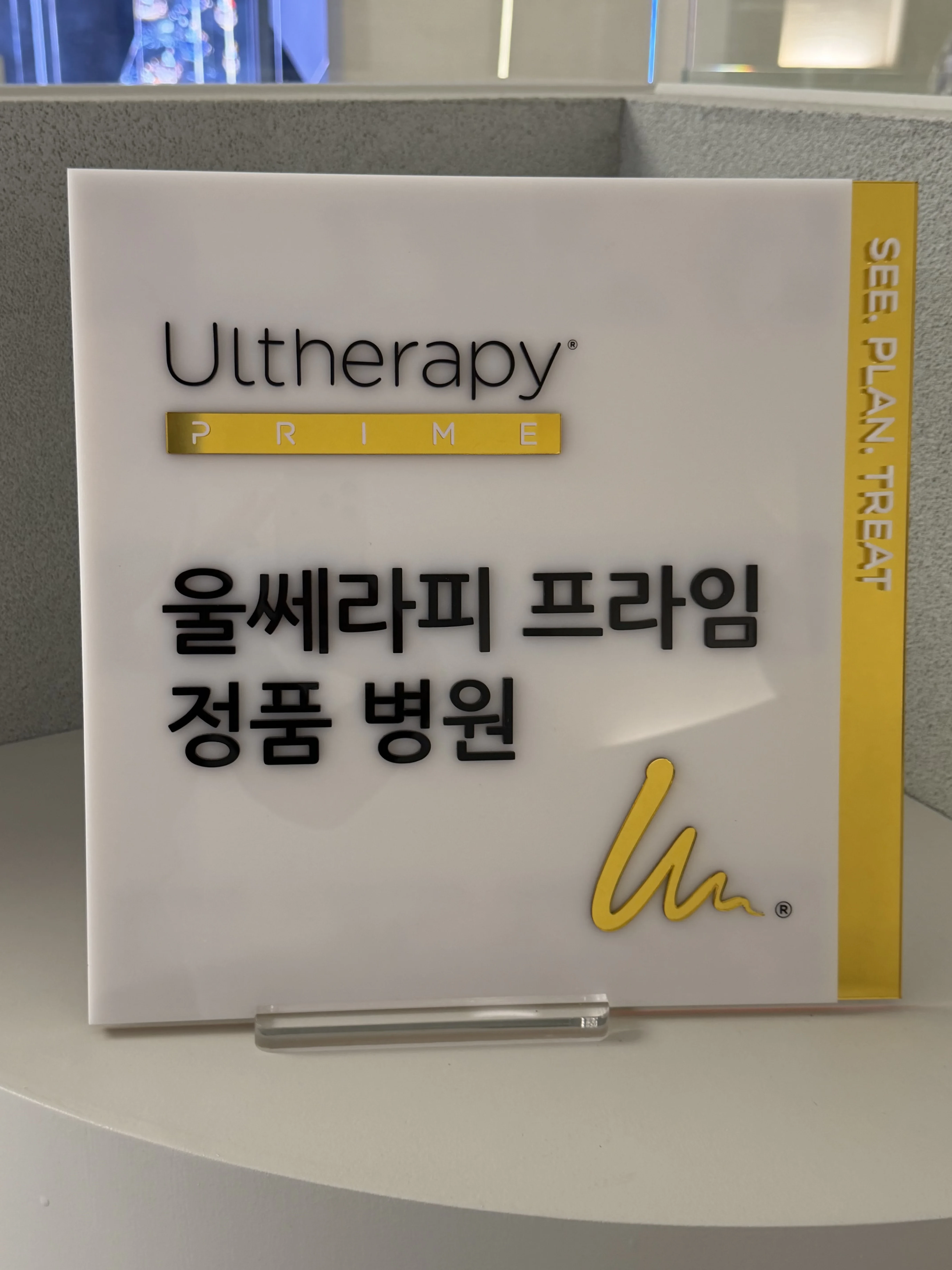
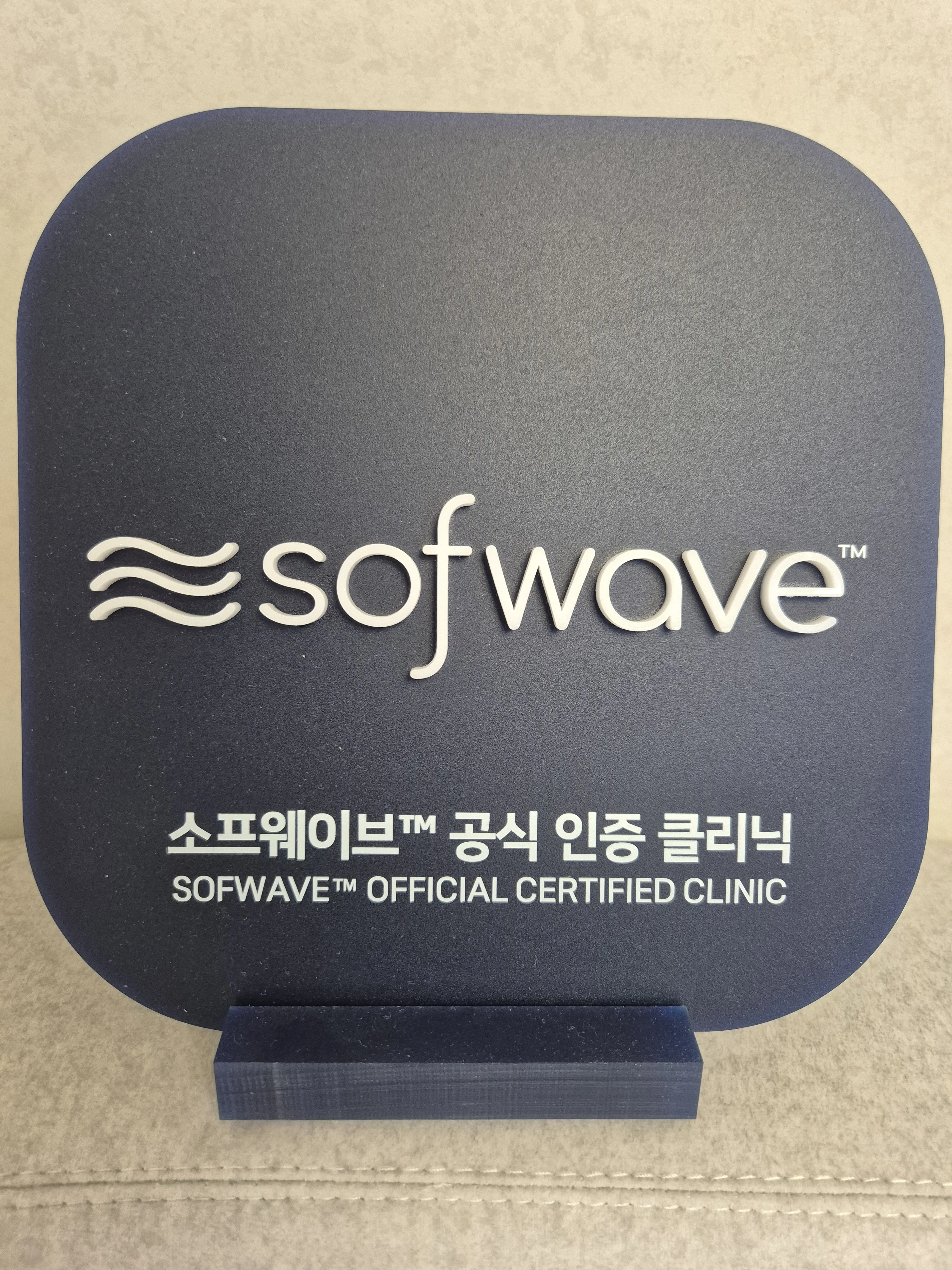
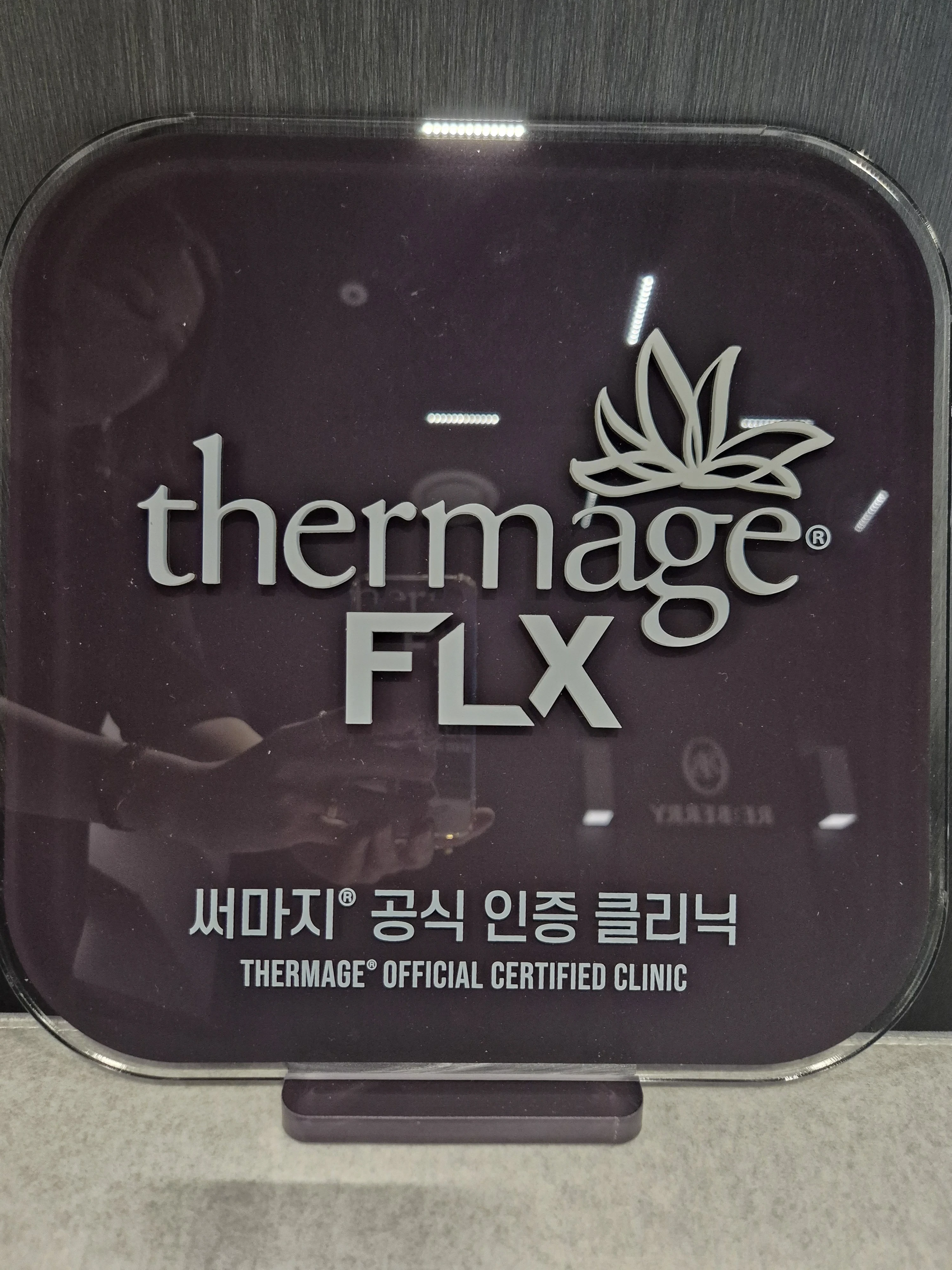
Brand-Authenticated Equipment & Training



Our doctors are certified by Korea’s top dermatological societies




Numbers That Tell Our Story
Real procedures performed.
Fractional Laser Korea in Hongdae Seoul — Frequently Asked Questions
Family selection, ablative vs non-ablative, downtime, and travel answers for fractional laser hongdae seoul patients at RE:BERRY, updated for 2026.
What is a fractional laser and how does fractional resurfacing work?
RE:BERRY Hongdae explains a fractional laser as 1 category of resurfacing lasers that work by fractional photothermolysis — treating thousands of microscopic zones while sparing skin between them for faster healing. Dr. Jae-Hong Kim uses this principle to plan the ablative or non-ablative family across a typical 3-5 session series in Hongdae.
Does fractional laser mean one machine or a whole category of devices?
It is a whole category — RE:BERRY Hongdae stresses that fractional laser splits into ablative CO2/Er:YAG and non-ablative 1,540/1,550 nm families with very different downtime. The 60-90 minute consultation defines which of the 2 families fits your concern and skin tone, rather than marketing 1 winning device.
What is the difference between ablative and non-ablative fractional laser?
RE:BERRY Hongdae distinguishes the 2 clearly: ablative CO2/Er:YAG vaporizes microcolumns for stronger scar resurfacing with more downtime, while non-ablative 1,540/1,550 nm heats the dermis without removing the epidermis for milder recovery.
| Factor | Ablative | Non-Ablative |
|---|---|---|
| Depth | Vaporizes tissue | Spares epidermis |
| Downtime | Longer | A few days |
| Best for | Deep scars | Texture, tone |
How much does fractional laser cost at RE:BERRY Hongdae?
RE:BERRY Hongdae publishes transparent pricing for every fractional laser option before you book, updated for 2026. Your WhatsApp quote covers the 60-90 minute consultation, the ablative or non-ablative session series, and the 4-week photo follow-up as 1 all-inclusive figure with no separate consultation charge.
Is fractional laser cheaper in Korea than back home?
RE:BERRY Hongdae emphasizes value through volume and experience across 8 languages rather than a discount claim. Korean clinics run notably higher aesthetic procedure volume than most Western markets, so Seoul physicians bring more experience matching the fractional family to skin tone. Your transparent quote is published before you book, with no hidden add-ons.
Fractional laser vs microneedling RF — which is better for scars?
It depends on your skin — RE:BERRY Hongdae maps the 2 in the 60-90 minute consultation, because fractional laser resurfaces the surface while microneedling RF delivers energy through needles at depth. Dr. Jae-Hong Kim types your scars first, then chooses. See related energy-based options for context.
Can I combine fractional laser with other treatments in Seoul?
Yes — RE:BERRY Hongdae maps combination plans in 1 shared consultation, so fractional laser resurfacing can pair with complementary ultherapy prime lifting or skin boosters where clinically appropriate. Sequencing across a 3-5 day Seoul itinerary is planned to keep the healing windows from overlapping.
Why choose a boutique clinic over a franchise for fractional laser?
RE:BERRY Hongdae gives 1 doctor and 60-90 minute consultations, while Seoul franchise chains rotate practitioners and run 10-15 minute intakes. For family-matched fractional care needing conservative settings, boutique continuity matters more than walk-in speed, so the same physician tracks scar improvement across your series.
How does fractional laser in Seoul compare with clinics back home?
RE:BERRY Hongdae offers 60-90 minute consultations versus the far shorter intake typical at high-volume clinics abroad. Korean clinics run more fractional resurfacing per doctor than most Western markets, so Seoul physicians bring greater experience matching the family to the concern — a volume-and-experience edge rather than a discount claim.
Is fractional laser safe for Asian or darker skin tones in Korea?
RE:BERRY Hongdae tailors every protocol for all 6 Fitzpatrick types, using conservative density and fluence and preferring non-ablative settings to reduce PIH risk. Korean clinics carry higher fractional volume across darker skin than most Western markets, so RE:BERRY physicians bring more experience resurfacing safely in skin of color.
How many fractional laser sessions are usually needed in Seoul?
Many RE:BERRY Hongdae patients need 3 to 5 non-ablative sessions spaced weeks apart, while deeper ablative work may need fewer with more downtime. Seoul physicians run more of these series than most Western clinics, so the count is tailored from higher experience, with collagen remodeling continuing over 2-3 months.
How much downtime is there after fractional laser in Seoul?
RE:BERRY Hongdae reports 3-7 days of downtime for non-ablative and longer for ablative — a few days of redness and sandpaper flaking versus more redness, swelling and crusting. The physician maps your exact window during the 60-90 minute consultation so you can plan a comfortable flight home.
Can I fly home after a fractional laser during a short Seoul trip?
Yes — RE:BERRY Hongdae plans the family and timing around your 3-5 day itinerary, favoring non-ablative for tighter windows so redness settles before your flight. The clinic sits 1 train ride from Incheon Airport on the AREX line, and gives 8-language aftercare so you know exactly what to expect while traveling.
Who performs fractional laser at RE:BERRY Hongdae in Korea?
100% of fractional laser care at RE:BERRY Hongdae is performed by Dr. Jae-Hong Kim (Korean MOHW License No. 138911) — no rotating staff. Korean physicians handle higher aesthetic volume than most Western markets, so you benefit from more experience across your other plans too.
What makes fractional laser at RE:BERRY Hongdae different?
3 things distinguish RE:BERRY Hongdae for fractional laser hongdae seoul: category-level family selection, conservative settings for darker skin, and transparent pricing published before you book. The clinic also sits in Hongdae’s design district — see the botox page for the same standard.
Book Your Fractional Laser Consultation at RE:BERRY Hongdae
Still unsure which fractional laser korea family fits your skin? Get concern-typed ablative vs non-ablative mapping with transparent pricing from ₩19,000 (about $14), published before you book. Directly on the AREX line from Incheon Airport, 1 train ride to Hongik University Station. Dr. Jae-Hong Kim handles your fractional laser hongdae seoul plan from assessment through 4-week aftercare. This information is for educational purposes only and is not medical advice; consult a licensed physician for individual guidance. Your fractional laser hongdae seoul plan is confirmed in writing before you book.
Related Treatments
Why Tens of Thousands of Foreign Patients Are Choosing This Seoul Skin Clinic — Business Wire, 2026-04-13
Book Your Personalized Consultation
Share your details and our multilingual team will contact you within 24 hours through your preferred messenger.
- ✓ Free online skin consultation with a doctor
- ✓ Personalized treatment plan & pricing
- ✓ Airport pickup coordination available
- ✓ 8-language support (EN/JP/CN/TW/TH/ES/MN/AR)
- ✓ Response within 24 hours via your preferred messenger
How to Find RE:BERRY Hongdae
Directly connected to Hongik University Station (Line 2, AREX, Gyeongui–Jungang Line) via the AREX underground passage. 3F & B2, 140 Yanghwa-ro, Mapo-gu, Seoul.
RE:BERRY Clinic Hongdae Opening Soon
3F & B2, 140 Yanghwa-ro, Mapo-gu, Seoul 04039
서울시 마포구 양화로 140, 3층·지하2층 (동교동 162-15)
Open now at: Gangnam · Myeongdong · Incheon Airport