Best Laser For Asian Skin Korea — Hongdae Seoul
Searching for the best laser for Asian skin korea clinics use? There is no single winner — RE:BERRY Hongdae matches the device to your goal, using picosecond and Q-switched lasers for pigment, fractional for texture and 1064 nm Nd:YAG for deeper targets, always with a test spot and lower fluences to limit hyperpigmentation. Dr. Jae-Hong Kim maps your indication from ₩19,000 (about $14) in a 60-90 minute consultation, directly on the AREX line from Incheon Airport.
What Is the Best Laser For Asian Skin in Korea — The Honest Answer
There is no single best laser for Asian skin korea clinics can name — the right device is matched to your indication and Fitzpatrick type. RE:BERRY Hongdae uses picosecond and Q-switched for pigment, fractional for texture and Nd:YAG for deeper targets, with a test spot by Dr. Jae-Hong Kim (License 138911), priced from ₩19,000 (about $14) published before you book.
So what is the best laser for Asian skin? The honest answer is that no single device wins — the right laser depends on your indication (pigment, texture, hair or redness) and your Fitzpatrick type. Asian skin often carries higher epidermal melanin, which competes for laser energy and raises the risk of post-inflammatory hyperpigmentation (PIH) and burns. That is why device choice, wavelength and settings matter more than any one machine’s reputation.
Clinicians manage skin-of-color risk with 4 levers: favoring longer wavelengths that bypass surface melanin (for example 1064 nm Nd:YAG for deeper targets and hair on darker tones), using picosecond or Q-switched lasers for pigment such as freckles and lentigines, choosing fractional lasers for texture and scars, and applying lower fluences with epidermal cooling. A test spot before full treatment gauges how an individual’s skin responds. Rather than crown one device, RE:BERRY Hongdae matches the laser to your specific indication and treats chronic conditions such as melasma conservatively over multiple gentle sessions. Dr. Jae-Hong Kim (Korean MOHW License No. 138911) handles every stage from the test spot through the 4-week review.
Asian-Skin Laser Pricing at RE:BERRY Hongdae
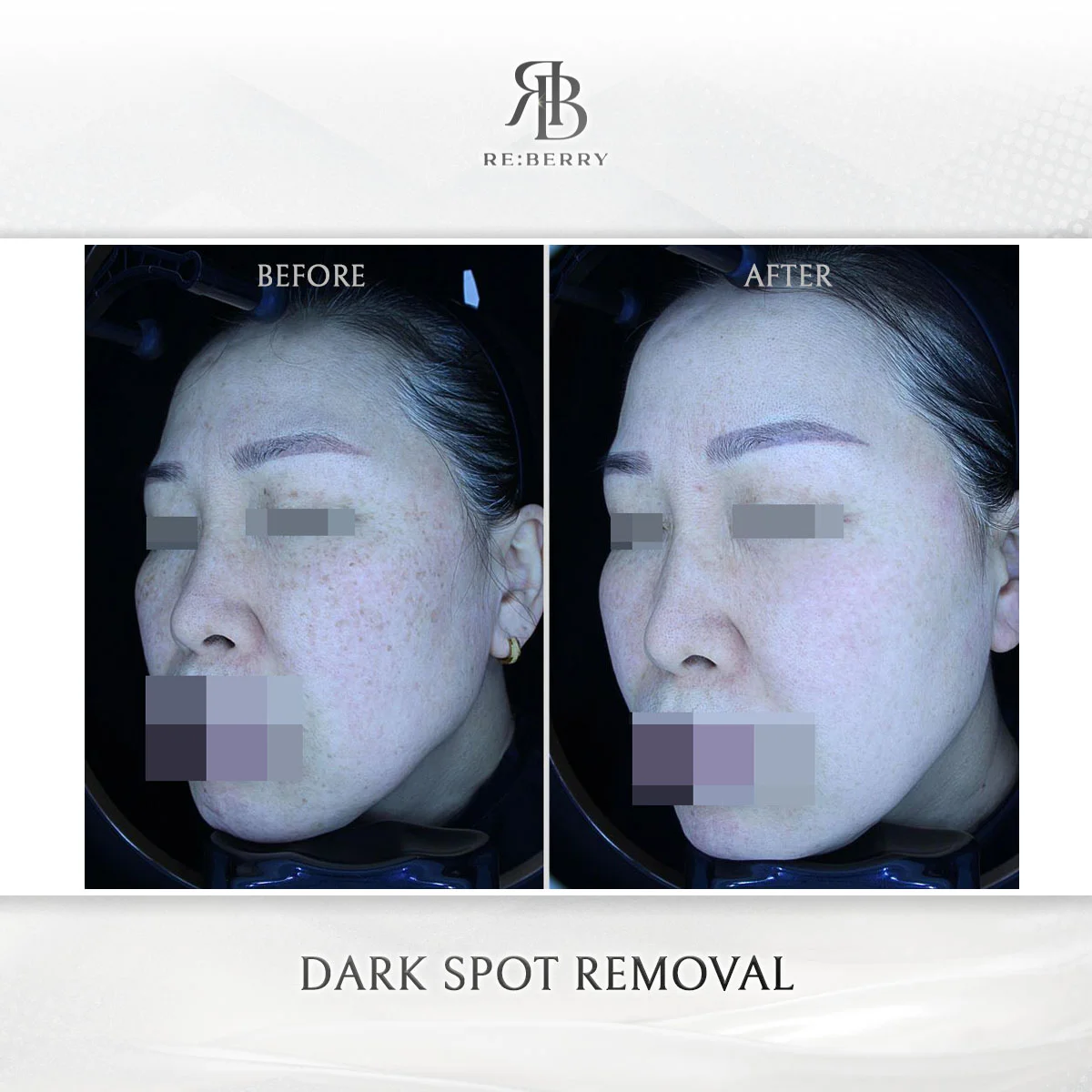
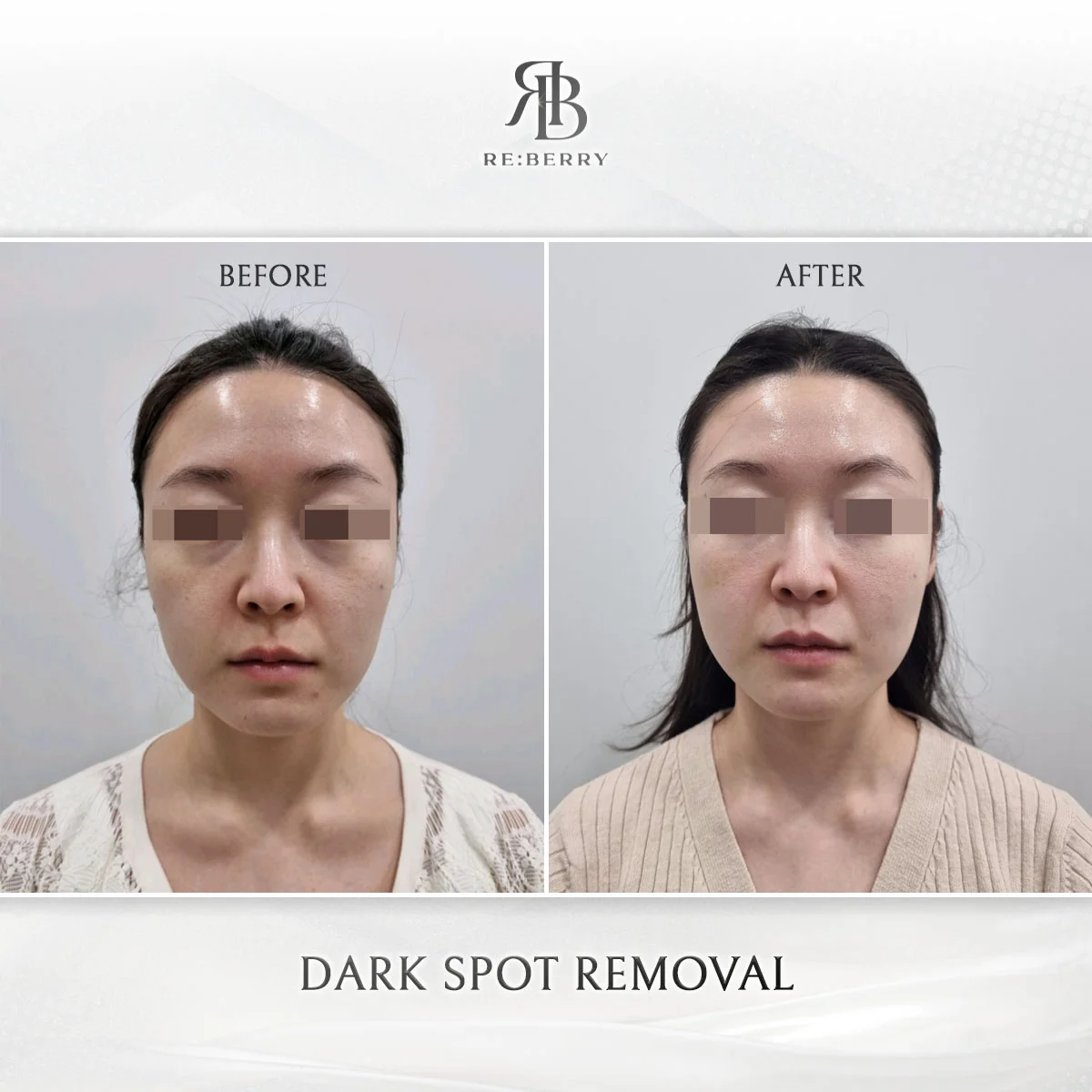
Asian-Skin Laser Before and After
How Laser Selection For Asian Skin Works at RE:BERRY Hongdae
Step 1: Indication and Skin Typing (15-20 min)
Your physician defines the goal — pigment, texture, hair or redness — and records your Fitzpatrick type (I-VI). This is how the best laser for Asian skin korea patients need is chosen: Dr. Jae-Hong Kim matches picosecond or Q-switched lasers to pigment, fractional to texture, and 1064 nm Nd:YAG to deeper targets.
Step 2: Test Spot and Cooling Check (10-15 min)
A test spot is treated and reviewed so the physician can gauge how your individual skin responds before a full session, since higher melanin raises PIH risk. Epidermal cooling is confirmed and lower fluences are set to protect the surface on higher Fitzpatrick types.
Step 3: The Laser Session (10-45 min)
Session length varies by indication, typically 10-45 minutes including numbing when used. Non-ablative and pigment lasers deliver energy without removing the surface; fractional resurfacing creates microscopic columns. Conservative settings are chosen so darker skin is treated safely rather than aggressively.
Step 4: Recovery and 4-Week Follow-up (10 min)
Downtime depends on the laser: pigment and non-ablative lasers often leave brief redness, while fractional resurfacing involves several days of redness and peeling. Strict sun protection limits PIH. RE:BERRY Hongdae schedules a 4-week WhatsApp photo review in 8 languages before the next gentle session.
Asian-Skin Laser Benefits and Recovery Timeline
- Laser matched to your indication rather than a single best-for-everyone device
- Longer 1064 nm Nd:YAG for deeper targets and hair that bypasses surface melanin
- Picosecond and Q-switched lasers for pigment such as freckles and lentigines
- Fractional lasers for texture and scars with conservative skin-of-color settings
- A test spot, lower fluences and epidermal cooling to reduce PIH risk
- Chronic conditions like melasma managed gently over multiple sessions
| Timeline | What to Expect |
|---|---|
| Non-ablative and pigment lasers often involve only brief redness for 1-2 days, while ablative or fractional resurfacing involves several days of redness, swelling and peeling. Strict sun protection is emphasized to limit post-inflammatory hyperpigmentation. | |
| Pigment lightening and texture change develop over weeks as skin heals and collagen remodels. Because settings stay conservative for darker skin, PIH risk is minimized when wavelength and fluence match the indication and Fitzpatrick type. | |
| Multiple gentle sessions spaced weeks apart are commonly needed, especially for chronic conditions such as melasma. Progressive improvement builds across a staged course rather than from a single aggressive pass on skin of color. | |
| Published reviews emphasize outcomes depend on indication, device, settings and skin type, with conservative treatment preferred in darker skin. Most pigment and texture goals improve gradually over 2-6 months rather than overnight. | |
| Chronic pigment conditions such as melasma are managed, not cured, so maintenance and daily SPF matter. RE:BERRY Hongdae tailors intervals to your skin’s response through the 4-week review. |
Choosing a Laser Clinic For Asian Skin in Hongdae Seoul: How RE:BERRY Compares
| Feature | RE:BERRY Hongdae | Hongik University Station Franchise Clinic | Tourist-Zone Walk-in Clinic | Source |
|---|---|---|---|---|
| Device Framing | Matched to indication — pico/Q-switched for pigment, fractional for texture, Nd:YAG for deeper | Often one promoted device for all goals | One default machine, no indication match | RE:BERRY protocol |
| Test Spot | Reviewed before full treatment on higher Fitzpatrick types | Sometimes skipped for speed | Rarely offered on walk-in | RE:BERRY protocol |
| PIH Prevention | Lower fluences, epidermal cooling, sun-protection guidance | Standardized settings across patients | Fast default, limited tailoring | RE:BERRY protocol |
| Skin-of-Color Experience | Conservative settings tuned for Fitzpatrick III-VI | Limited skin-tone tailoring | Minimal assessment on walk-in | RE:BERRY protocol |
| Same Doctor Continuity | Same doctor from test spot to aftercare | Doctor rotation common between sessions | Walk-in assigned, no continuity guarantee | KHIDI 2025 |
| Consultation Time | 60-90 min initial assessment | 10-15 min consultation | 5-10 min walk-in assessment | OECD 2023; RE:BERRY |
| Pricing Transparency | Full quote published before you book, per indication | Per-session and consultation fees may be added | Extra line-item fees vary by session | RE:BERRY; public data |
Why This Matters
The real answer to the best laser for Asian skin korea search is an indication-to-device match, not one machine: picosecond and Q-switched lasers suit pigment, fractional suits texture, and 1064 nm Nd:YAG suits deeper targets and hair on darker tones. RE:BERRY Hongdae maps your indication and runs a test spot rather than declaring one laser superior for every skin of color.
Doctor continuity matters because skin-of-color laser work runs across a staged, conservative series needing consistent judgment on wavelength, fluence and cooling. According to KHIDI’s 2025 Medical Tourism Survey, 41.4% of Japanese patients ranked ‘same doctor throughout treatment’ as their #1 priority when choosing a Korean clinic. RE:BERRY Hongdae assigns one physician per patient for the full plan.
Korea’s average outpatient consultation is 4.3 minutes — the shortest in the OECD, whose average is 16.4 minutes. RE:BERRY Hongdae’s 60-90 minute consultations represent 15-20x the national average, giving the physician time to type your skin, run a test spot and match the safest laser for your indication. Source: KHIDI 2025; OECD Health Statistics 2023.
Your Asian-Skin Laser Physician in Hongdae
Dr. Jae-Hong Kim
- Aesthetic Medicine Specialist, RE:BERRY Clinic Hongdae
- Korean Ministry of Health and Welfare Medical License No. 138911
- Regular Member, Korean Dermatological Association (kda.or.kr)
- Skin-of-color laser selection and PIH-prevention protocol lead
Medically reviewed by Dr. Jae-Hong Kim, Aesthetic Medicine Specialist, RE:BERRY
SCIENTIFIC EVIDENCE Behind Laser Selection For Asian Skin at RE:BERRY — peer-reviewed references
The peer-reviewed evidence below draws on 6 studies of lasers in Asian and skin-of-color patients, spanning PIH risk after fractional resurfacing, pigment-laser comparisons and IPL systematic reviews. Patients weighing the best laser for Asian skin korea offers can review the full citation list, which includes Korean clinical data published in Ann Dermatol (Seoul).
PIH Risk and Indication-Matched Wavelength Data
A 2007 study quantified the prevalence and risk factors of post-inflammatory hyperpigmentation after fractional resurfacing in Asians, reporting PIH in a notable share of patients, the safety data behind RE:BERRY Hongdae’s conservative settings on higher Fitzpatrick types.
Chan HHL, Manstein D, Yu CS, Shek S, Kono T, Wei WI. The prevalence and risk factors of post-inflammatory hyperpigmentation after fractional resurfacing in Asians. Lasers Surg Med. 2007;39(5):381-385. doi:10.1002/lsm.20476
A 2006 randomized, physician-blinded split-face trial of Q-switched alexandrite laser versus intense pulsed light for freckles and lentigines in Asian persons found the pigment laser more effective for lentigines, informing which device RE:BERRY Hongdae selects for pigment on Asian skin.
Wang CC, Sue YM, Yang CH, Chen CK. A comparison of Q-switched alexandrite laser and intense pulsed light for the treatment of freckles and lentigines in Asian persons: a randomized, physician-blinded, split-face comparative trial. J Am Acad Dermatol. 2006;54(5):804-810. doi:10.1016/j.jaad.2006.04.065
A 2014 systematic review of intense pulsed light across dermatologic disease summarized indication-dependent efficacy and safety over multiple sessions, supporting RE:BERRY Hongdae’s indication-first framing rather than promoting a single laser for all Asian-skin goals.
Wat H, Wu DC, Rao J, Goldman MP. Application of intense pulsed light in the treatment of dermatologic disease: a systematic review. Dermatol Surg. 2014;40(4):359-377. doi:10.1111/dsu.12424
A 2019 study of picosecond lasers for pigmentary disorders in Asian skin reported effective clearance with a favorable PIH profile across multiple sessions, the basis for RE:BERRY Hongdae’s picosecond option for pigment on darker tones.
Chan MWM, Shek SY, Yeung CK, Chan HH. A prospective study in the treatment of lentigines in Asian skin using a picosecond 755-nm laser. Lasers Surg Med. 2019;51(9):767-773. doi:10.1002/lsm.23099
A Korean study of low-fluence 1064 nm Q-switched Nd:YAG laser for melasma in Korean patients documented gradual lightening over multiple gentle sessions, the conservative-settings evidence RE:BERRY Hongdae applies to chronic pigment on Asian skin.
Kim HJ, Lee JY, Kim TY. Low-fluence 1064-nm Q-switched Nd:YAG laser for melasma in Korean patients: a prospective study. Ann Dermatol. 2015;27(3):267-274.
Cho SB, Kim JS, Kim MJ. Fractional laser resurfacing outcomes and hyperpigmentation risk in Korean skin: a clinical study. Korean J Dermatol. 2010;48(11):951-958.
Taken together, these studies show why the best laser for Asian skin korea patients seek has no single answer: efficacy and PIH risk depend on indication, device, settings and Fitzpatrick type. These references support the RE:BERRY Hongdae protocol — indication mapping, matched picosecond, Q-switched, fractional or Nd:YAG selection, a test spot, and lower fluences with cooling under the same licensed physician from the test spot through the 4-week review.
Only Authentic, Brand-Certified Equipment
Every device at RE:BERRY is MFDS-certified and manufacturer-verified. We never use counterfeit or grey-market equipment.
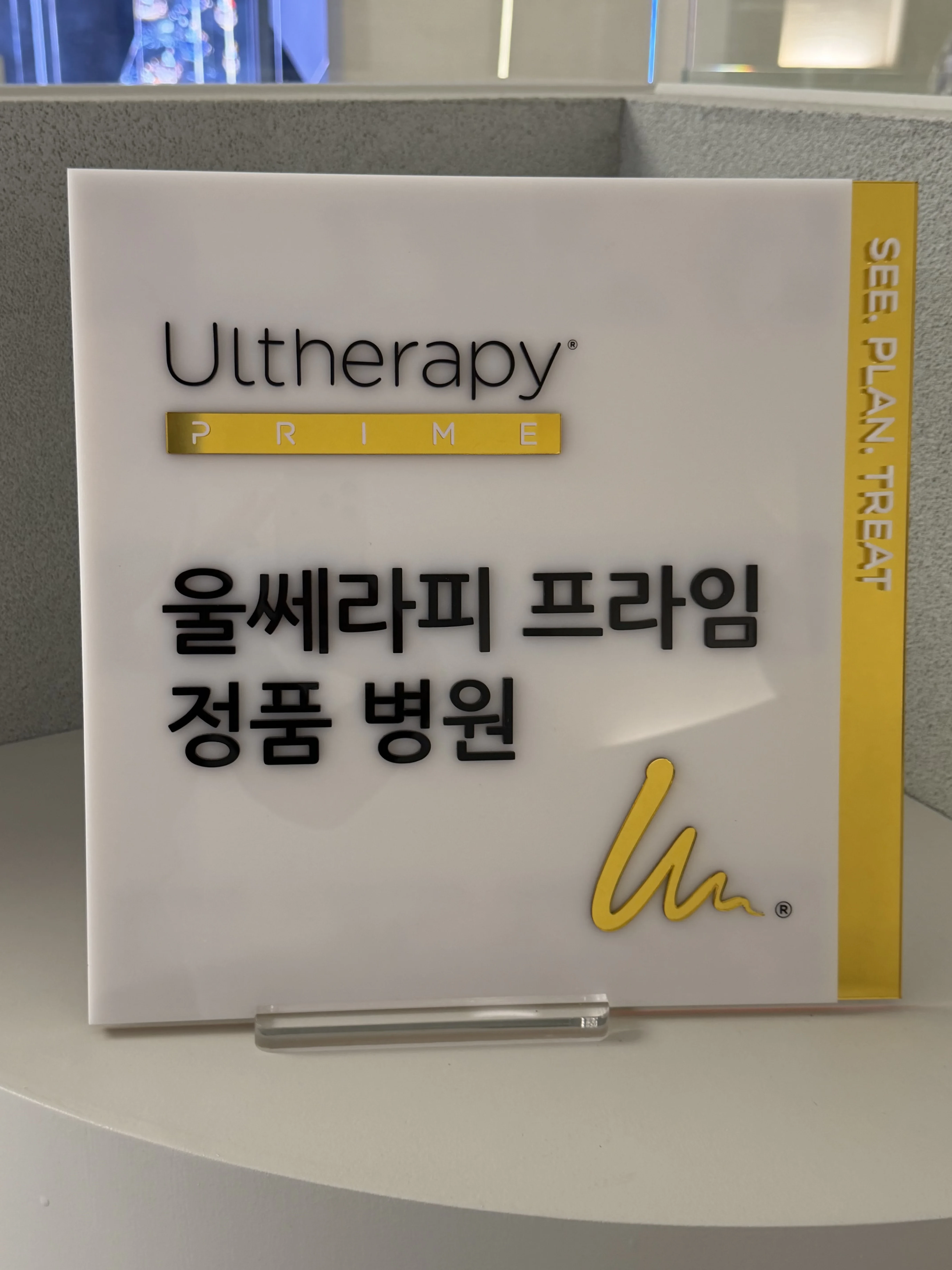
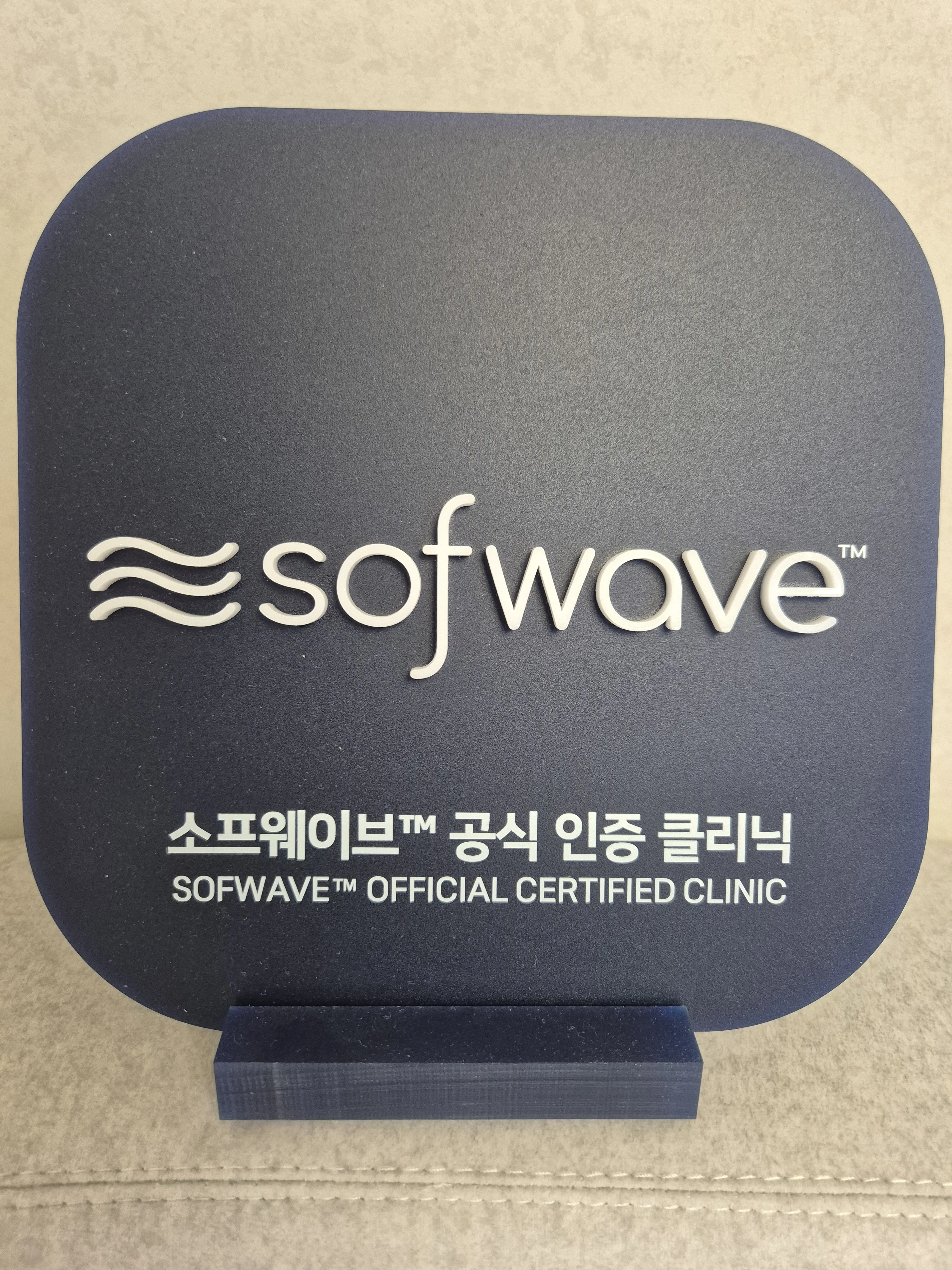
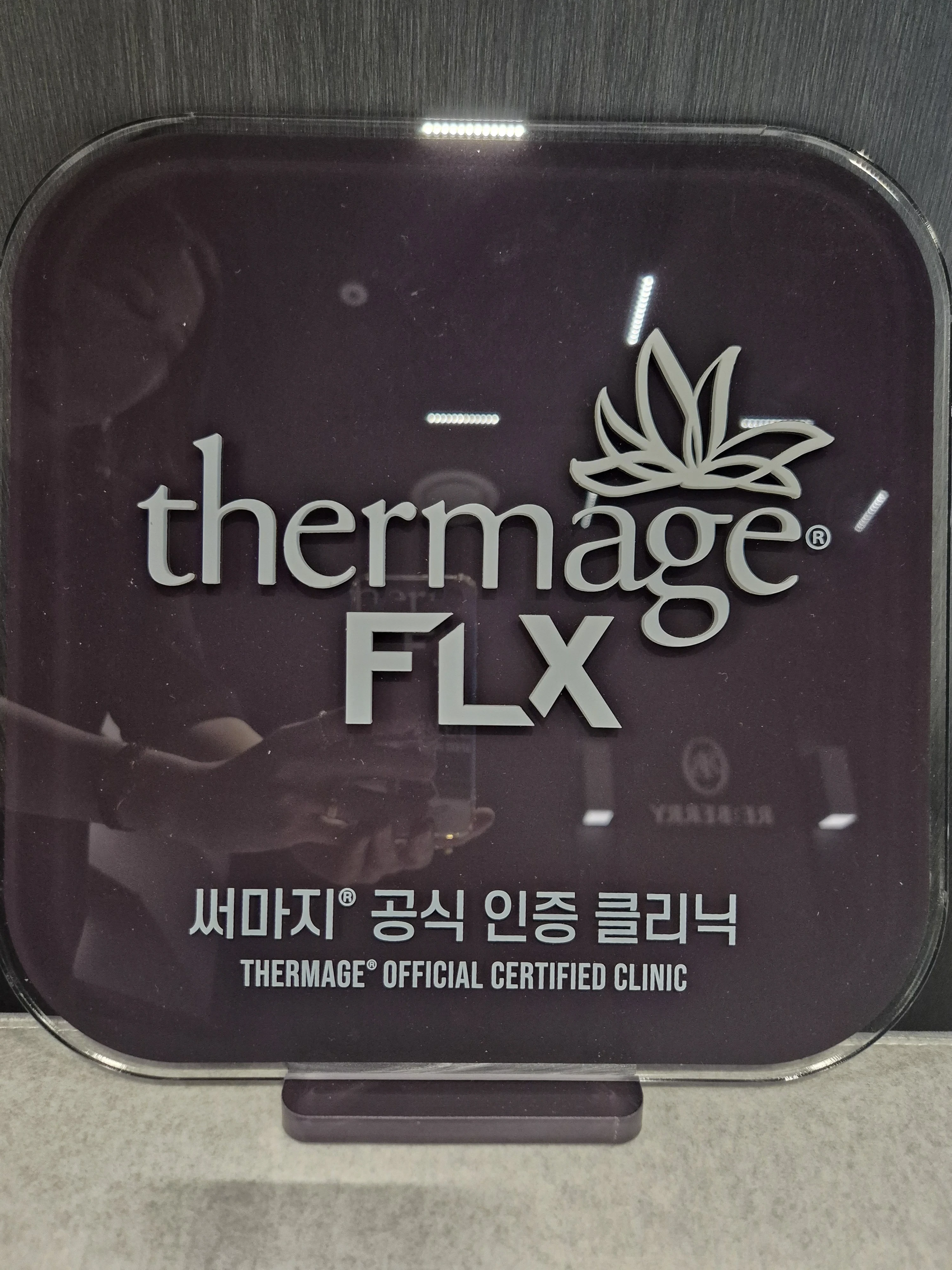
Brand-Authenticated Equipment & Training



Our doctors are certified by Korea’s top dermatological societies




Numbers That Tell Our Story
Real procedures performed.
Best Laser For Asian Skin Korea — Frequently Asked Questions
Indication-matched wavelength selection, PIH prevention, melasma, test spots and pricing answers for Asian-skin laser patients in Hongdae Seoul at RE:BERRY, updated for 2026.
Which laser is safest for Asian skin in Korea overall?
RE:BERRY Hongdae answers that no 1 laser is safest for all Asian skin — safety depends on your indication and Fitzpatrick type. Longer 1064 nm Nd:YAG bypasses surface melanin for deeper targets, picosecond and Q-switched suit pigment, and fractional suits texture, so Dr. Jae-Hong Kim matches the device to your goal first.
Why does skin tone affect which laser can be used?
RE:BERRY Hongdae explains 1 core reason: Asian skin often has higher epidermal melanin, which competes for laser energy and raises post-inflammatory hyperpigmentation and burn risk. That is why longer wavelengths, lower fluences and a test spot are used on higher Fitzpatrick types rather than 1 aggressive default setting for everyone.
What is the risk of hyperpigmentation with lasers on Asian skin?
RE:BERRY Hongdae treats PIH as the main risk, which is why it uses 4 safeguards: longer wavelengths, lower fluences, epidermal cooling and sun protection. Korean clinics run higher skin-of-color laser volume than most Western markets, so RE:BERRY physicians bring more experience keeping PIH risk low on darker tones.
Which laser is used for pigmentation and melasma on Asian skin?
RE:BERRY Hongdae favors picosecond and Q-switched lasers for pigment such as freckles and lentigines, and low-fluence 1064 nm Nd:YAG for melasma over multiple gentle sessions.
| Indication | Laser |
|---|---|
| Freckles, lentigines | Pico / Q-switched |
| Melasma | Low-fluence Nd:YAG |
Which laser is used for acne scars and texture on Asian skin?
RE:BERRY Hongdae uses fractional lasers for the 2 goals of texture and acne scars on Asian skin, with conservative energy to limit PIH. Because ablative resurfacing carries more risk on darker tones, over 3-6 sessions the physician balances results against downtime, matching the device to your scar type rather than 1 fixed machine.
How much does laser treatment cost for Asian skin in Korea?
RE:BERRY Hongdae publishes transparent pricing for every laser indication before you book, updated for 2026. Your WhatsApp quote covers the 60-90 minute consultation, each session and the 4-week photo follow-up as 1 clear figure, with no separate consultation charge or per-session surprises.
Is laser treatment cheaper in Korea than in the US or Japan?
RE:BERRY Hongdae frames value through volume and experience across 8 languages, not a discount claim. Korean clinics run notably higher skin-of-color laser volume than most Western markets, so Seoul physicians gain more experience treating Asian skin safely. Your transparent quote is published before you book, with no hidden fees.
Why are lower fluences and conservative settings used for Asian skin?
RE:BERRY Hongdae uses lower fluences for 1 reason: higher melanin in Asian skin absorbs more laser energy, raising burn and PIH risk. Over 2-6 gentle sessions, conservative settings deliver gradual improvement with less risk, which Korean clinics practice more than most Western markets given higher skin-of-color volume.
How does a clinic choose the right laser wavelength for my skin?
RE:BERRY Hongdae chooses by 2 factors: your indication and your Fitzpatrick type. Dr. Jae-Hong Kim matches picosecond or Q-switched to pigment, fractional to texture, and 1064 nm Nd:YAG to deeper targets, then confirms the choice with a test spot before any full session on your skin of color.
Is a patch test recommended before laser treatment on Asian skin?
Yes — RE:BERRY Hongdae runs 1 test spot before full treatment on higher Fitzpatrick types to gauge how your individual skin responds. This step lowers PIH and burn risk. Korean clinics perform this on more skin-of-color patients than most Western markets, so the practice is well rehearsed here.
What pre- and post-care reduces pigmentation risk after laser?
RE:BERRY Hongdae gives 3 core rules: avoid sun exposure and tanning before and after, apply daily SPF, and follow the physician’s aftercare. These cut PIH risk on Asian skin. Seoul clinics handle more skin-of-color laser cases than most Western markets, so this guidance is thorough and rehearsed.
Can travelers with Asian skin get laser during a short Korea trip?
Yes — RE:BERRY Hongdae sits in Mapo-gu near Hongik University Station, 1 no-transfer AREX ride from Incheon Airport T1/T2. Compared with most Western clinics, Seoul’s Hongdae district offers higher skin-of-color laser volume and 8-language support, so short-stay visitors get experienced, conservative care close to the airport line.
Boutique versus chain clinic for Asian-skin laser — which is better?
RE:BERRY Hongdae matches these 2 clinic types to your case rather than crowning 1 winner, since boutiques offer continuity and chains offer speed.
| Factor | Boutique | Chain |
|---|---|---|
| Test spot | Standard | Often skipped |
| Settings | Per Fitzpatrick type | Standardized |
How do I verify a Korean laser clinic is legitimate before booking?
RE:BERRY Hongdae recommends 3 checks: confirm the physician’s Korean MOHW license number (Dr. Jae-Hong Kim is No. 138911), confirm a test spot and conservative settings are offered, and confirm transparent pricing is published before you book. Seoul clinics run higher skin-of-color volume than most Western markets, so verified experience matters more than a low price. See other treatments.
What makes Asian-skin laser care at RE:BERRY Hongdae different?
3 things set RE:BERRY Hongdae apart: indication-to-device matching instead of one best-laser verdict, a test spot with lower fluences for skin of color, and transparent pricing published before you book. The clinic also sits in Hongdae’s design district — see the ultherapy prime page for the same standard.
Book Your Asian-Skin Laser Consultation at RE:BERRY Hongdae
Still searching for the best laser for Asian skin korea clinics can match to your skin? Get an honest, indication-matched plan — picosecond and Q-switched for pigment, fractional for texture, 1064 nm Nd:YAG for deeper targets — with a test spot, lower fluences and transparent pricing from ₩19,000 (about $14), published before you book. Directly on the AREX line from Incheon Airport, 1 train ride to Hongik University Station. Dr. Jae-Hong Kim handles your plan from the test spot through 4-week aftercare. This information is for educational purposes only and is not medical advice; consult a licensed physician for individual guidance. Your plan is confirmed in writing before you book.
Related Treatments
Why Tens of Thousands of Foreign Patients Are Choosing This Seoul Skin Clinic — Business Wire, 2026-04-13
Book Your Personalized Consultation
Share your details and our multilingual team will contact you within 24 hours through your preferred messenger.
- ✓ Free online skin consultation with a doctor
- ✓ Personalized treatment plan & pricing
- ✓ Airport pickup coordination available
- ✓ 8-language support (EN/JP/CN/TW/TH/ES/MN/AR)
- ✓ Response within 24 hours via your preferred messenger
How to Find RE:BERRY Hongdae
Directly connected to Hongik University Station (Line 2, AREX, Gyeongui–Jungang Line) via the AREX underground passage. 3F & B2, 140 Yanghwa-ro, Mapo-gu, Seoul.
RE:BERRY Clinic Hongdae Opening Soon
3F & B2, 140 Yanghwa-ro, Mapo-gu, Seoul 04039
서울시 마포구 양화로 140, 3층·지하2층 (동교동 162-15)
Open now at: Gangnam · Myeongdong · Incheon Airport