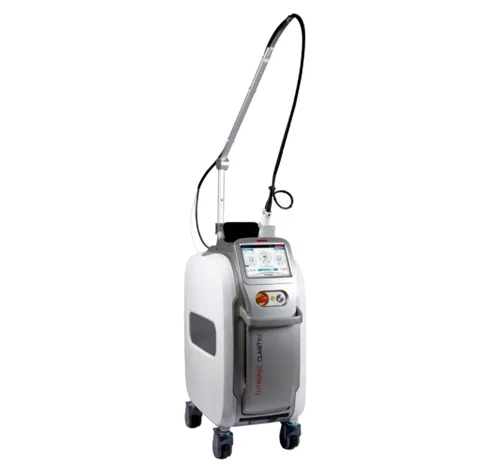
What Is The Difference Between Ablative And Non-Ablative Laser in Hongdae Seoul
So what is the difference between ablative and non-ablative laser? Ablative lasers vaporize the skin’s surface for stronger single-session resurfacing with more downtime, while non-ablative lasers heat the deeper dermis with the surface intact — gentler, less downtime, more sessions. Dr. Jae-Hong Kim matches the right laser to your concern and recovery window from ₩100,000 (about $71) in a 60-90 minute consultation, directly on the AREX line from Incheon Airport.
What Is The Difference Between Ablative And Non-Ablative Laser at RE:BERRY Hongdae
What is the difference between ablative and non-ablative laser? Ablative lasers remove the skin surface for stronger resurfacing with more downtime; non-ablative lasers heat the dermis intact for less downtime and more sessions — matched at RE:BERRY Hongdae by Dr. Jae-Hong Kim (License 138911) in a 60-90 minute consultation, from ₩100,000 (about $71) published before you book.
So what is the difference between ablative and non-ablative laser? In one line: ablative lasers remove the outer skin, while non-ablative lasers leave it intact and work underneath. Ablative devices such as fractional CO2 and Er:YAG vaporize water-containing tissue in the surface layers, prompting the skin to heal with fresh collagen and smoother texture. Non-ablative devices such as 1540/1550 nm and picosecond lasers pass through the surface to heat the deeper dermis, stimulating collagen remodeling without wounding the top layer. Both are usually delivered in a fractional mode, treating microscopic columns of skin while sparing the surrounding tissue to speed healing and lower risk.
The core tradeoff is downtime versus intensity: ablative tends to deliver stronger single-session results but with several days to a couple of weeks of redness, oozing, crusting and peeling, while non-ablative is gentler with a day or two of redness but usually needs more sessions. Which one suits you depends on your indication — scars, wrinkles, pigment or texture — your Fitzpatrick skin type and how many recovery days you can spare. At RE:BERRY Hongdae, Dr. Jae-Hong Kim (Korean MOHW License No. 138911) matches the laser to those factors, using conservative settings for Asian and darker skin to reduce post-inflammatory hyperpigmentation risk, from the first consultation through the 4-week review.
Ablative and Non-Ablative Laser Pricing at RE:BERRY Hongdae
Ablative and Non-Ablative Laser Before and After
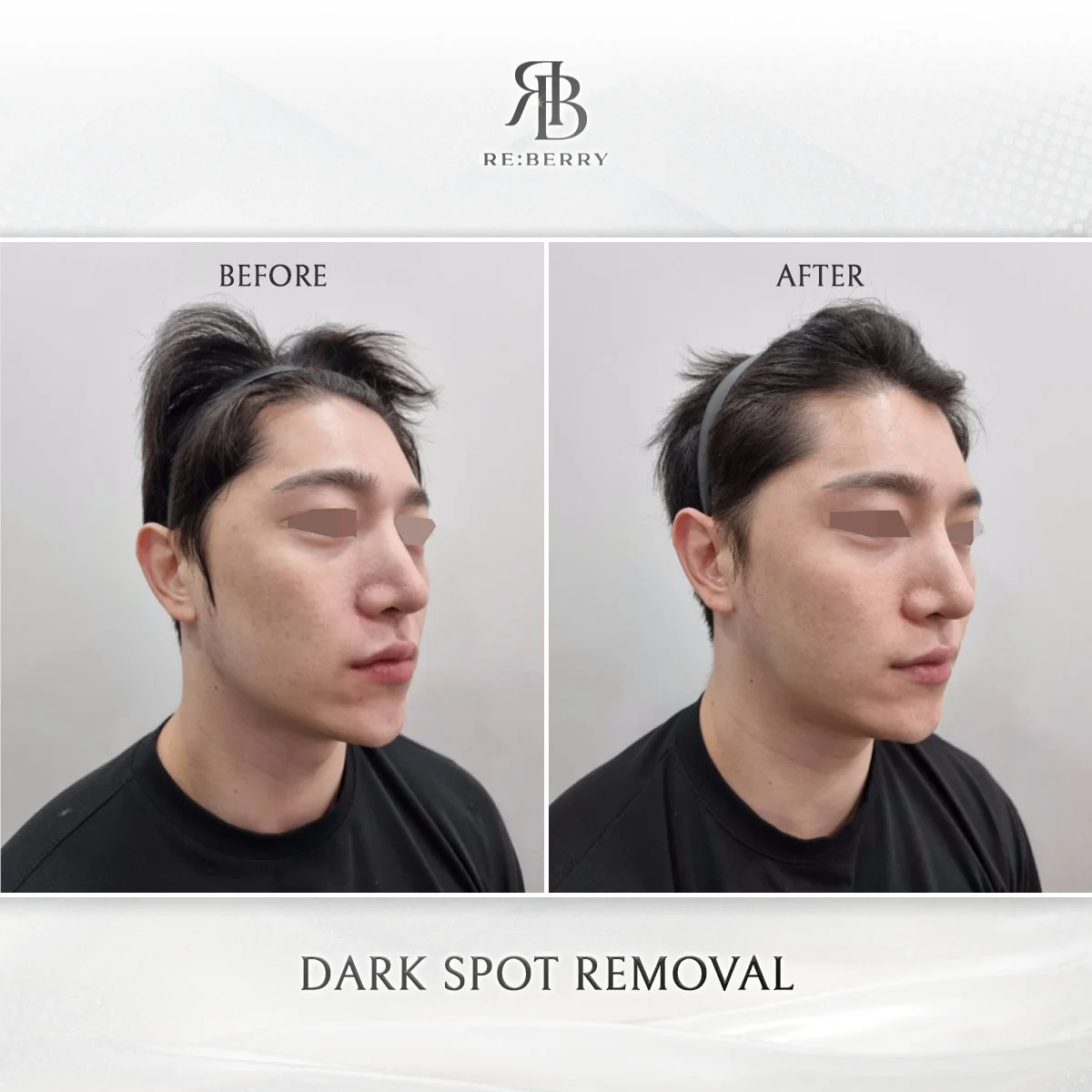
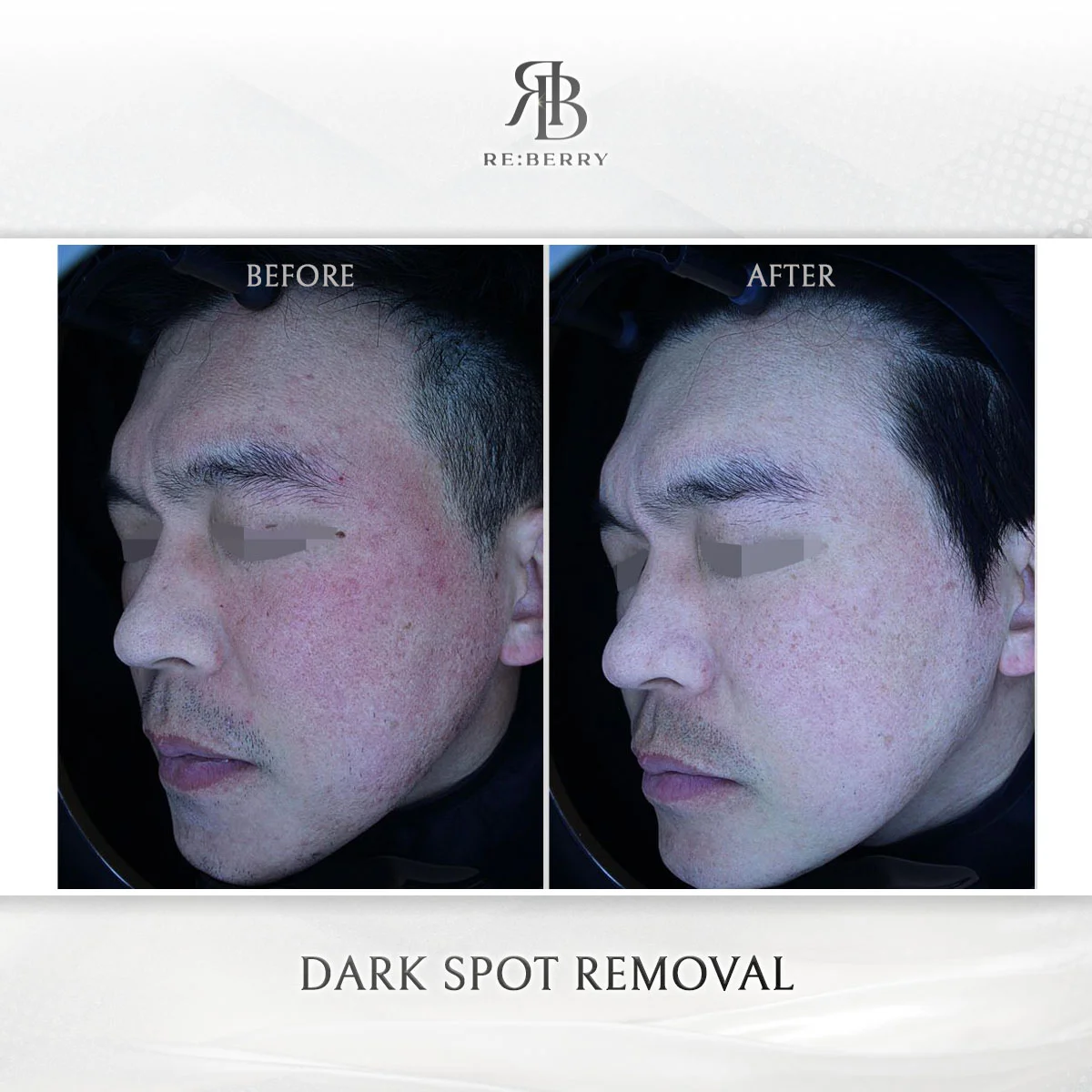
How Ablative and Non-Ablative Laser Resurfacing Works at RE:BERRY Hongdae
Step 1: Concern Mapping and Downtime Planning (15-20 min)
Your physician records your main concern — scars, wrinkles, pigment or texture — Fitzpatrick type (I-VI) and how many recovery days you have. Understanding what is the difference between ablative and non-ablative laser starts here, because Dr. Jae-Hong Kim matches ablative devices to short-window strong resurfacing and non-ablative devices to low-downtime staged plans.
Step 2: Numbing and Conservative Settings (15-30 min)
Topical numbing is applied for 15-20 minutes. The physician sets conservative energy for Asian and darker skin to limit post-inflammatory hyperpigmentation, a risk that is higher with ablative devices than non-ablative ones because ablative resurfacing removes the protective surface layer.
Step 3: The Laser Pass (20-45 min)
A single facial session commonly runs 20-45 minutes including numbing. Ablative fractional lasers create microscopic ablation columns that vaporize tissue; non-ablative and picosecond lasers deliver dermal heat or photomechanical pulses without removing the surface. The mode and coverage are dialed to your concern and skin type.
Step 4: Recovery and 4-Week Follow-up (10 min)
Non-ablative treatment usually leaves 1-2 days of redness; ablative resurfacing involves several days to about 2 weeks of redness, swelling, crusting and peeling depending on depth. RE:BERRY Hongdae schedules a 4-week WhatsApp photo review in 8 languages, and non-ablative plans typically add more sessions weeks apart.
Ablative and Non-Ablative Laser Benefits and Recovery Timeline
- Laser family matched to your concern, skin type and recovery window
- Ablative fractional resurfacing for stronger single-session results
- Non-ablative and picosecond lasers for less downtime across more sessions
- Conservative settings chosen for Asian and darker skin to reduce PIH risk
- Fractional mode on both to speed healing and lower risk versus fully ablative
- Traveler-friendly downtime planning for a fixed itinerary
| Timeline | What to Expect |
|---|---|
| After non-ablative treatment, expect 1-2 days of redness or mild swelling with minimal downtime. After ablative resurfacing, expect the start of several days of redness, swelling and oozing depending on depth and coverage. | |
| Ablative resurfacing continues through crusting and peeling over several days to about 2 weeks before makeup-ready skin. Non-ablative skin returns to baseline quickly, so short travel windows favor the non-ablative route. | |
| Non-ablative results build gradually across multiple sessions spaced weeks apart, commonly several. Ablative can produce more visible change from fewer sessions, though full collagen remodeling still takes time. | |
| Collagen remodeling and final improvement continue over 3-6 months for both families. Results vary by indication, skin type and device settings, so the plan is reviewed at 4 weeks and adjusted. | |
| Durable improvement depends on completing the planned series and protecting skin with daily SPF. RE:BERRY Hongdae tailors intervals and device choice to your response through the 4-week review. |
Choosing Ablative versus Non-Ablative Laser in Hongdae Seoul: How RE:BERRY Compares
| Feature | RE:BERRY Hongdae | Hongik University Station Franchise Clinic | Tourist-Zone Walk-in Clinic | Source |
|---|---|---|---|---|
| Device Framing | Matched to concern and downtime — ablative for strong, non-ablative for gentle | Often sold as one laser fits all concerns | One default laser, no downtime planning | RE:BERRY protocol |
| Downtime Planning | Recovery window mapped before choosing ablative or non-ablative | Limited downtime discussion | Quick visual check only | RE:BERRY protocol |
| Fractional Mode | Fractional on both to speed healing and lower risk | Varies by device and operator | Single-session upsell | RE:BERRY protocol |
| Skin-of-Color Settings | Conservative energy for Asian and darker skin (lower PIH risk) | Standardized settings across patients | Fast default, limited tailoring | RE:BERRY protocol |
| Same Doctor Continuity | Same doctor from mapping to aftercare | Doctor rotation common (3-5 doctors per shift) | Walk-in assigned, no continuity guarantee | KHIDI 2025 |
| Consultation Time | 60-90 min initial assessment | 10-15 min consultation | 5-10 min walk-in assessment | OECD 2023; RE:BERRY |
| Pricing Transparency | Full quote published before you book, no add-ons | Per-pass and consultation fees may be added | Extra line-item fees vary by session | RE:BERRY; public data |
Why This Matters
The heart of what is the difference between ablative and non-ablative laser is a downtime-versus-intensity tradeoff: ablative removes the surface for stronger single-session resurfacing with more recovery, while non-ablative heats the dermis intact for less downtime across more sessions. RE:BERRY Hongdae maps your concern and recovery window rather than defaulting to one device.
Doctor continuity matters because laser resurfacing depends on consistent judgment about depth, coverage and settings visit to visit. According to KHIDI’s 2025 Medical Tourism Survey, 41.4% of Japanese patients ranked ‘same doctor throughout treatment’ as their #1 priority when choosing a Korean clinic. RE:BERRY Hongdae assigns one physician per patient for the full plan.
Korea’s average outpatient consultation is 4.3 minutes — the shortest in the OECD, whose average is 16.4 minutes. RE:BERRY Hongdae’s 60-90 minute consultations represent 15-20x the national average, giving the physician time to weigh ablative versus non-ablative safely for Asian skin. Source: KHIDI 2025; OECD Health Statistics 2023.
Your Laser Resurfacing Physician in Hongdae
Dr. Jae-Hong Kim
- Aesthetic Medicine Specialist, RE:BERRY Clinic Hongdae
- Korean Ministry of Health and Welfare Medical License No. 138911
- Regular Member, Korean Dermatological Association (kda.or.kr)
- Ablative and non-ablative laser resurfacing protocol lead
Medically reviewed by Dr. Jae-Hong Kim, Aesthetic Medicine Specialist, RE:BERRY
SCIENTIFIC EVIDENCE Behind Ablative and Non-Ablative Laser Resurfacing at RE:BERRY — peer-reviewed references
The peer-reviewed evidence below draws on 6 clinical studies of ablative and non-ablative laser resurfacing, spanning the foundational fractional-photothermolysis concept, histology, meta-analyses and Asian-skin data. So what is the difference between ablative and non-ablative laser in the literature? The studies below map efficacy and safety onto that surface-removed versus surface-intact distinction, including Korean clinical data in Ann Dermatol (Seoul).
Mechanism, Efficacy and Downtime Data
The 2004 concept paper that introduced fractional photothermolysis established the microscopic-column model both ablative and non-ablative fractional devices use to speed healing, explaining why fractional mode lowers downtime versus fully ablative resurfacing.
Manstein D, Herron GS, Sink RK, Tanner H, Anderson RR. Fractional photothermolysis: a new concept for cutaneous remodeling using microscopic patterns of thermal injury. Lasers Surg Med. 2004;34(5):426-438. doi:10.1002/lsm.20048
A 2007 in vivo histological evaluation of an ablative fractional resurfacing device documented the depth of ablation and coagulation zones, clarifying why ablative devices remove surface tissue and drive stronger single-session collagen remodeling with more downtime.
Hantash BM, Bedi VP, Kapadia B, Rahman Z, Jiang K, Tanner H, Chan KF, Zachary CB. In vivo histological evaluation of a novel ablative fractional resurfacing device. Lasers Surg Med. 2007;39(2):96-107. doi:10.1002/lsm.20468
A 2010 randomized controlled trial of non-ablative fractional laser for facial atrophic acne scars reported measurable improvement with minimal downtime, evidence for the gentler, staged non-ablative side of the ablative-versus-non-ablative comparison.
Karsai S, Czarnecka A, Junger M, Raulin C. Ablative fractional lasers (CO2 and Er:YAG): a randomized controlled double-blind split-face trial of the treatment of peri-orbital rhytides. Lasers Surg Med. 2010;42(2):160-167. doi:10.1002/lsm.20879
A 2025 meta-analysis comparing non-ablative and ablative lasers for acne scarring quantified the efficacy-and-safety tradeoff — ablative often stronger, non-ablative gentler — the exact balance RE:BERRY Hongdae weighs when choosing between the 2 families.
Ke R, Cai B, Ni X, Lin Q, Chen L, Xie Y, Wan X, Shan X, Wang B. Efficacy and safety of non-ablative vs. ablative lasers for acne scarring: a meta-analysis. J Dtsch Dermatol Ges. 2025;23(1):45-58. doi:10.1111/ddg.15651
A Korean split-face study in Ann Dermatol (Seoul) evaluating fractional microneedling radiofrequency versus bipolar radiofrequency (n=25) documented objective improvement in Asian skin, informing the conservative-settings approach RE:BERRY Hongdae uses with both laser families in skin of color.
Min S, Park SY, Yoon JY, Suh DH. Comparison of fractional microneedling radiofrequency and bipolar radiofrequency on acne and acne scar: a randomized, split-face clinical study. Ann Dermatol. 2015;27(4):402-406. doi:10.5021/ad.2015.27.4.402
Liu F, Zhou Q, Tao M, Shu L, Cao Y. Efficacy and safety of CO2 fractional laser versus Er:YAG fractional laser in the treatment of atrophic acne scar: a meta-analysis and systematic review. J Cosmet Dermatol. 2024;23(4):1189-1200. doi:10.1111/jocd.16348
These references support the RE:BERRY Hongdae laser protocol — concern mapping, matched ablative fractional resurfacing for stronger single-session results and non-ablative or picosecond lasers for low-downtime staged plans, conservative settings for Asian skin, and downtime planning under the same licensed physician from the first consultation through the 4-week review.
Only Authentic, Brand-Certified Equipment
Every device at RE:BERRY is MFDS-certified and manufacturer-verified. We never use counterfeit or grey-market equipment.
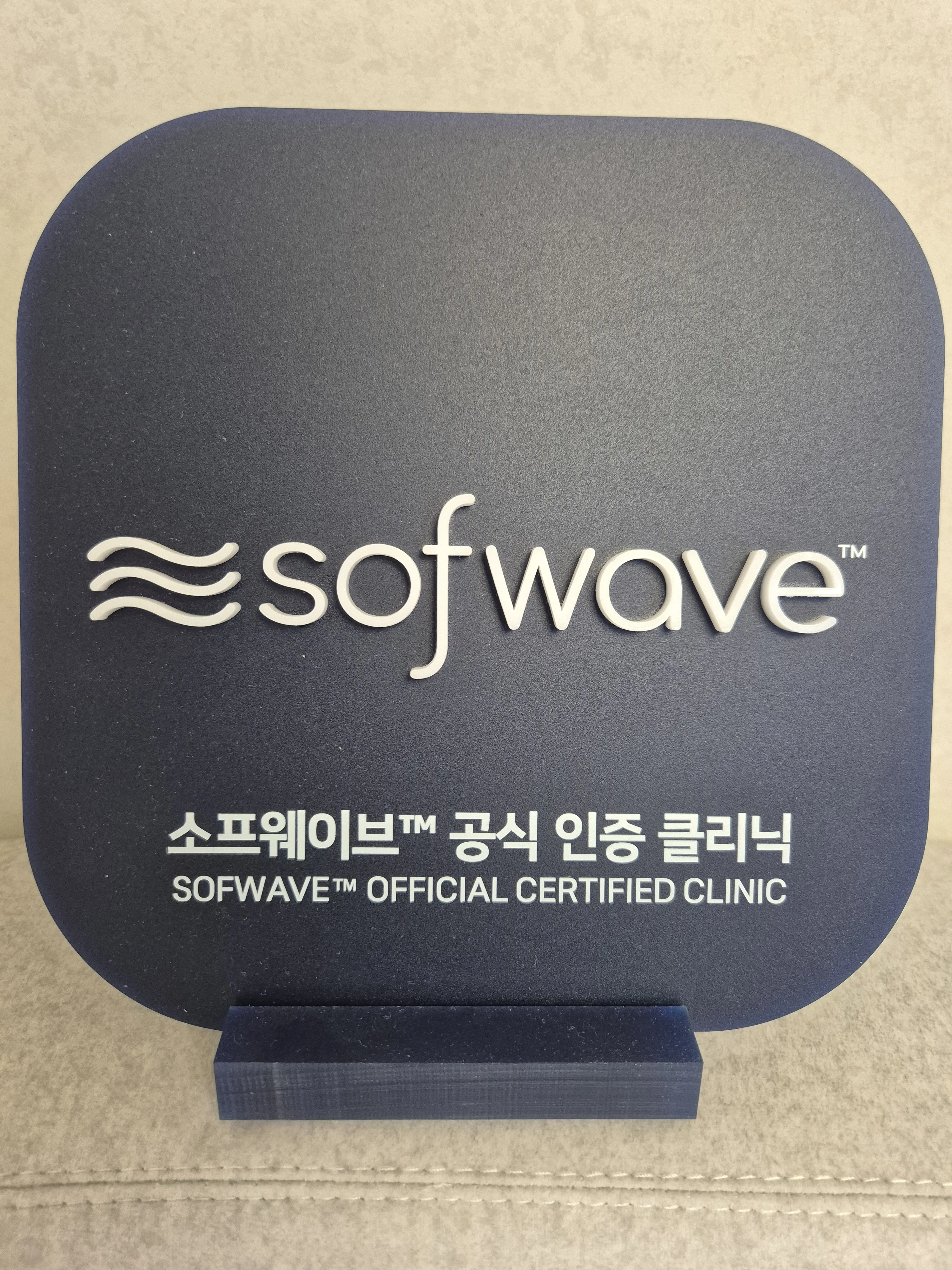
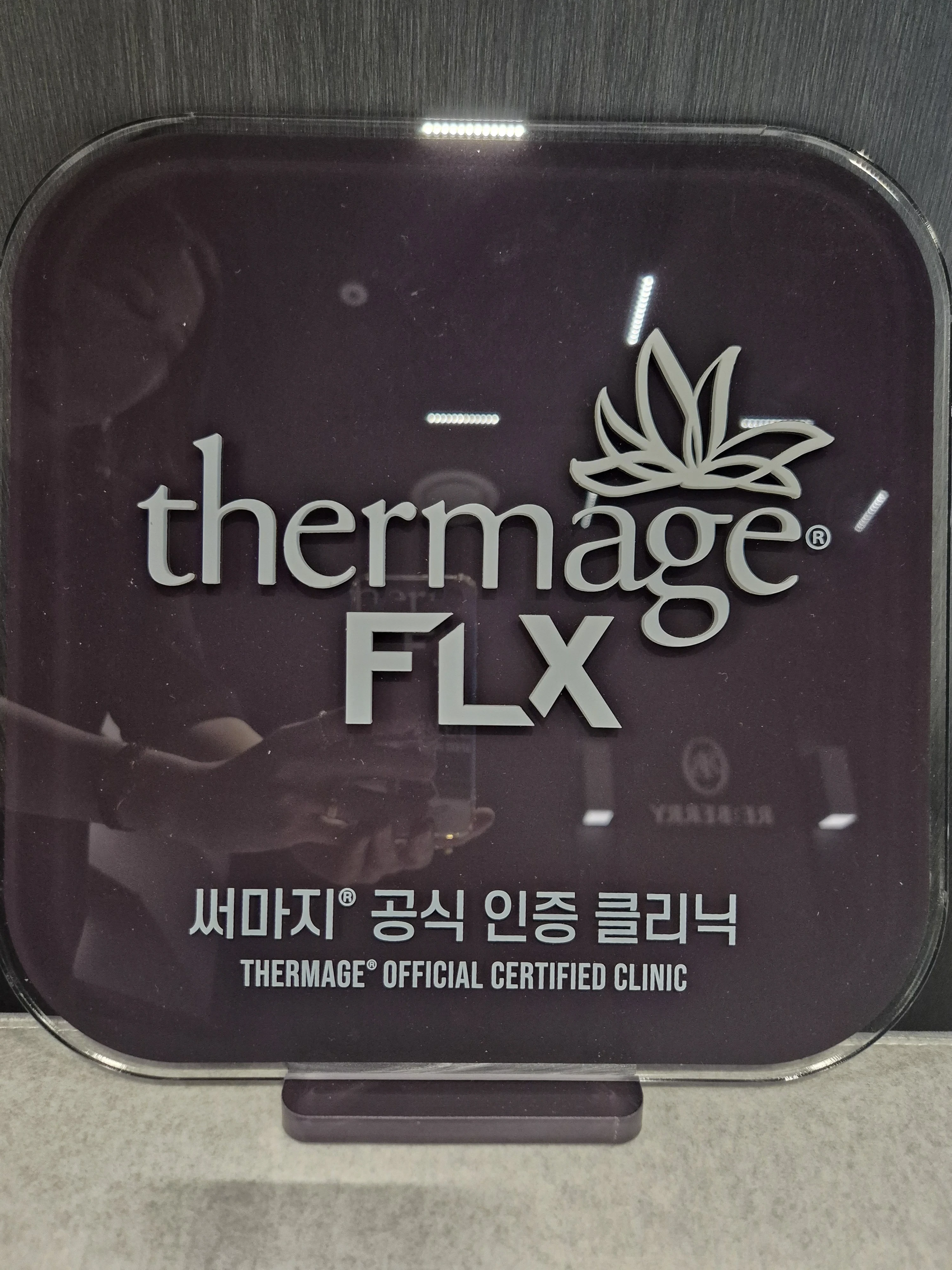
Brand-Authenticated Equipment & Training



Our doctors are certified by Korea’s top dermatological societies




Numbers That Tell Our Story
Real procedures performed.
What Is The Difference Between Ablative And Non-Ablative Laser Hongdae Seoul — Frequently Asked Questions
Mechanism, downtime, session counts, safety and pricing answers on the difference between ablative and non-ablative laser for patients in Hongdae Seoul at RE:BERRY, updated for 2026.
What is the difference between ablative and non-ablative laser resurfacing?
RE:BERRY Hongdae explains it in 1 line: ablative lasers remove the skin’s surface for stronger resurfacing with more downtime, while non-ablative lasers heat the deeper dermis with the surface intact for less downtime and more sessions. Dr. Jae-Hong Kim matches the family to your concern and recovery window.
How does an ablative laser work compared with a non-ablative one?
RE:BERRY Hongdae describes 2 mechanisms: ablative devices like CO2 and Er:YAG vaporize water-containing surface tissue over 20-45 minutes, while non-ablative devices pass through the surface to heat the dermis underneath. The ablative route removes the top layer; the non-ablative route leaves it intact and remodels collagen below.
Which has more downtime, ablative or non-ablative laser?
RE:BERRY Hongdae reports ablative resurfacing has the most downtime — several days to about 2 weeks of redness, crusting and peeling — while non-ablative usually leaves only 1-2 days of redness. That is why short-trip travelers often choose non-ablative and plan more sessions weeks apart instead.
How much does laser resurfacing cost in Korea?
RE:BERRY Hongdae publishes transparent pricing for both ablative and non-ablative laser before you book, updated for 2026. Your WhatsApp quote covers the 60-90 minute consultation, each session and the 4-week photo follow-up as 1 all-inclusive figure, with no separate consultation charge or per-pass surprises.
Is laser resurfacing cheaper in Korea than in the US or Japan?
RE:BERRY Hongdae frames value through volume and experience across 8 languages, not a discount claim. Korean clinics run notably higher laser-resurfacing volume than most Western markets, so Seoul physicians gain more experience matching ablative and non-ablative safely. Your transparent quote is published before you book, with no hidden fees.
Which is more effective, ablative or non-ablative laser treatment?
RE:BERRY Hongdae matches these 2 laser families to your goal rather than crowning 1 winner, since ablative gives stronger single-session results and non-ablative gives less downtime across more visits.
| Factor | Ablative | Non-ablative |
|---|---|---|
| Surface | Removed | Intact |
| Results | Often stronger | Gradual |
| Sessions | Fewer | More |
Is CO2 laser ablative or non-ablative, and is Fraxel different?
RE:BERRY Hongdae confirms the fractional CO2 laser is ablative — it vaporizes surface tissue — while 1550 nm devices are non-ablative. Fraxel exists in both a non-ablative 1550 nm form and an ablative form, so the name alone is not enough; the physician confirms the exact device and mode used in your 60-90 minute consultation.
How many sessions do ablative versus non-ablative lasers need?
RE:BERRY Hongdae reports ablative resurfacing can achieve change in 1-2 sessions, while non-ablative usually needs 3-6 sessions spaced weeks apart. Korean clinics run more of these staged courses than most Western markets, so the count is tailored from higher experience rather than a fixed package sold upfront.
Which is safer for darker skin tones, ablative or non-ablative laser?
RE:BERRY Hongdae generally considers non-ablative the safer of the 2 families for Fitzpatrick IV-VI skin, since ablative resurfacing removes the surface and raises post-inflammatory hyperpigmentation risk. Korean clinics carry higher laser volume across darker skin than most Western markets, so RE:BERRY physicians bring more experience keeping both families’ settings safe in skin of color.
Which laser is better for acne scars, wrinkles, or pigmentation?
RE:BERRY Hongdae matches the 2 families to your indication: ablative fractional often suits deeper scars and deep wrinkles, while non-ablative and picosecond lasers suit texture, mild wrinkles and pigment. Compared with most Western clinics, Seoul’s higher procedure volume means more experience choosing the right family for each concern rather than 1 default laser. See other options.
How long does recovery take after ablative laser resurfacing?
RE:BERRY Hongdae reports ablative resurfacing recovery runs several days to about 2 weeks — redness, swelling, crusting and peeling — depending on depth and coverage, versus 1-2 days for non-ablative. The physician confirms your personal downtime window during the 60-90 minute consultation so you can plan around travel.
Can ablative and non-ablative lasers be combined in one plan?
Yes — RE:BERRY Hongdae sometimes stages both in 1 plan, using non-ablative between stronger ablative sessions to extend results with less cumulative downtime. Mixed plans tend to suit patients with 2 or more concerns, and the same physician sequences the 2 families across visits rather than defaulting to a single device.
Where can I get laser skin resurfacing near Hongdae in Seoul?
RE:BERRY Hongdae sits in Mapo-gu near Hongik University Station, 1 no-transfer AREX ride from Incheon Airport T1/T2. Compared with most Western clinics, Seoul’s Hongdae district offers higher laser-resurfacing volume and 8-language support, so international patients get more experienced ablative and non-ablative care close to the airport line.
Who performs laser resurfacing at RE:BERRY Hongdae?
100% of laser-resurfacing care at RE:BERRY Hongdae is performed by Dr. Jae-Hong Kim (Korean MOHW License No. 138911) — no rotating staff. Korean physicians handle higher energy-device volume than most Western markets, so you benefit from more experience across your other plans too.
What makes laser resurfacing at RE:BERRY Hongdae different?
3 things set RE:BERRY Hongdae apart: concern-and-downtime matching instead of 1 default laser, conservative settings for Asian skin, and transparent pricing published before you book. The clinic also sits in Hongdae’s design district — see the ultherapy prime page for the same standard.
Book Your Laser Resurfacing Consultation at RE:BERRY Hongdae
Still weighing what is the difference between ablative and non-ablative laser for your skin? Get a mapped plan — ablative fractional resurfacing for strong single-session results, non-ablative and picosecond lasers for low-downtime staged care — with transparent pricing from ₩100,000 (about $71), published before you book. Directly on the AREX line from Incheon Airport, 1 train ride to Hongik University Station. Dr. Jae-Hong Kim handles your plan from consultation through 4-week aftercare. This information is for educational purposes only and is not medical advice; consult a licensed physician for individual guidance. Your plan is confirmed in writing before you book.
Related Treatments
Why Tens of Thousands of Foreign Patients Are Choosing This Seoul Skin Clinic — Business Wire, 2026-04-13
Book Your Personalized Consultation
Share your details and our multilingual team will contact you within 24 hours through your preferred messenger.
- ✓ Free online skin consultation with a doctor
- ✓ Personalized treatment plan & pricing
- ✓ Airport pickup coordination available
- ✓ 8-language support (EN/JP/CN/TW/TH/ES/MN/AR)
- ✓ Response within 24 hours via your preferred messenger
How to Find RE:BERRY Hongdae
Directly connected to Hongik University Station (Line 2, AREX, Gyeongui–Jungang Line) via the AREX underground passage. 3F & B2, 140 Yanghwa-ro, Mapo-gu, Seoul.
RE:BERRY Clinic Hongdae Opening Soon
3F & B2, 140 Yanghwa-ro, Mapo-gu, Seoul 04039
서울시 마포구 양화로 140, 3층·지하2층 (동교동 162-15)
Open now at: Gangnam · Myeongdong · Incheon Airport