Scar Removal Korea 2026 — Atrophic, Hypertrophic & Keloid Scars, Treated by Type in Seoul
Understand scar removal korea before you book — it is a category, not 1 procedure, because atrophic, hypertrophic and keloid scars each need a different approach, and treatment improves rather than fully erases most scars. RE:BERRY Hongdae triages your scar type from ₩19,000 (about $14) in a 60-90 minute doctor-led consult at Hongik University Station, direct on the AREX airport line, with honest keloid-recurrence framing.
Visit RE:BERRY across Seoul, Korea
Hongdae opens soon. Until then, explore our flagships — tap a clinic to view it.
ONE RE:BERRY BRAND · MFDS-REGISTERED DEVICES · MULTILINGUAL CARE AT EVERY LOCATION
What is scar removal korea and can a scar be removed completely?
Scar removal korea is a category of treatments matched to scar type — atrophic (depressed), hypertrophic (raised) and keloid (raised beyond the wound) — where the honest goal is to improve texture, height and color, not to erase a scar completely. RE:BERRY Hongdae triages yours from ₩19,000 (about $14) in a doctor-led consult on the AREX line, with candid keloid-recurrence framing.
Scar Removal Korea Pricing at RE:BERRY Hongdae
Scar Removal Korea — What to Expect at RE:BERRY
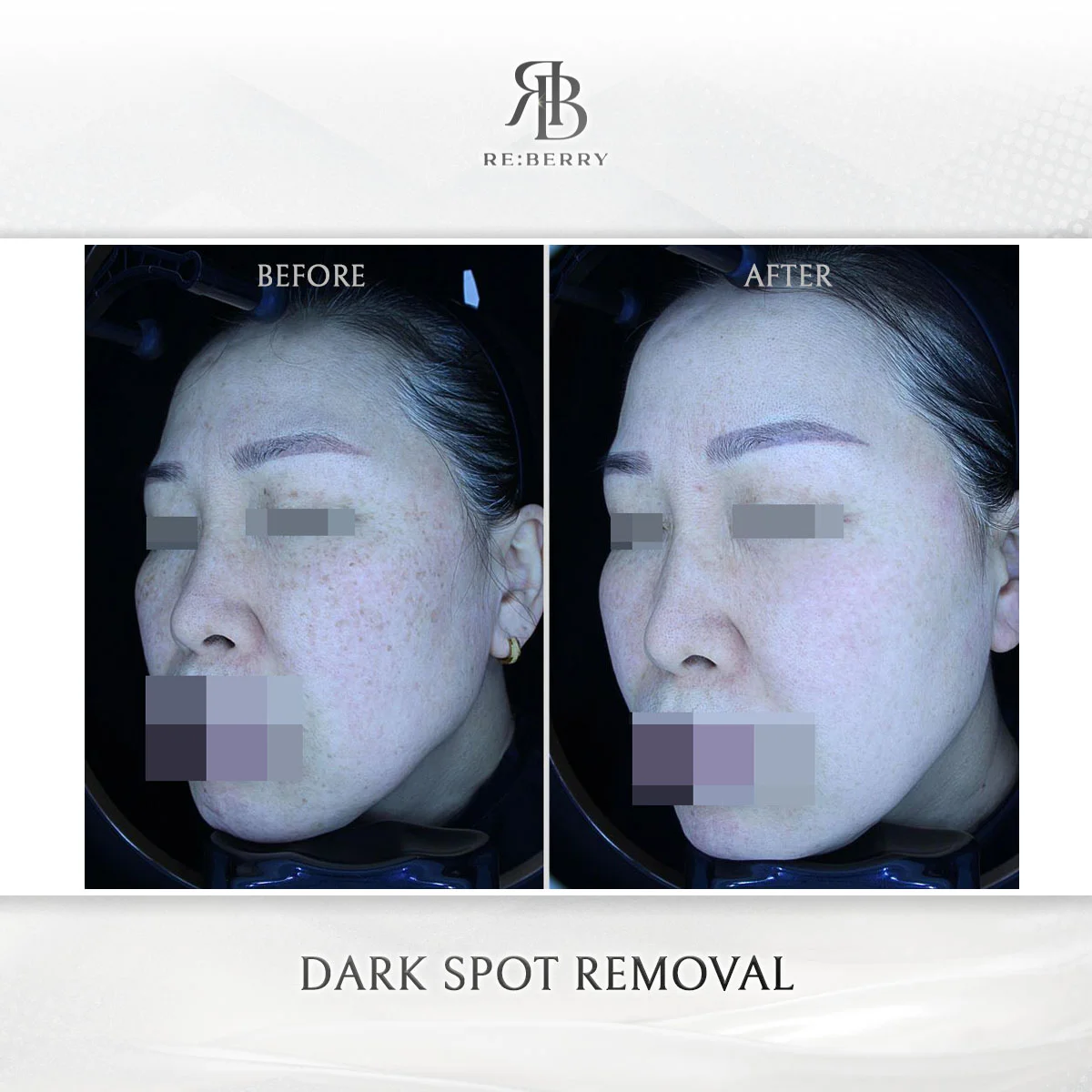
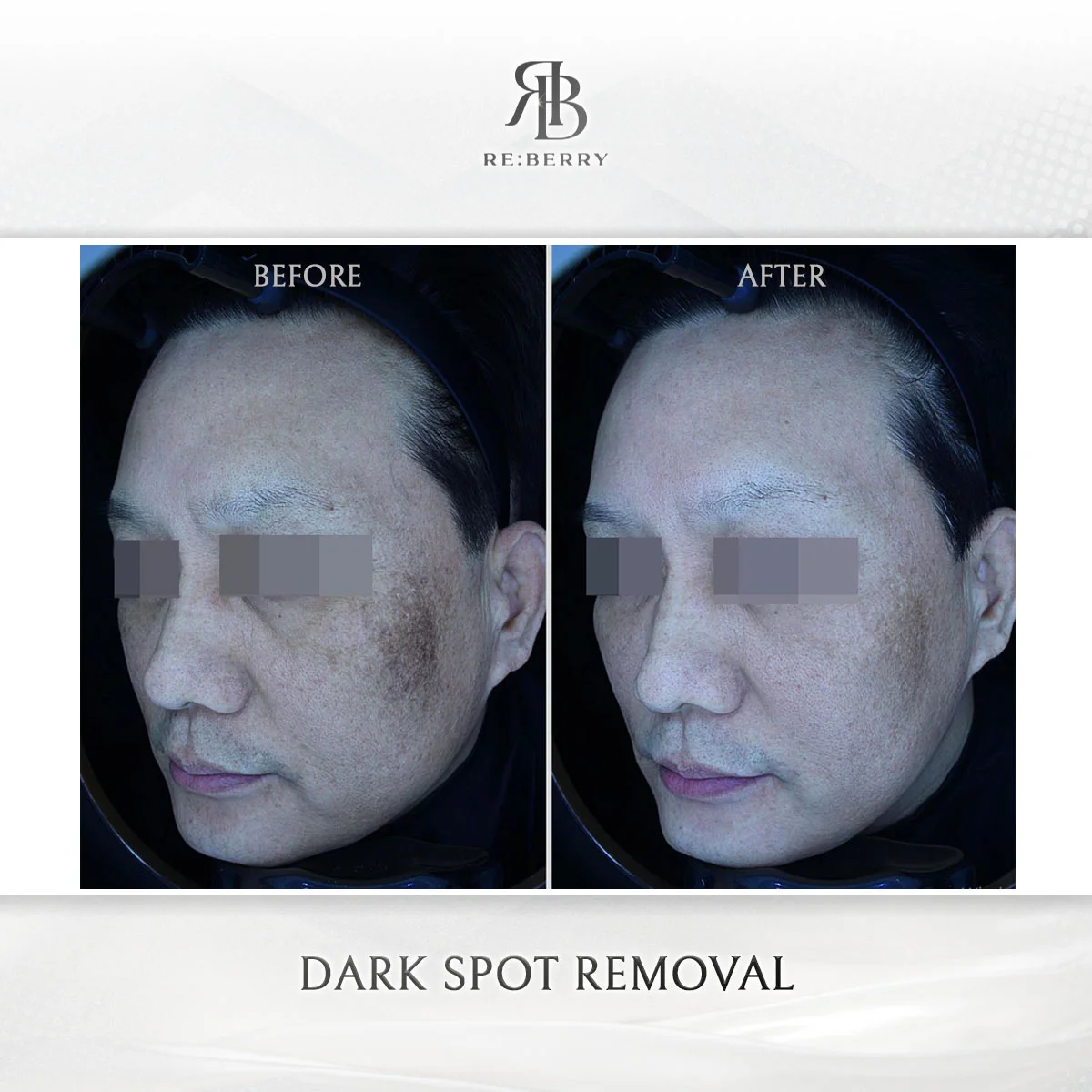
How Your Scar Removal Korea Plan Is Built at RE:BERRY Hongdae
Step 1: Classify the scar type and cause
In the 60-90 minute consult, Dr. Jae-Hong Kim classifies the scar across 3 shapes — atrophic (depressed), hypertrophic (raised, within the wound) and keloid (raised beyond the wound) — plus cause: acne, surgical, C-section or traumatic. Scar removal korea only works when the plan is matched to type and cause.
Step 2: Assess scar age, tissue and skin tone
Your doctor evaluates how old the scar is, whether it is still remodeling, its tissue type, and your Fitzpatrick skin tone, because post-inflammatory pigmentation risk in darker skin guides conservative settings. This 1 assessment decides timing, modality and energy level before any scar removal korea treatment begins.
Step 3: Match modality to depressed vs raised scars
Depressed scars are treated by releasing tethered tissue and remodeling collagen with subcision, fractional laser resurfacing, RF microneedling or filler. Raised hypertrophic and keloid scars are calmed with intralesional corticosteroids, silicone, pressure, 5-fluorouracil or cryotherapy, so scar removal korea uses different tools for the 2 scar directions.
Step 4: Plan keloids as staged, combined therapy
Because keloids are an aberrant wound-healing response with a notably high recurrence rate, Dr. Jae-Hong Kim plans them as staged, combined management — for example excision only when paired with adjuvant therapy — rather than excision alone. That honest framing is why scar removal korea for keloids is treated as ongoing, multi-modal care.
Step 5: Run several sessions, then review remotely
Most scar types need several sessions spaced weeks apart, since remodeling is gradual over weeks to months. After starting in Seoul, RE:BERRY Hongdae sends written aftercare in 8 languages plus a 4-week WhatsApp review from ₩19,000 (about $14), and you continue on the AREX line, with keloids monitored for recurrence.
Why Visitors Choose RE:BERRY Hongdae for Scar Removal Korea
- Scar-type triage, not 1 default laser Scar removal korea at RE:BERRY Hongdae maps atrophic, hypertrophic and keloid scars to different modalities, so your plan from ₩19,000 (about $14) matches your scar. That is a distinct approach from a clinic that applies 1 default laser regardless of whether your scar is depressed or raised.
- Honest keloid and erasure framing RE:BERRY Hongdae states that keloids commonly recur after excision and need combined, staged therapy, and that scar removal korea improves rather than erases most scars. That honesty protects you from over-promising and sets realistic expectations for texture, height and color change.
- Hongdae’s youth and design-district context Hongdae is Seoul’s creative, university-driven neighborhood around Hongik University Station and Yeonnam-dong — walkable and English-friendly. A 15-60 minute in-office session such as a laser pass or injection fits naturally between the district’s cafes, galleries and the Gyeongui Line Forest Park.
- Direct airport access for staged care RE:BERRY Hongdae sits on the AREX line at Hongik University Station, a no-transfer ride from Incheon Airport T1 and T2. Because scar removal korea usually needs several sessions weeks apart, that access makes starting in Seoul and returning realistic, with WhatsApp support between visits.
| Timeline | What to Expect |
|---|---|
| Before travel | Send scar photos, age and cause on WhatsApp; receive 1 itemized quote and scar-type triage note |
| Day 1 | 60-90 min assessment, scar-type classification, and first 15-60 min in-office session if suitable |
| Weeks 2-8 | Further sessions spaced weeks apart; redness or bruising settles between visits by modality |
| Months 1-3 | Texture, height and color reassessed; keloids monitored for recurrence and plan adjusted |
Scar Removal Korea — Options & Clinic-Type Guide
| Criteria | RE:BERRY Hongdae (Boutique) | Hongik-Station Franchise Clinic | Cheongdam Premium Clinic | Tourist-Zone Walk-in Clinic | Source |
|---|---|---|---|---|---|
| Scar-type triage first | Classifies atrophic, hypertrophic and keloid | Often 1 default laser package | Detailed but premium-priced | Minimal assessment | RE:BERRY policy |
| Keloid recurrence honesty | Plans staged, combined keloid therapy | Sometimes excision-only offered | Detailed, premium consult | Minimal explanation | RE:BERRY policy |
| Skin-of-color safety | Conservative settings for pigmentation risk | Variable settings | Detailed, premium consult | Limited screening | RE:BERRY policy |
| Same-doctor continuity | Your assigned doctor handles the full plan | Different doctor per visit (rotation) | Usually same doctor (appointment-based) | Random assignment | RE:BERRY / Industry standard |
| Consultation time | 60-90 min assessment | 10-15 min | 30-45 min | 5-10 min | OECD 2023; RE:BERRY records |
| Pricing transparency | Itemized quote before you book, no extra line-item fees | Add-on fees common at checkout | Premium, clearly quoted | Variable walk-in pricing | RE:BERRY policy |
| Language support | 8 languages (EN/JP/ZH/KO/VN/TH/ES+) | 1-2 languages | 2-4 languages | 2-3 languages (tourist-focused) | RE:BERRY records |
| Post-return follow-up | WhatsApp remote review included | In-person only | Email follow-up available | Limited post-visit support | RE:BERRY records |
Why This Matters
Classifying the scar before treating is the defining step. RE:BERRY Hongdae distinguishes atrophic, hypertrophic and keloid scars — more reliable than a clinic that applies 1 default laser and simply ranks itself first among Seoul clinics, because depressed and raised scars need opposite tools.
Experience matters for multi-modal scar work. Korean clinics run higher procedure volume than most Western markets, and Seoul recorded over 1,170,000 foreign-patient treatments in 2024 per KHIDI — accumulated experience that supports careful combination planning, though you should still verify each clinic’s license and approach.
Korea’s average outpatient consultation is 4.3 minutes — the shortest in the OECD, against a 16.4-minute member average. RE:BERRY Hongdae’s 60-90 minute assessment runs over 15x that norm, long enough to classify scar type and set honest expectations. Source: KHIDI 2025; OECD Health Statistics 2023.
Your Physician at RE:BERRY Hongdae
Dr. Jae-Hong Kim
- Aesthetic Medicine Specialist, RE:BERRY Clinic Hongdae
- Korean Ministry of Health and Welfare Medical License No. 138911
- Regular Member, Korean Dermatological Association (kda.or.kr)
- Lead physician for the RE:BERRY Hongdae scar-management protocol
Medically reviewed by Dr. Jae-Hong Kim, Aesthetic Medicine Specialist, RE:BERRY
SCIENTIFIC EVIDENCE — peer-reviewed references behind scar removal korea at RE:BERRY
The 6 peer-reviewed references below span international scar-management algorithms, fractional laser and subcision trials, and Korean clinical data — the evidence base for matching scar removal korea to scar type. Because most scars improve rather than fully erase and keloids recur, RE:BERRY Hongdae plans staged, combined therapy rather than 1 default treatment.
International clinical recommendations on scar management
The 2014 updated international clinical recommendations on scar management set algorithms for scar prevention and treatment across the reviewed evidence, and documented that keloids carry a high recurrence rate requiring combined therapy — the honest, algorithm-based foundation of scar removal korea planning by scar type.
Gold MH, McGuire M, Mustoe TA, Pusic A, Sachdev M, Waibel J, Murcia C. Updated international clinical recommendations on scar management: part 2 – algorithms for scar prevention and treatment. Dermatol Surg. 2014;40(8):825-831. doi:10.1111/dsu.0000000000000050
Fractional laser resurfacing for atrophic acne scars
A 2012 review of fractional laser resurfacing for acne scars synthesized outcomes across the reported studies, documenting measurable improvement in atrophic scar texture with fractional devices and confirming resurfacing as a core tool for depressed scars within scar removal korea.
Ong MWS, Bashir SJ. Fractional laser resurfacing for acne scars: a review. Br J Dermatol. 2012;166(6):1160-1169. doi:10.1111/j.1365-2133.2012.10870.x
Subcision clinical-trial evidence for depressed scars
A 2023 review of subcision clinical trials in acne scarring pooled the controlled studies and documented improvement in tethered, depressed scars after releasing fibrous bands, establishing subcision as an evidence-based option for atrophic scars in a scar removal korea plan.
Ahramiyanpour N, Rastaghi F, Parvar SY, et al. Subcision in acne scarring: A review of clinical trials. J Cosmet Dermatol. 2023;22(3):744-751. doi:10.1111/jocd.15480
Randomized split-face subcision study
A 2020 randomized, split-face controlled study in JAMA Dermatology reported greater improvement on the subcision-treated side than the control side across the enrolled patients with atrophic acne scarring, providing controlled evidence that subcision meaningfully improves depressed scars.
Alam M, Han S, Pongprutthipan M, et al. Subcision for acne scarring: a randomized, split-face, controlled study. JAMA Dermatol. 2020;156(8):873-879. doi:10.1001/jamadermatol.2020.1801
Korean fractional-laser split-face scar study
A 2010 Korean randomized split-face study in Ann Dermatol (Seoul) compared non-ablative 1,550-nm erbium-glass and ablative 10,600-nm CO2 fractional lasers for acne scars across the treated Korean patients, anchoring scar removal korea resurfacing choices in Korean skin data.
Cho SB, Lee SJ, Cho S, Oh SH, Chung WS, Kang JM, Kim YK, Kim DH. Non-ablative 1,550-nm erbium-glass and ablative 10,600-nm carbon dioxide fractional lasers for acne scars: a randomized split-face study. Ann Dermatol (Seoul). 2010;22(3):290-296. doi:10.5021/ad.2010.22.3.290
Korean stem-cell conditioned-medium scar study
A 2012 Korean randomized, double-blind, placebo-controlled study in Ann Dermatol (Seoul) reported that adipose-derived stem cell-conditioned medium improved acne scars across the treated Korean patients, extending regenerative options within scar removal korea for depressed scars under medical supervision.
Cho BS, Kim JO, Ha DH, Yi YW. Human adipose-derived stem cell-conditioned medium improves acne scars: a randomized, double-blind, placebo-controlled study. Ann Dermatol (Seoul). 2012;24(2):108-113. doi:10.5021/ad.2012.24.2.108
Only Authentic, Brand-Certified Equipment
Every device at RE:BERRY is MFDS-certified and manufacturer-verified. We never use counterfeit or grey-market equipment.
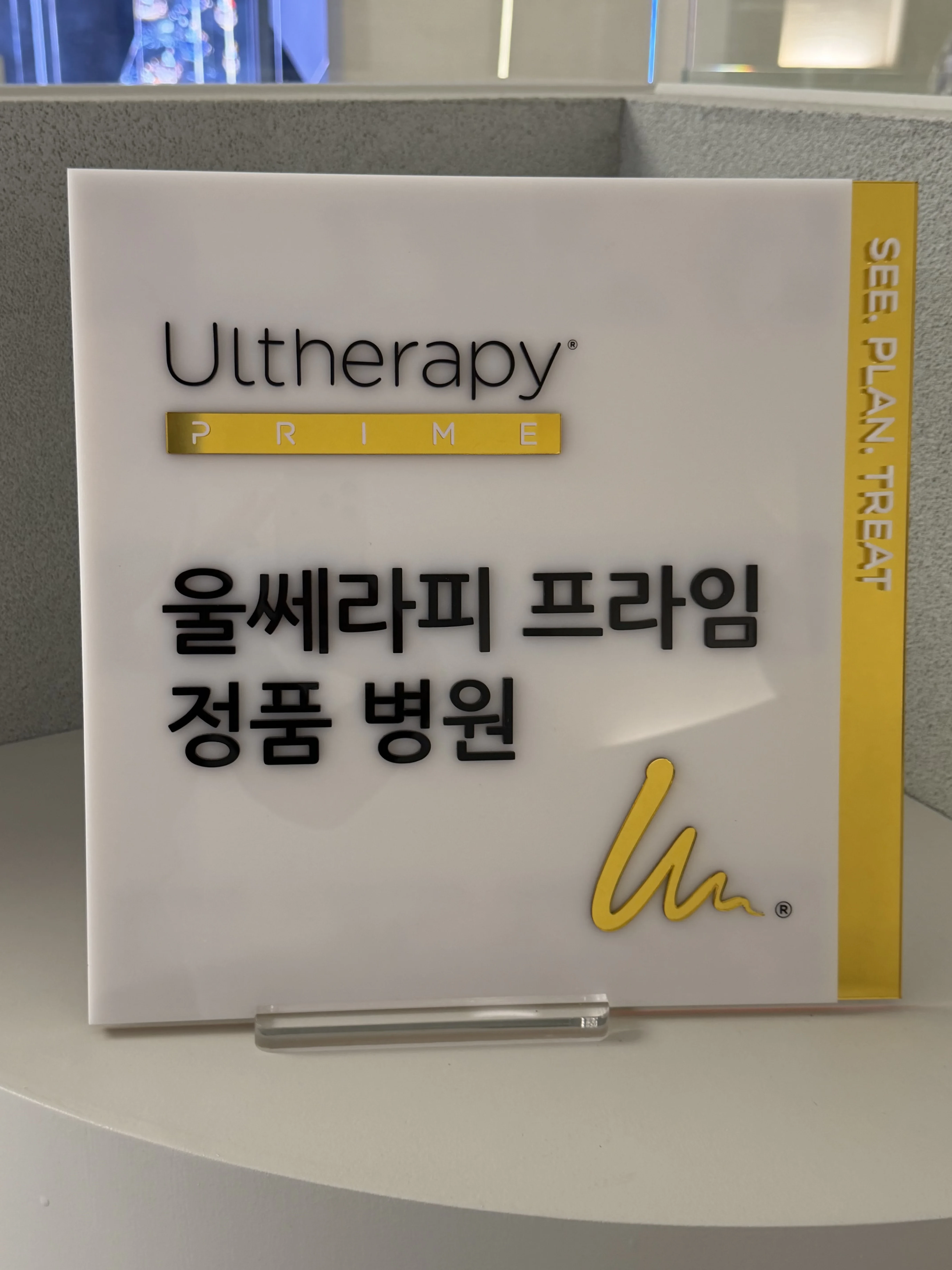
Brand-Authenticated Equipment & Training



Our doctors are certified by Korea’s top dermatological societies



Numbers That Tell Our Story
Real procedures performed.
Scar Removal Korea — Frequently Asked Questions
Scar-type triage, keloid recurrence honesty, raised versus depressed tools, skin-of-color safety, sessions, pricing and travel answers for scar removal korea visitors at RE:BERRY Hongdae, updated for 2026.
Who performs scar removal treatment at RE:BERRY Hongdae in Seoul?
RE:BERRY Hongdae has 1 physician, Dr. Jae-Hong Kim (License No. 138911), classify your scar as atrophic, hypertrophic or keloid before choosing any tool. Scar removal korea is a category matched to type and cause, so the doctor triages across the 60-90 minute consult rather than defaulting to 1 laser.
Do I see the same doctor throughout my scar treatment in Hongdae?
RE:BERRY Hongdae keeps 1 assigned doctor from consult through follow-up, because scar removal korea is judged over weeks to months and several sessions. Dr. Jae-Hong Kim reviews texture, height and color at set intervals, monitors keloids for recurrence, and adjusts the plan since scar remodeling is gradual, not a single fix.
How much does scar removal treatment cost in Hongdae Seoul in 2026?
RE:BERRY Hongdae publishes transparent pricing, with your 1 full quote confirmed on WhatsApp before you travel to Seoul. Because scar removal korea combines modalities across several sessions, the quote itemizes the consult, each planned session and the 4-week review as clear line items you see before booking.
What are the main types of scars and how do they differ?
RE:BERRY Hongdae explains 3 main types in scar removal korea: atrophic scars are depressed from tissue loss (acne, chickenpox), hypertrophic scars are raised but stay within the wound, and keloids are raised and extend beyond the wound boundary. Because each behaves differently, Dr. Jae-Hong Kim matches a distinct plan to each scar type.
What is the difference between a keloid and a hypertrophic scar?
RE:BERRY Hongdae clarifies 1 key difference: hypertrophic scars stay raised within the original wound, while keloids grow beyond the wound boundary and recur far more often. That is why scar removal korea treats keloids as staged, combined therapy under Dr. Jae-Hong Kim rather than as a simple excision.
| Feature | Hypertrophic | Keloid |
|---|---|---|
| Border | Within wound | Beyond wound |
| Recurrence | Lower | High |
| Approach | Steroid, silicone | Combined, staged |
Why do keloids often come back after removal in Korea?
RE:BERRY Hongdae is honest on 1 hard fact: keloids are an aberrant wound-healing response with a notably high recurrence rate, so excision alone frequently fails. Scar removal korea therefore combines excision with adjuvant therapy such as intralesional corticosteroids, silicone, pressure or 5-fluorouracil, and Dr. Jae-Hong Kim monitors keloids for return over months.
What treatments are used for raised versus depressed scars?
RE:BERRY Hongdae uses 2 opposite toolsets in scar removal korea: depressed scars are lifted with subcision, fractional laser resurfacing, RF microneedling or filler, while raised scars are calmed with intralesional corticosteroids, silicone, pressure, 5-fluorouracil or cryotherapy. Dr. Jae-Hong Kim selects the tool by scar direction rather than applying 1 device to both, alongside other RE:BERRY options like thermage flx.
Do Korean clinics perform more scar procedures than US or Japan?
RE:BERRY Hongdae operates in Korea, where clinics run higher procedure volume than most US and Japan clinics, and Seoul logged over 1,170,000 foreign-patient treatments in 2024 per KHIDI. That greater experience with multi-modal scar work supports careful combination planning, though you should still verify each clinic’s license before booking scar removal korea.
Can surgical, C-section and traumatic scars be improved?
RE:BERRY Hongdae confirms 1 realistic goal for surgical, C-section and traumatic scars: scar removal korea improves texture, height and color rather than erasing them. Depending on whether the scar is raised or depressed, Dr. Jae-Hong Kim uses resurfacing, subcision, steroid injection or scar revision, and sets expectations for gradual change across several sessions.
Can acne scars and other scar types be treated together?
RE:BERRY Hongdae often combines modalities in 1 scar removal korea plan, treating atrophic acne scars alongside other scar types when the skin can tolerate it. Dr. Jae-Hong Kim sequences subcision, resurfacing or RF microneedling for depressed scars with calming therapy for any raised scars, staging sessions weeks apart to protect healing — see other RE:BERRY Hongdae care too.
How long is recovery after scar treatment in Hongdae?
RE:BERRY Hongdae keeps recovery modality-specific across 3 paths in scar removal korea: intralesional injections and subcision have minimal downtime with possible bruising, RF microneedling means a few days of redness, and ablative laser means several days of redness and peeling. Dr. Jae-Hong Kim explains the 1 recovery path for your chosen tool before you begin — much like sofwave aftercare.
Is scar treatment safe for darker skin tones and Asian skin?
RE:BERRY Hongdae screens for 1 key risk in scar removal korea: post-inflammatory pigmentation in skin of color, which is managed with conservative laser settings and staged energy. Dr. Jae-Hong Kim reviews your Fitzpatrick skin tone and scar history first, choosing gentler protocols so darker skin is treated safely rather than aggressively.
How many sessions does scar treatment usually take in Korea?
RE:BERRY Hongdae plans 3 or more sessions spaced weeks apart in scar removal korea, because remodeling is gradual over weeks to months and most scar types need repeated treatment. Dr. Jae-Hong Kim sets the session count by scar type and response, and keloids may need ongoing management given their recurrence tendency — alongside options like thermage flx.
Can I start scar removal on a short Seoul trip and continue home?
RE:BERRY Hongdae confirms you can begin scar removal korea in Seoul — an in-office session runs 15-60 minutes with modality-specific downtime — then continue care. RE:BERRY Hongdae sits 1 AREX train from Incheon Airport with no transfer, and a 4-week WhatsApp review supports staged sessions after you fly home, like ultherapy prime visitors.
Why choose RE:BERRY Hongdae for scar removal in Seoul?
RE:BERRY Hongdae is defined by 3 things: scar-type triage first, honest keloid-recurrence and improvement-not-erasure framing, and same-doctor continuity with Dr. Jae-Hong Kim (License No. 138911). The 60-90 minute consult on the AREX line plans your scars honestly across atrophic, hypertrophic and keloid types before any treatment.
Book Your Scar Removal Korea Consultation at RE:BERRY
Plan scar removal korea honestly — your scar triaged as atrophic, hypertrophic or keloid and matched to the right tool by Dr. Jae-Hong Kim in a 60-90 minute doctor-led consult, with transparent pricing from ₩19,000 (about $14) published before you book. RE:BERRY Hongdae sits directly on the AREX airport line at Hongik University Station. This information is for educational purposes only and is not medical advice; consult a licensed physician for individual guidance. Your plan is confirmed in writing before you book.
Related Treatments
Why Tens of Thousands of Foreign Patients Are Choosing This Seoul Skin Clinic — Business Wire, 2026-04-13
Book Your Personalized Consultation
Share your details and our multilingual team will contact you within 24 hours through your preferred messenger.
- ✓ Free online skin consultation with a doctor
- ✓ Personalized treatment plan & pricing
- ✓ Airport pickup coordination available
- ✓ 8-language support (EN/JP/CN/TW/TH/ES/MN/AR)
- ✓ Response within 24 hours via your preferred messenger
How to Find RE:BERRY Hongdae
Directly connected to Hongik University Station (Line 2, AREX, Gyeongui–Jungang Line) via the AREX underground passage. 3F & B2, 140 Yanghwa-ro, Mapo-gu, Seoul.
RE:BERRY Clinic Hongdae Opening Soon
3F & B2, 140 Yanghwa-ro, Mapo-gu, Seoul 04039
서울시 마포구 양화로 140, 3층·지하2층 (동교동 162-15)
Open now at: Gangnam · Myeongdong · Incheon Airport