PDO Thread Lift Korea 2026 — Absorbable Polydioxanone Threads, Explained
Understand the lift before you choose it — pdo thread lift korea uses fine absorbable polydioxanone threads, a decades-old surgical suture material that dissolves by hydrolysis while stimulating your own collagen. RE:BERRY Hongdae plans thread type by goal over a 60-90 minute consult, with transparent pricing from ₩19,000 (about $14) at Hongik University Station, direct on the AREX airport line.
Visit RE:BERRY across Seoul, Korea
Hongdae opens soon. Until then, explore our flagships — tap a clinic to view it.
ONE RE:BERRY BRAND · MFDS-REGISTERED DEVICES · MULTILINGUAL CARE AT EVERY LOCATION
What is pdo thread lift korea and what is PDO actually made of?
PDO thread lift korea uses absorbable polydioxanone threads — a decades-old surgical suture polymer — for an immediate mechanical lift that dissolves by hydrolysis over about 6 months while stimulating new collagen. RE:BERRY Hongdae matches thread type to your goal from ₩19,000 (about $14) over a 60-90 minute consult at Hongik University Station.
PDO Thread Lift Korea — Transparent Pricing at RE:BERRY Hongdae
PDO Thread Lift Korea — What an Absorbable Thread Lift Looks Like
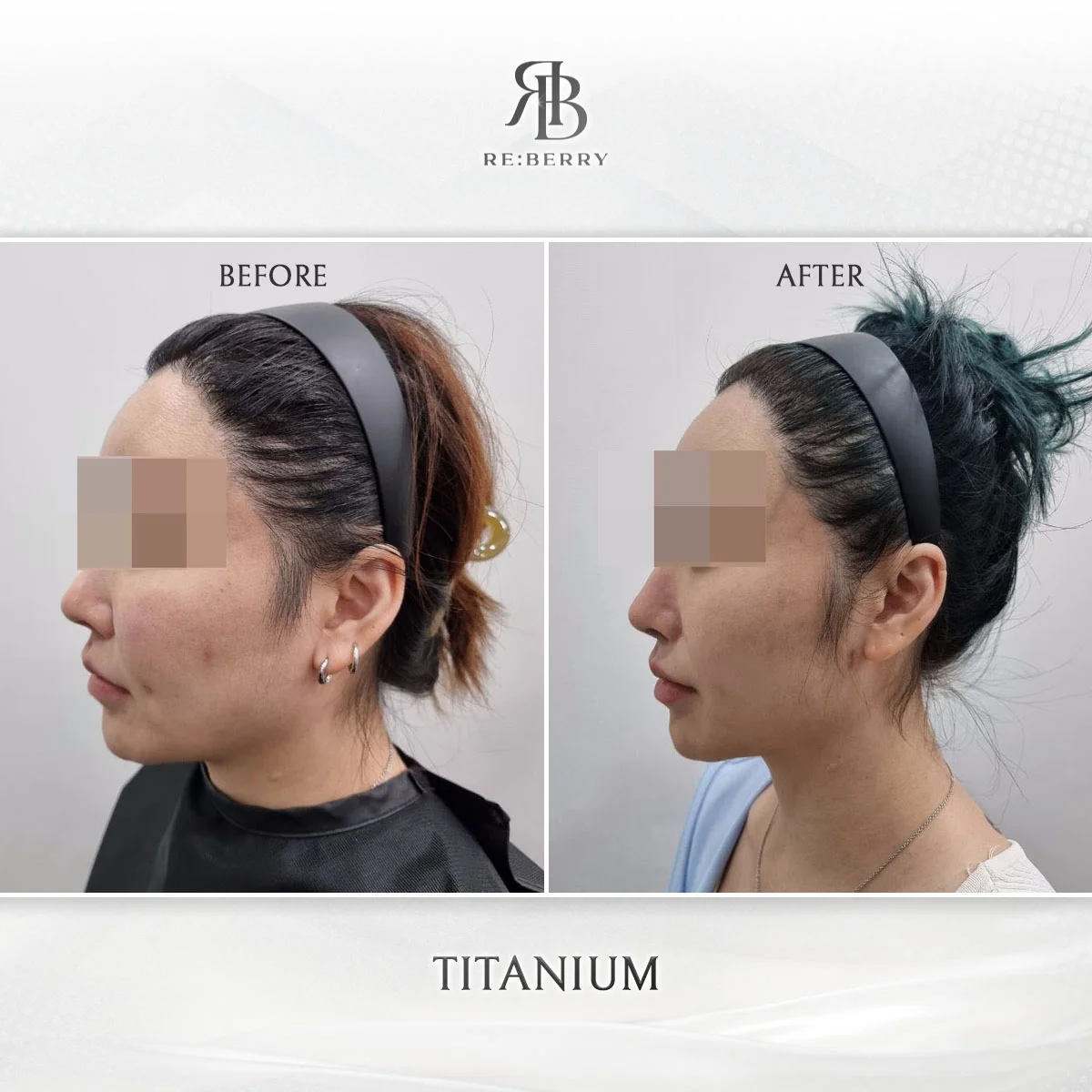
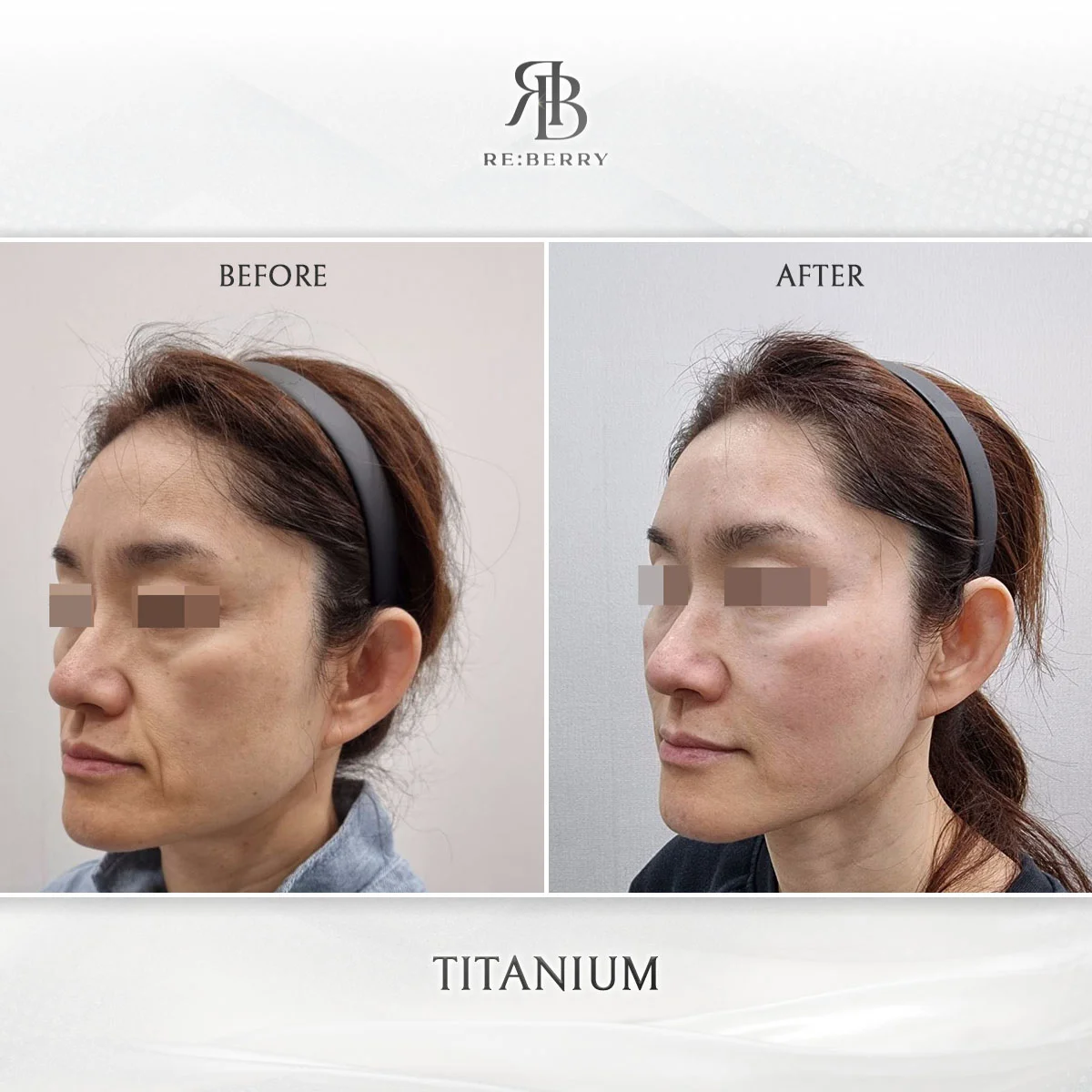
How PDO Thread Lift Korea Works, Step by Step
Step 1: 60-90 minute consult to match thread type to goal
PDO thread lift korea starts by choosing the right thread. In a 60-90 minute consult — over 15x Korea’s 4.3-minute outpatient average — the doctor decides between mono, screw and cog threads based on whether you need stimulation, volume or repositioning across your face.
Step 2: Local anesthesia and vector marking, about 30-60 minutes
After local anesthesia, entry points and vectors are marked. A pdo thread lift korea procedure commonly runs about 30 to 60 minutes total, depending on the number of threads and areas treated, so the plan stays specific to the lift and stimulation you actually need.
Step 3: Absorbable PDO threads inserted with a fine cannula
Fine polydioxanone threads are inserted with a thin cannula or needle. In pdo thread lift korea, cog (barbed) or screw threads physically grip and reposition tissue for an immediate lift on the day, while mono (smooth) threads mainly stimulate and firm 1 targeted zone.
Step 4: Hydrolysis dissolves the thread and builds collagen
Over about 6 months the PDO is broken down by non-enzymatic hydrolysis into carbon dioxide and water, leaving nothing permanent behind. As it dissolves, fibroblasts are activated and lay down new collagen (neocollagenesis), so the result firms and thickens tissue as the thread is absorbed.
Step 5: Aftercare and 4-week WhatsApp follow-up
You receive written aftercare from ₩19,000 (about $14) plus a 4-week WhatsApp review, and are advised to avoid wide facial movements, sleeping face-down and vigorous activity for a short period. A pdo thread lift korea plan follows you home to Japan, the US or beyond, unlike a walk-in that ends at the door.
Why Patients Choose RE:BERRY Hongdae for PDO Thread Lift
- Material science first, not just the lift Rather than jumping to the lift, the PDO thread lift at RE:BERRY Hongdae starts from what PDO is — a decades-old absorbable surgical suture polymer — so its safety and dissolving behavior are understood before treatment, planned from ₩19,000 (about $14) in the consult with the thread type matched to your goal.
- Two mechanisms explained clearly A PDO thread lift result has 2 parts: an immediate mechanical lift from the thread structure (strongest with cog threads), then a slower biostimulatory effect as hydrolysis triggers fibroblasts and neocollagenesis. RE:BERRY Hongdae explains both so you know which effect drives your result over the following months.
- Honest thread-type and duration counseling Mono threads stimulate, screw threads add volume, and cog threads reposition — the PDO thread lift at RE:BERRY Hongdae maps these to your anatomy rather than a single best thread. Results commonly last about 12 to 18 months by thread type, technique and individual factors, stated openly rather than as a permanent change.
- Direct airport access and English consultation RE:BERRY Hongdae sits on the AREX line at Hongik University Station, a no-transfer ride from Incheon Airport T1 and T2, with consults across 8 languages. That lets a foreign patient ask exactly which thread material, type and vectors are planned for their pdo thread lift korea before agreeing to treatment.
| Timeline | What to Expect |
|---|---|
| Day 1 | Immediate lift and firmer contour; local anesthesia used during the 30-60 min procedure |
| First 1-2 weeks | Possible swelling, bruising, tightness or mild puckering settles; avoid wide facial movements |
| 1-3 months | Collagen stimulation develops as PDO threads dissolve by hydrolysis |
| 12-18 months | Visible results commonly last this long by thread type, technique and individual factors |
PDO Thread Lift Korea — PDO vs PLLA vs PCL Threads
| Criteria | PDO Threads (RE:BERRY Hongdae) | PLLA Threads | PCL Threads | Energy-Based Tightening | Source |
|---|---|---|---|---|---|
| Material | Polydioxanone, absorbable surgical suture polymer | Poly-L-lactic acid | Polycaprolactone | No implant; heat only | Device and material references |
| Absorption | Hydrolysis over about 6 months | Slower absorption | Slowest absorption of the three | Not applicable | Peer-reviewed literature |
| Main effect | Mechanical lift plus collagen stimulation | Stronger, longer stimulation | Longest-lasting stimulation | Collagen from heat | Clinical references |
| Onset | Immediate mechanical lift on day 1 | Mostly gradual stimulation | Mostly gradual stimulation | Gradual over weeks | Clinical references |
| Duration | About 12-18 months | Often longer than PDO | Often longest of threads | Varies by device | Clinical references |
| Downtime | A few days to about a week | A few days to about a week | A few days to about a week | Minimal to mild | RE:BERRY records |
| Best for | Immediate lift with steady stimulation | Longer biostimulation | Longest biostimulation | Firming without repositioning | Consultation-led decision |
| When surgery is better | Very severe laxity or heavy sagging | Very severe laxity | Very severe laxity | Very severe laxity | Clinical references |
Why This Matters
The key insight is that thread material changes the tradeoff. PDO thread lift korea uses polydioxanone that absorbs by hydrolysis over about 6 months, while PLLA and PCL absorb more slowly and stimulate longer — so the choice weighs immediate lift against longevity of stimulation, decided at consultation rather than framed as a single best thread among Seoul options.
Controlled model studies confirm PDO thread insertion triggers measurable fibroblast activation and neocollagenesis, and comparative work shows PDO, PLLA and PCL differ in biostimulation profile, which is why pdo thread lift korea is planned by thread material and type. Source: Su et al. 2024; Kwon et al. 2019.
Korean clinics run a higher procedure volume than most Western markets, and KHIDI’s 2025 survey found 41.4% of foreign patients rank same-doctor continuity as their top priority. That experience and continuity support a material-aware, thread-type-matched plan. Source: KHIDI 2025.
Your Physician at RE:BERRY Hongdae
Dr. Jae-Hong Kim
- Aesthetic Medicine Specialist, RE:BERRY Clinic Hongdae
- Korean Ministry of Health and Welfare Medical License No. 138911
- Regular Member, Korean Dermatological Association (kda.or.kr)
- Plans PDO thread lifts by thread material and type to each patient’s goal
Medically reviewed by Dr. Jae-Hong Kim, Aesthetic Medicine Specialist, RE:BERRY
SCIENTIFIC EVIDENCE — peer-reviewed references behind absorbable PDO thread lift material science at RE:BERRY
The 6 peer-reviewed references below span more than 20 years of published research on absorbable thread lifting, from the original barbed-suture technique to 2024 biostimulation models comparing thread materials — the evidence behind a material-aware pdo thread lift korea plan rather than a single best-thread claim.
Biostimulation after PDO thread insertion
A 2024 experimental study in a pig model investigated biostimulatory effects after polydioxanone thread insertion and documented measurable fibroblast activation and new collagen, the direct evidence for the neocollagenesis a PDO thread lift relies on as the thread dissolves by hydrolysis.
Su D, Wang S, He T, Wang J. Experimental investigation of biostimulatory effects after polydioxanone thread insertion in a pig model. J Cosmet Dermatol. 2024;23(4):1189-1197. doi:10.1111/jocd.15966
Comparing PDO, PLLA and PCL biostimulation
A 2019 study compared the biostimulatory effects of polydioxanone, poly-d,l-lactic acid and polycaprolactone fillers in a mouse model and found the materials differed in collagen response, quantifying the material tradeoff that informs thread-type selection in a PDO thread lift.
Kwon TR, Han SW, Yeo IK, et al. Biostimulatory effects of polydioxanone, poly-d, l lactic acid, and polycaprolactone fillers in mouse model. J Cosmet Dermatol. 2019;18(4):1002-1008. doi:10.1111/jocd.12950
Korean outcomes of PDO knotless thread lifting
A 2015 Korean study of polydioxanone knotless thread lifting reported measurable facial rejuvenation across the treated patients, establishing absorbable PDO threads as an effective option in Asian skin and grounding pdo thread lift korea in Korean clinical evidence.
Suh DH, Jang HW, Kim SN, Lee SJ, Ryu HJ. Outcomes of polydioxanone knotless thread lifting for facial rejuvenation. Dermatol Surg. 2015;41(6):720-725. doi:10.1097/DSS.0000000000000368
Original barbed-suture repositioning technique
A 2002 study introduced special barbed threads to remove facial soft-tissue ptosis, documenting the mechanical repositioning across the treated cases that underpins how cog threads grip and lift tissue in a modern pdo thread lift korea procedure.
Sulamanidze MA, Fournier PF, Paikidze TG, Sulamanidze GM. Removal of facial soft tissue ptosis with special threads. Dermatol Surg. 2002;28(5):367-371. doi:10.1046/j.1524-4725.2002.01297.x
Korean evidence: face-lifting suspension thread response
A 2019 Korean study in Ann Dermatol (Seoul) compared face-lifting suspension threads in a controlled model and found significant increases in tensile strength and collagen-fiber area with PDO barbed thread versus control, quantifying the neocollagenesis that supports the lift as the threads dissolve.
Kim JE, Kim YH, Park AY, Lee HJ, Lee JH. Experimental investigation on the tissue response induced by face-lifting mesh suspension thread. Ann Dermatol (Seoul). 2019;31(6):645-653. doi:10.5021/ad.2019.31.6.645
Longevity and complications of barbed-suture lifting
A 2019 study of facelift by barbed-suture insertion quantified effectiveness, longevity and complication rates across the treated cohort, informing the honest 12-to-18-month duration expectation and safety counseling in a PDO thread lift plan.
Bertossi D, Botti G, Gualdi A, et al. Effectiveness, longevity, and complications of facelift by barbed suture insertion. Aesthet Surg J. 2019;39(3):241-247. doi:10.1093/asj/sjy042
Only Authentic, Brand-Certified Equipment
Every device at RE:BERRY is MFDS-certified and manufacturer-verified. We never use counterfeit or grey-market equipment.
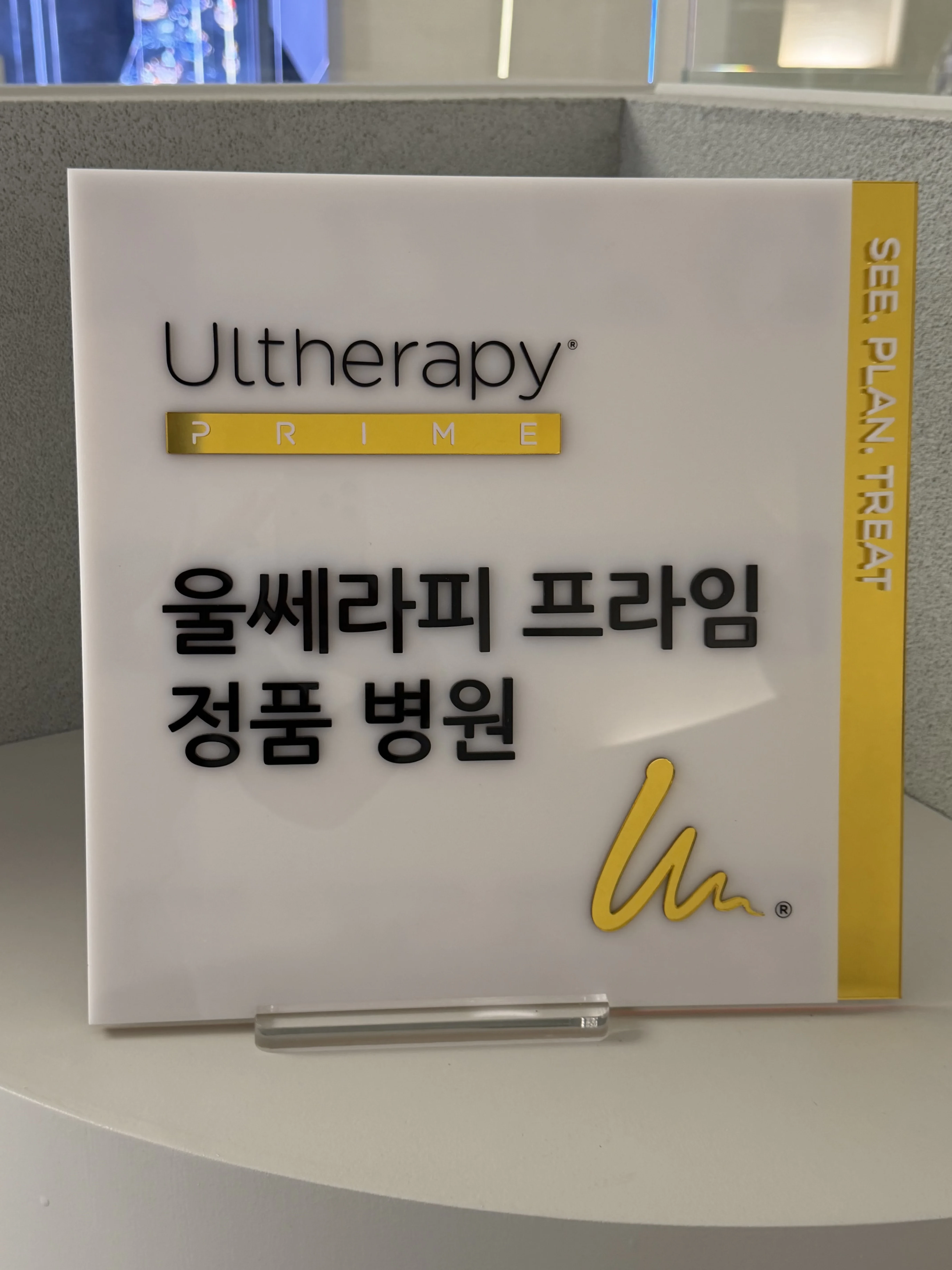
Brand-Authenticated Equipment & Training




Our doctors are certified by Korea’s top dermatological societies




Numbers That Tell Our Story
Real procedures performed.
PDO Thread Lift Korea — Frequently Asked Questions
PDO material science, mono vs screw vs cog threads, hydrolysis and collagen stimulation, PDO vs PLLA and PCL, honest 12-18 month duration, downtime and English consultation answers for pdo thread lift korea searchers at RE:BERRY Hongdae, updated for 2026.
What is a PDO thread lift and what is PDO actually made of?
RE:BERRY Hongdae uses 1 material: polydioxanone (PDO), a synthetic absorbable polymer used for decades as a surgical suture. A pdo thread lift korea inserts fine PDO threads under the skin, so the safety profile is well understood before the lift, which is why the material is explained first at the 60-90 minute consult.
How do PDO threads lift the skin and stimulate collagen at once?
RE:BERRY Hongdae explains 2 mechanisms: cog or screw threads give an immediate mechanical lift, and as the PDO dissolves it triggers fibroblasts to build new collagen. A pdo thread lift korea therefore firms both instantly and gradually, with the biostimulation developing over the months after your 30-60 minute procedure.
What is the difference between mono, screw and cog PDO threads?
RE:BERRY Hongdae matches 3 thread types to your goal: mono (smooth) threads mainly stimulate and firm, screw/spiral threads add volume and support, and cog (barbed) threads grip and reposition tissue for lift. In pdo thread lift korea the doctor chooses among these at consultation rather than using 1 thread for everyone.
How does PDO compare with PLLA and PCL threads in Seoul?
RE:BERRY Hongdae treats these as 3 materials with different absorption: pdo thread lift korea uses PDO that dissolves by hydrolysis over about 6 months, while PLLA and PCL absorb more slowly and stimulate longer. The consult weighs immediate lift against longevity, whether paired with thread lift options or not.
| Material | Absorption | Main effect |
|---|---|---|
| PDO | ~6 months | Lift plus stimulation |
| PLLA | Slower | Longer stimulation |
| PCL | Slowest | Longest stimulation |
How long do PDO threads stay in the body before they dissolve?
RE:BERRY Hongdae notes PDO thread integrity in tissue is often described as lasting on the order of about 6 months, after which the material is fully absorbed. A pdo thread lift korea leaves nothing permanent behind, because the polydioxanone breaks down by hydrolysis into carbon dioxide and water while a collagen scaffold remains.
Do dissolving PDO threads leave anything behind, and are they safe?
RE:BERRY Hongdae is clear on 1 point: pdo thread lift korea threads dissolve completely, with polydioxanone breaking down by non-enzymatic hydrolysis into carbon dioxide and water. Because PDO has been used as an absorbable surgical suture for decades, its safety profile is well understood; Korean clinics also run higher procedure volume than most Western markets, supporting practised technique in Seoul.
How long does a PDO thread lift procedure take at the clinic?
RE:BERRY Hongdae completes a pdo thread lift korea procedure in about 30 to 60 minutes, including local anesthesia and marking the vectors, depending on the number of threads and areas treated. The 60-90 minute consult beforehand chooses thread type and plan, so the procedure stays focused on your goal.
How much downtime is there after a PDO thread lift in Korea?
RE:BERRY Hongdae advises 1 recovery window: pdo thread lift korea downtime is typically a few days to about a week, with possible swelling, bruising, tenderness, tightness or mild puckering that usually settles. You are asked to avoid wide facial movements, sleeping face-down and vigorous activity for a short period; Korean clinics run higher procedure volume than most Western markets, so recovery guidance in Seoul is well rehearsed.
When will I see results from a PDO thread lift and how long do they last?
RE:BERRY Hongdae notes there is an immediate lift on day 1, with collagen benefit developing over the following months as the PDO dissolves. Honestly, pdo thread lift korea results commonly last about 12 to 18 months by thread type, technique and individual factors — temporary, not permanent; for energy firming see sofwave.
Does a PDO thread lift hurt, and is local anesthesia used?
RE:BERRY Hongdae performs pdo thread lift korea under local anesthesia, so the 30-60 minute procedure is generally well tolerated, with pressure or tugging rather than sharp pain. Mild tenderness for a few days afterward is normal, and the aftercare plan covers what to expect while the threads settle.
Who is a good candidate for a PDO thread lift, and who is not?
RE:BERRY Hongdae considers 1 factor first — degree of laxity: pdo thread lift korea suits mild-to-moderate sagging, while very severe laxity or heavy sagging may be better addressed by energy tightening or surgery. Pregnancy, active infection and bleeding disorders are screened at the 60-90 minute consult before treatment.
How does PDO thread lift in Korea compare with clinics elsewhere?
RE:BERRY Hongdae notes 2 advantages: Korean clinics run higher procedure volume than most Western markets, and Korean studies specifically validated PDO thread techniques. So pdo thread lift korea here uses material-aware methods refined in Seoul, and KHIDI 2025 found 41.4% of foreign patients value same-doctor continuity; see thread lift.
Can a PDO thread lift be combined with other treatments in Seoul?
RE:BERRY Hongdae often combines pdo thread lift korea with other tools after the consult — energy tightening for firming or botox for muscle. Because Korean clinics run higher procedure volume than most Western markets, planning a combined approach is routine, decided by the doctor rather than sold as a fixed set, with options like ultherapy prime.
Can I get an English consultation for a PDO thread lift in Hongdae?
RE:BERRY Hongdae runs consults across 8 languages, 1 AREX train from Incheon Airport with no transfer, whether you plan PDO threads or a botox pairing. That lets a foreign patient ask exactly which thread material, type and vectors are planned for their pdo thread lift korea before agreeing to treatment.
Why choose RE:BERRY Hongdae for a PDO thread lift in Seoul?
RE:BERRY Hongdae is defined by 3 things: material-first education, thread-type matching, and honest 12-18 month duration. Dr. Jae-Hong Kim (License No. 138911) plans each lift by PDO thread type — for related energy lifting, see sofwave for focused ultrasound tightening.
Book Your PDO Thread Lift Consultation at RE:BERRY Hongdae
Choose pdo thread lift korea understood from the material up — absorbable polydioxanone threads, a decades-old surgical suture polymer that dissolves by hydrolysis over about 6 months while stimulating your own collagen, with honest 12-18 month duration rather than a permanent claim. Dr. Jae-Hong Kim leads a 60-90 minute consult with transparent pricing from ₩19,000 (about $14) published before you book, matching mono, screw or cog threads to your goal, and consults in 8 languages. RE:BERRY Hongdae sits directly on the AREX airport line at Hongik University Station. This information is for educational purposes only and is not medical advice; consult a licensed physician for individual guidance on whether threads, energy tightening or surgery suits you.
Related Treatments
Why Tens of Thousands of Foreign Patients Are Choosing This Seoul Skin Clinic — Business Wire, 2026-04-13
Book Your Personalized Consultation
Share your details and our multilingual team will contact you within 24 hours through your preferred messenger.
- ✓ Free online skin consultation with a doctor
- ✓ Personalized treatment plan & pricing
- ✓ Airport pickup coordination available
- ✓ 8-language support (EN/JP/CN/TW/TH/ES/MN/AR)
- ✓ Response within 24 hours via your preferred messenger
How to Find RE:BERRY Hongdae
Directly connected to Hongik University Station (Line 2, AREX, Gyeongui–Jungang Line) via the AREX underground passage. 3F & B2, 140 Yanghwa-ro, Mapo-gu, Seoul.
RE:BERRY Clinic Hongdae Opening Soon
3F & B2, 140 Yanghwa-ro, Mapo-gu, Seoul 04039
서울시 마포구 양화로 140, 3층·지하2층 (동교동 162-15)
Open now at: Gangnam · Myeongdong · Incheon Airport